Soline Bay’s quiet sentinel and the fading rhythm of the Adriatic’s maritime merchants.
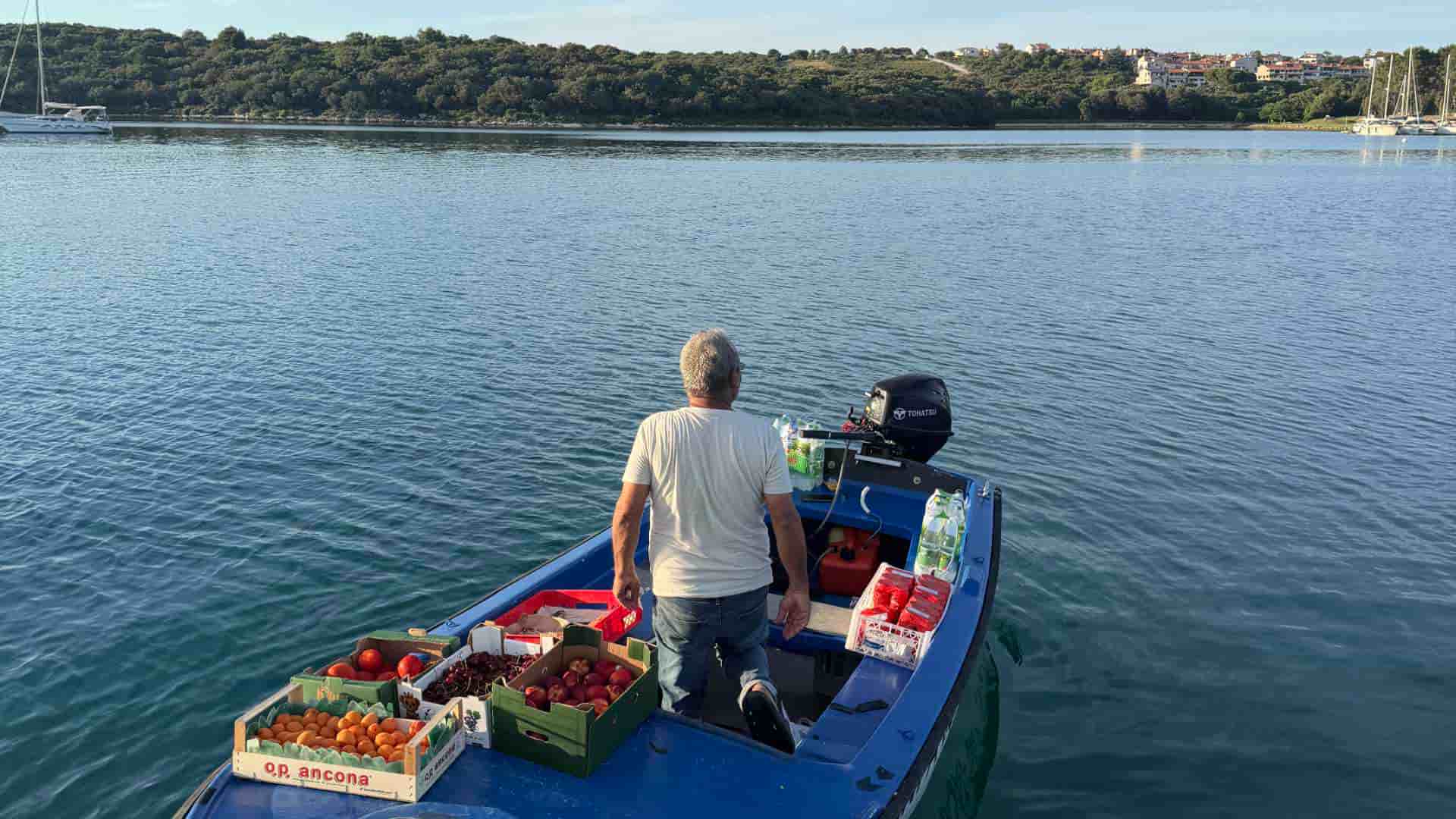
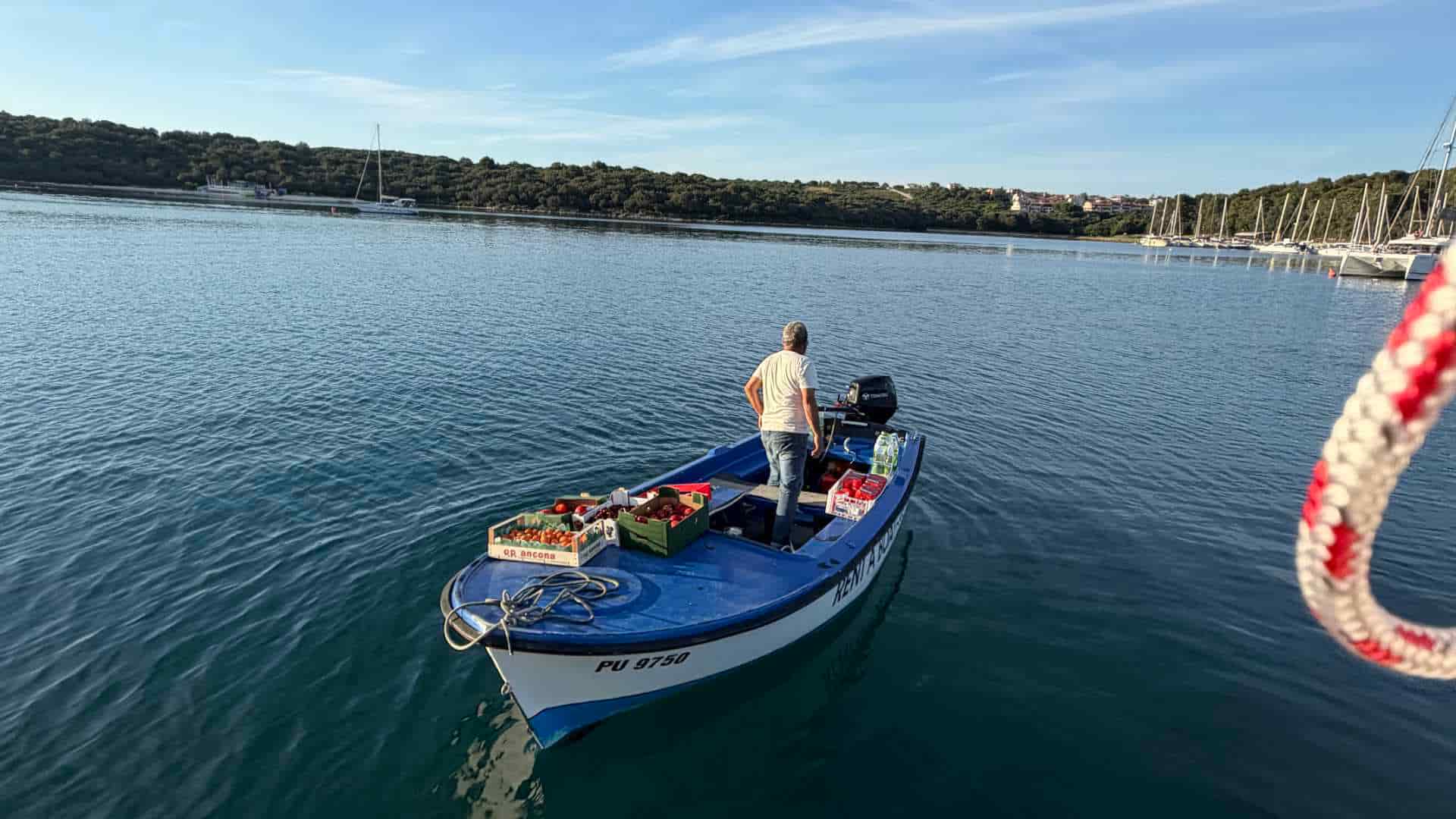
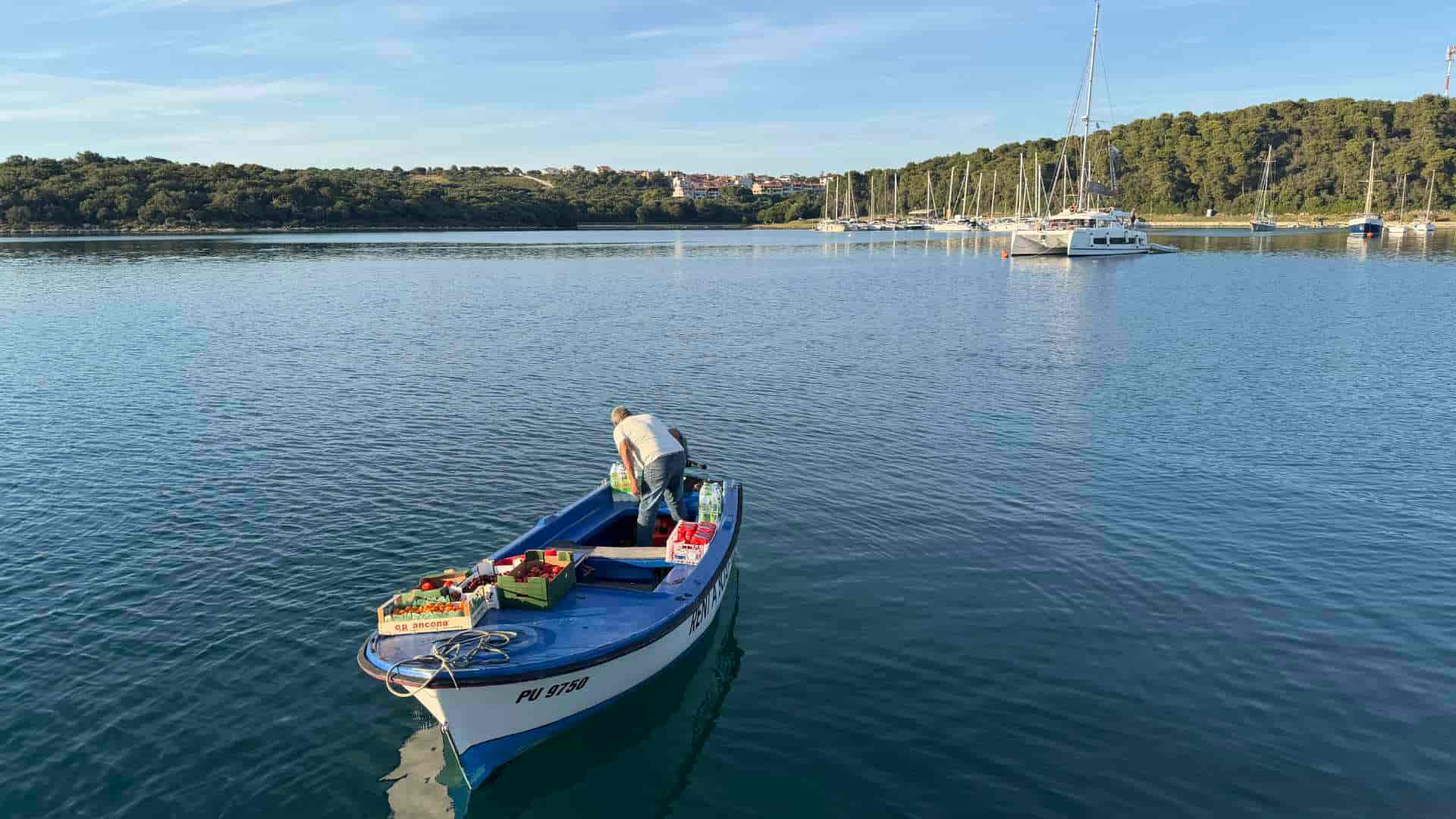
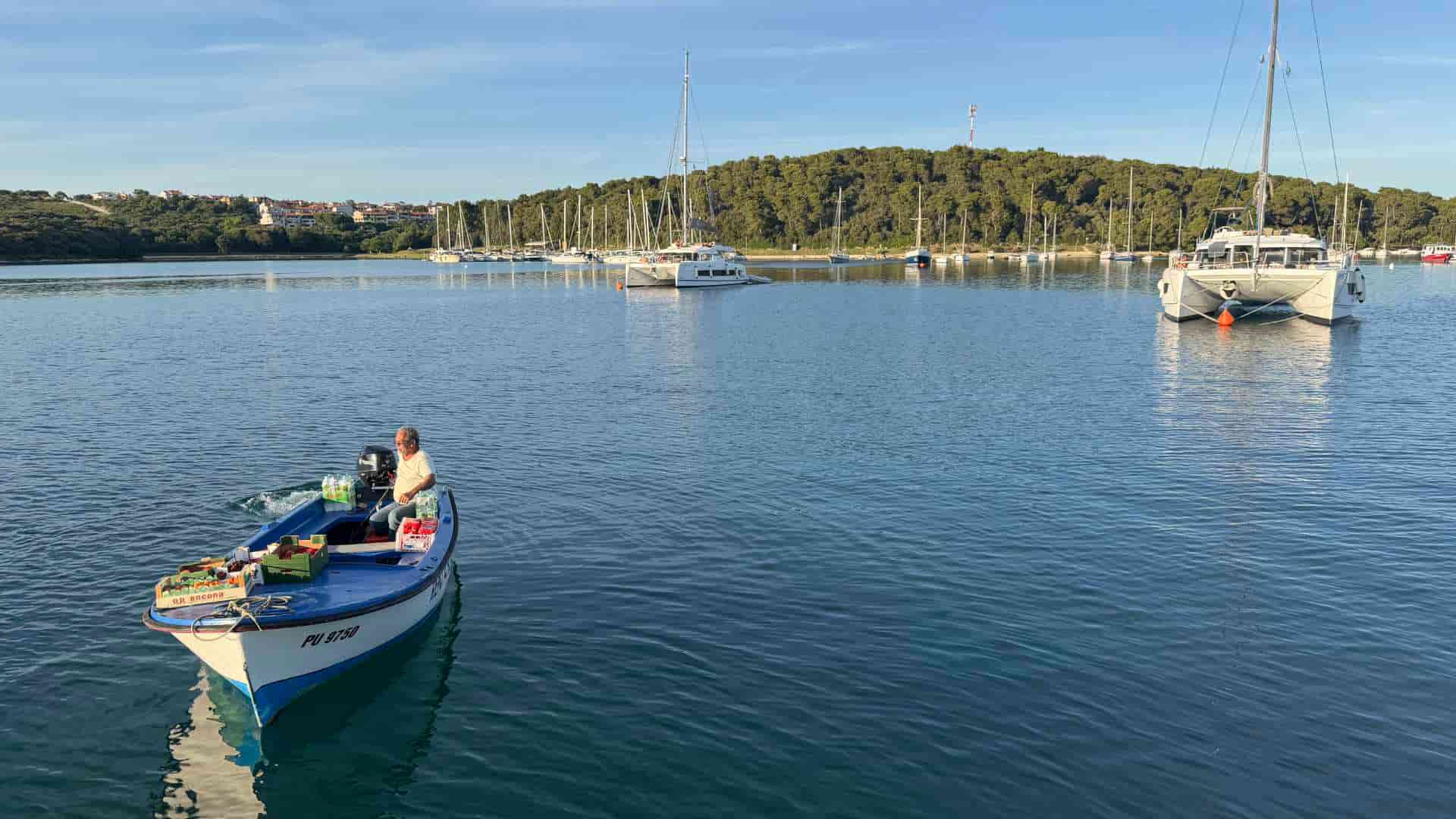
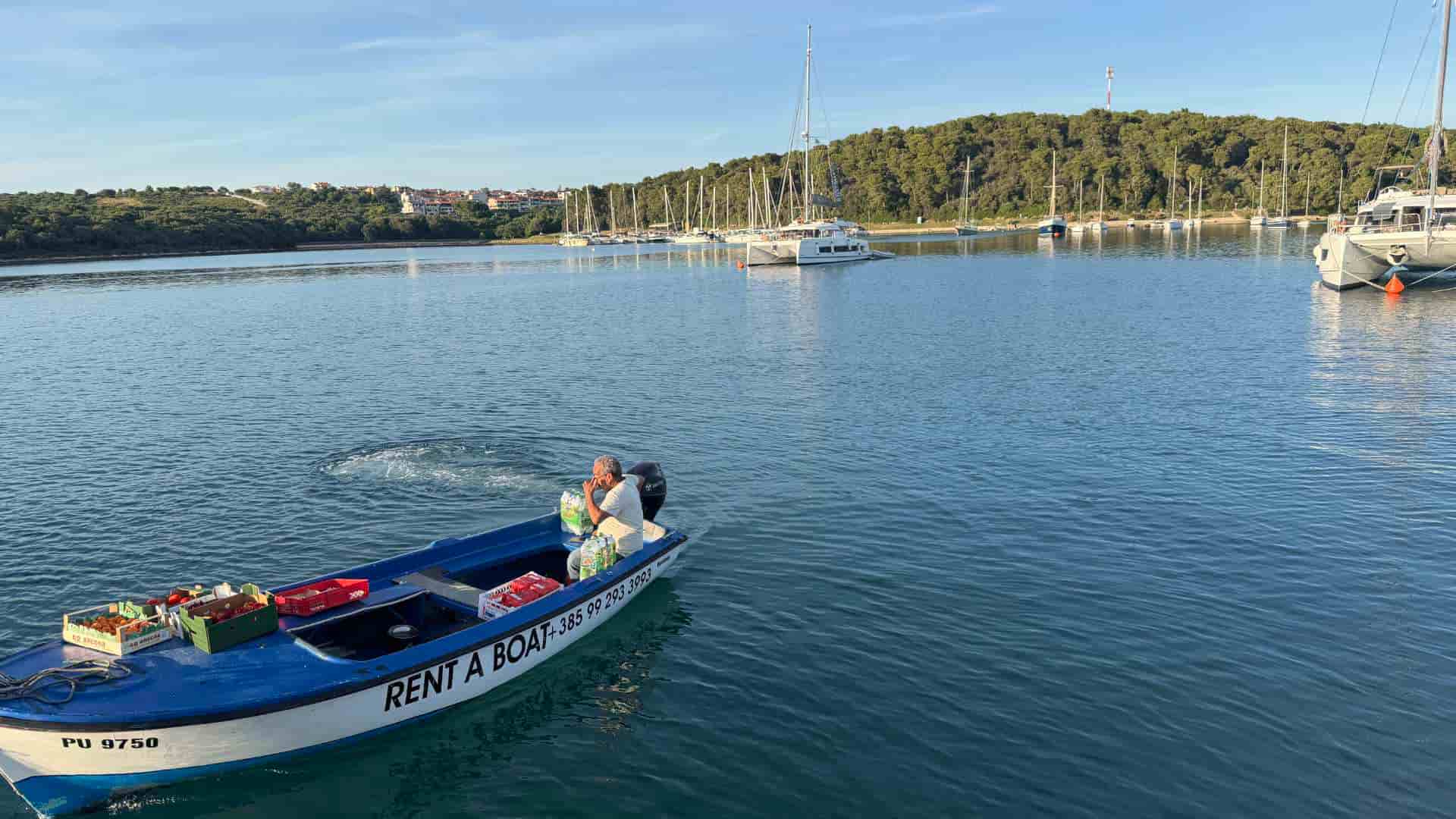
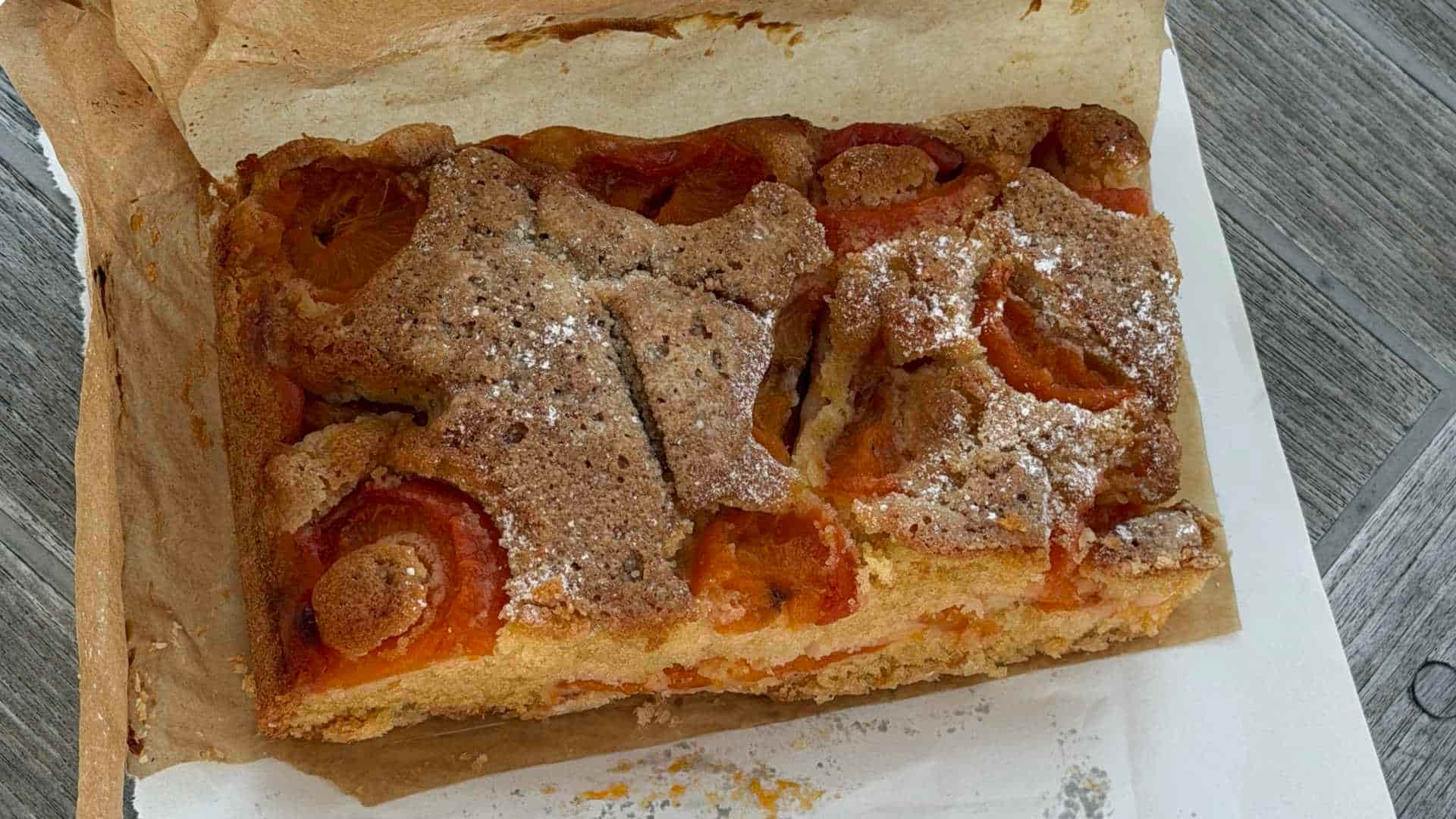
The Adriatic at dawn does not so much wave as it exhales, a vast pane of turquoise glass undisturbed by the tourists still sleeping in their white-hulled yachts. Through this silence comes a rhythmic, low-frequency pulse—the steady put-put-put of an ancient, single-cylinder diesel engine. A small blue-and-white wooden motorboat cuts a clean, silver wake across Soline Bay, steering with a deliberate, unhurried precision. At the stern stands Suleiman. A half-burned cigarette clings to his lip, its blue smoke curling upward to merge with the scent of salt air, bruised plums, and warm, yeast-sweet flour. Behind him, wooden crates are stacked high, a vibrant cargo of oranges, dark plums, and heavy cakes wrapped in wax paper. He does not wave; he merely watches, his eyes squinted against the glare, reading the shifting anchorages like an open book.
The Encounter & The Tension
When the blue boat pulls alongside a sleek, French-flagged catamaran, Suleiman kills the ignition. The abrupt silence is heavy, filled only with the soft lap of water against the hulls. He handles his boat not as a machine, but as an extension of his own weathered frame—sun-cured skin and hands calloused from decades of wet hemp and rough wood. He does not hustle. He waits for the yacht owners to scramble on deck, blinking into the morning light.
"The peaches are from the valley behind Pula," he says, his voice a low gravel-scrape of Croatian mixed with Italian. "The cake was baked four hours ago. My wife does not believe in yesterday’s sugar."
There is an unspoken tension here between the floating luxury of the modern travelers and the stripped-back utility of Suleiman’s trade. They offer him digital payments; he prefers the crisp weight of physical currency, though he accepts both with a dry nod. To the summer tourists, he is a picturesque curiosity, a quaint relic of Mediterranean charm. But Suleiman rejects this easy romanticism.
"They think this is a postcard," he mutters, gesturing toward the hills of Veruda with a thumb stained by tobacco. "But water is hard work. They come for two weeks, they drop their anchors, they leave their plastic in the sea, and then they disappear. I stay. I have watched these same bays change colors for forty years. The yachts get larger, the people get louder, but the hunger remains the same."
He hands over a paper bag heavy with ripe plums and a dusting of white sugar from the daily cakes. His movements are spare, free of unnecessary gestures. He is not just selling sustenance; he is dispensing stability to those who live on the drift. "A boat is a small house," he observes, staring at the catamaran's gleaming fiberglass. "If you do not have fresh bread and a quiet mind, even the biggest ship becomes a prison."
The Historical Horizon
To understand Suleiman’s daily pilgrimage is to understand the fractured, layered history of the Istrian peninsula. This coast has been claimed, abandoned, and reclaimed by Rome, Venice, Vienna, and Yugoslavia. Each empire left its stone ruins and its language, but the maritime routes remained the truest connective tissue of the region. Floating merchants once navigated these shallow bays in wooden batane, trading olive oil and wild asparagus long before the first luxury marina was dredged from the silt of Veruda.
Today, as Croatia’s coastline is increasingly carved up into exclusive concessions and high-end anchorages, Suleiman’s small blue vessel represents a quiet, stubborn rebellion against the commercialization of the sea. The modern Adriatic is fast, hyper-efficient, and engineered for consumption. Yet, in this pocket of Istria, the ancient economy of proximity survives. Suleiman is the custodian of a disappearing littoral culture, one where trade is still conducted at eye level, boat-to-boat, bound by the mutual respect of those who understand the vulnerability of life on the water. His presence is a reminder that before these bays were maps of coordinates for leisure, they were working landscapes defined by the sweat of fishermen and the slow, seasonal crawl of local trade.
The Reflective Outro
Suleiman pulls the starter rope. The motor coughs once, then settles back into its steady, hypnotic beat. He steers away from the catamaran, already looking toward the next mast bobbing in the distance. The sun is high now, baking the scent of wild thyme from the Istrian hills, mixing it with the sweet, heavy aroma of his remaining cakes. As his boat grows smaller against the glittering expanse of Soline Bay, one is left wondering who will inherit these waters when his engine finally goes silent. Will the bay lose its anchor, leaving only the sterile silence of fiberglass and plastic, or will another solitary figure rise to feed the transient souls of the Adriatic? He does not look back to find out; his gaze is fixed solely on the next swell.