
Beyond the Postcard: A Tactical and Existential Inquiry into the Windward Reefs, Volcanic Amphitheaters, and Open-Ocean Channels of the South Pacific
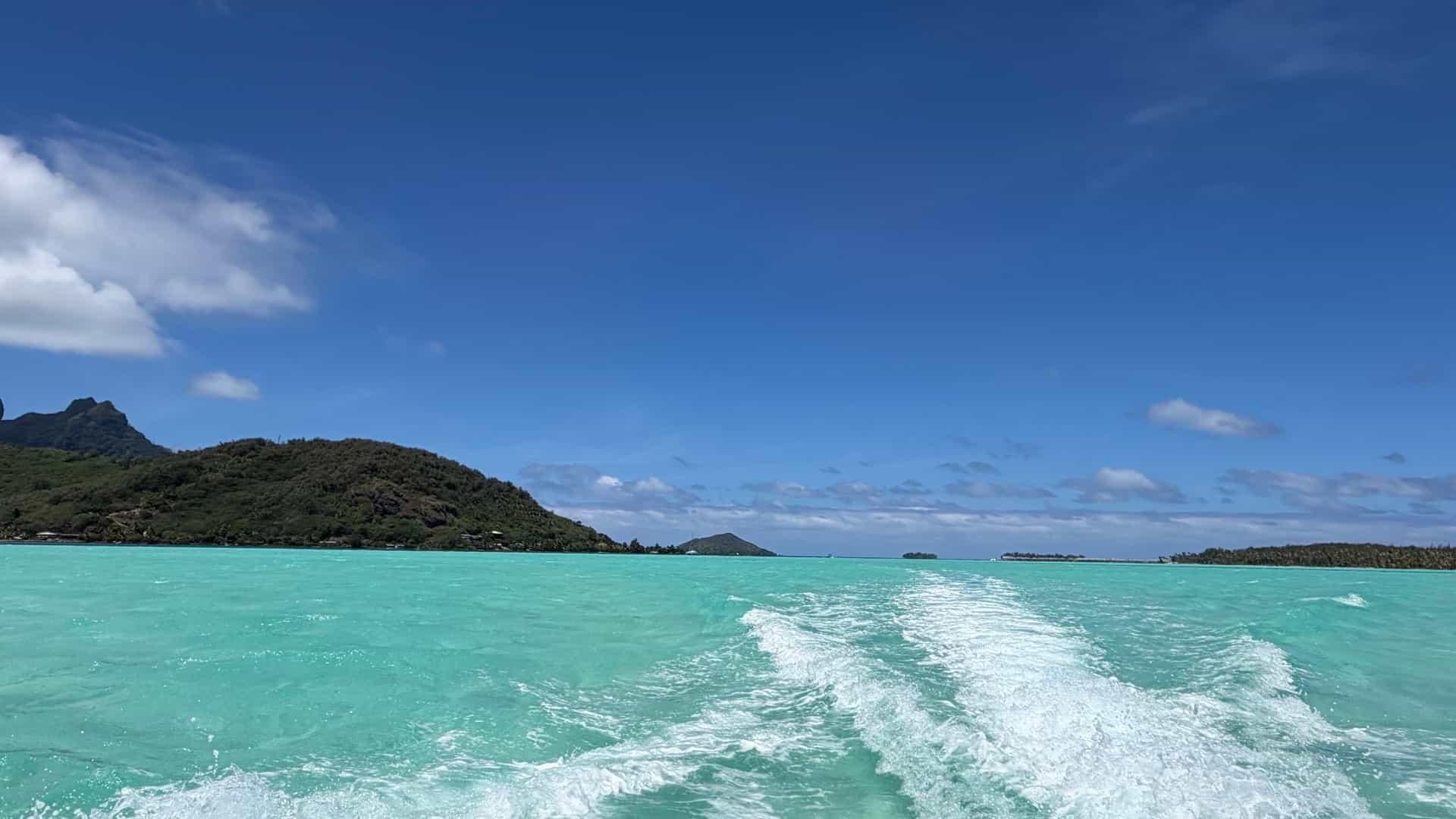
The Avapehi Pass spits us out into the unshielded Pacific with a violent, shuddering drop. Beneath the twin fiberglass hulls of our fifty-nine-foot catamaran, the floor drops five thousand meters into an inky, pitiless abyss. Trade winds at fifteen knots scream through the stainless-steel rigging, throwing cold, salt-laden spray across the helm station. There is no gentle transition here; the barrier reef ends in a sudden line of white, churning foam, and we are thrust instantly into six-foot rolling swells. My hands grip the wheel, feeling the mechanical strain of the steering cables as we motor-sail west toward Taha’a. This is the ocean stripped of its tourist lacquer—raw, kinetic, and demanding absolute physical presence.
Geography & The Stakes
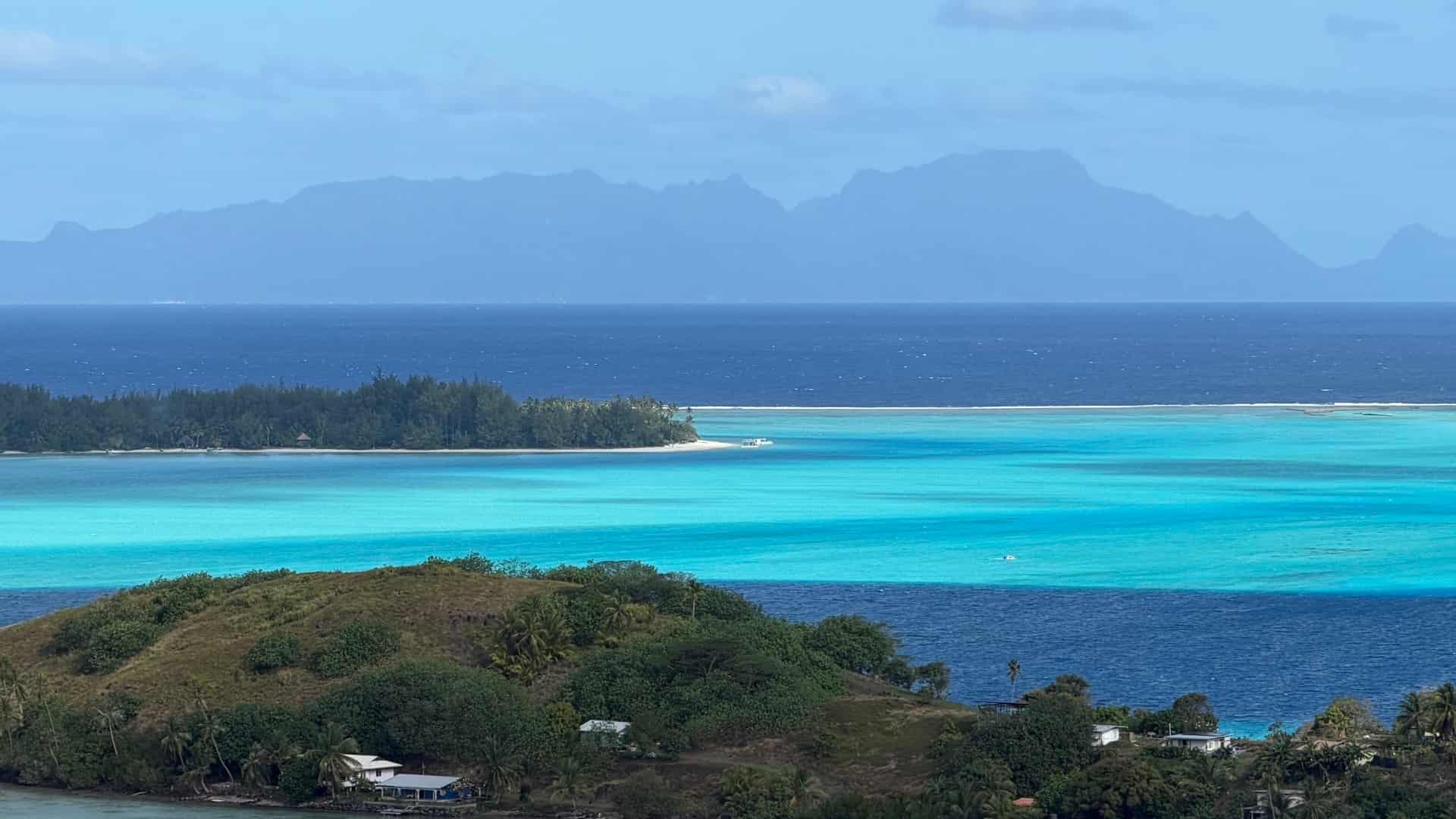
French Polynesia’s Society Archipelago is a masterclass in geologic decay and oceanic siege. These are not merely islands; they are the jagged basalt skeletons of ancient volcanoes, slowly drowning under their own immense weight while outer coral rings wage a continuous, multi-millennial war against the relentless swell of the Pacific. To navigate this fractured geography is to confront immense physical scale. Between the high, rain-slicked needles of Moorea’s Mount Rotui and the low, fragile sanctuary of Tetiaroa Atoll lies a maritime wilderness that forgives no navigational arrogance. These passes—narrow, high-velocity channels cut through razor-sharp coral—serve as the only valves between the protected, neon-turquoise lagoons and the violent energy of the open sea. It is a landscape defined by sharp thresholds, where one miscalculated tide or engine failure means catastrophic grounding.
The Logistics & The Movement
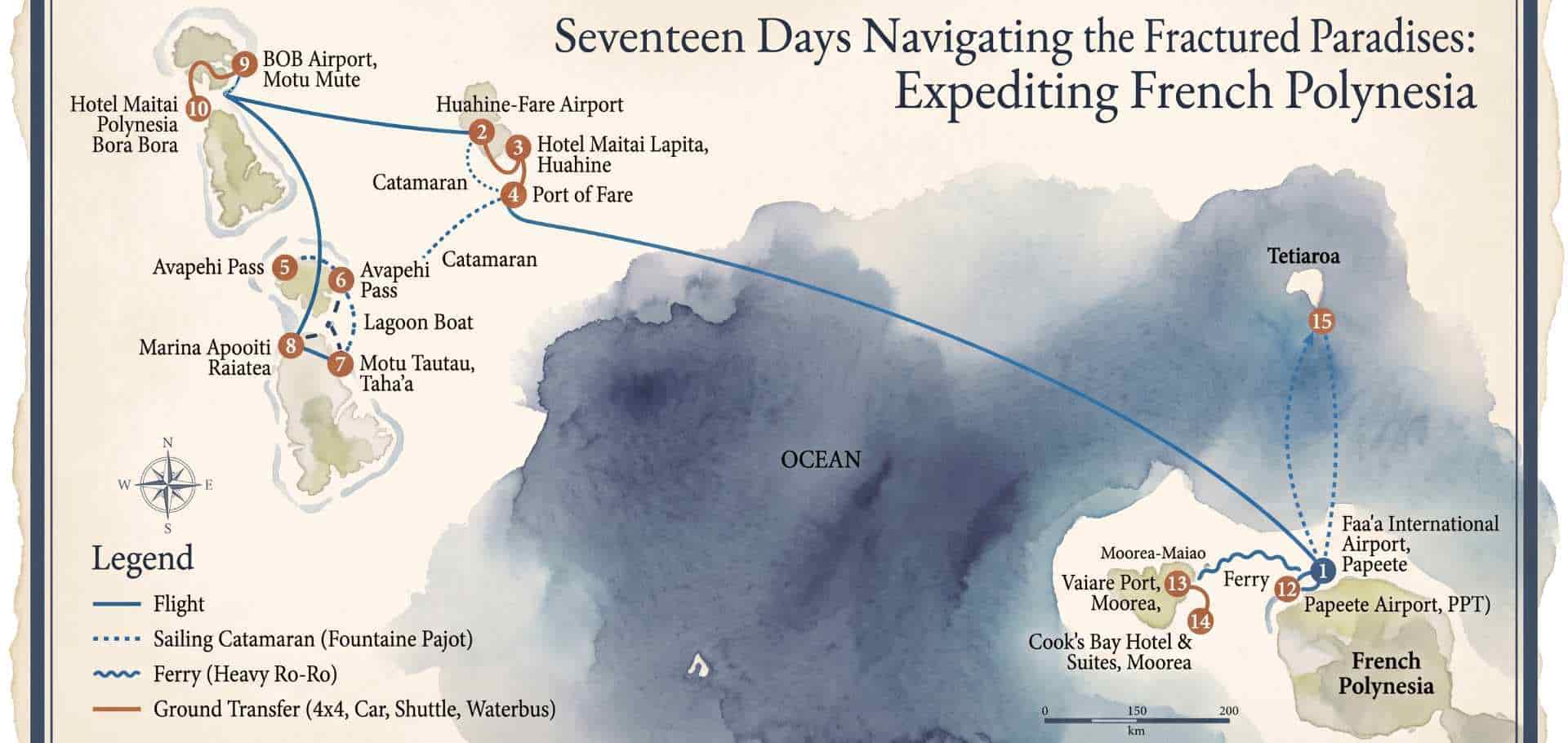
Our seventeen-day transit architecture operates with military-grade complexity across a multi-modal network. We cross the equator on a Boeing 787-9, drop down to regional ATR-72 turboprops to reach Huahine, and transition to a Fountaine Pajot catamaran to run the inter-island channels. The progression demands a rigorous, daily gear reset: swapping dust-covered overland boots for coral-grade sea shoes, securing digital assets in watertight dry-bags, and monitoring Vini network cellular signals for real-time weather updates.
We feel the friction of this environment most acutely in its logistical choke points. A grueling seven-hour aviation delay at Raiatea’s exposed tarmac tests our mental endurance, forcing us to wait out flight cancellations under a heavy, humid sky before executing a midnight lagoon crossing to Vaitape on an open waterbus. Yet, the reward lies in the precision of the sailing. Navigating the Taha'a lagoon requires constant vigilance; we track the depth gauge obsessively, watching it fluctuate from eighty meters to less than three within a single boat length. At night, we drop a heavy spade anchor into ten meters of thick volcanic mud off Taha’a, the hulls illuminated by blue underwater LEDs that reveal a silent, circling patrol of blacktip reef sharks.
On land, the movement remains relentless. We deploy three-car rental convoys to snake along the narrow, coastal ribbon of Huahine Iti, tracking stingrays in the shallows. In Moorea, we shift to open 4x4 safari pickups to scale the sheer, muddy tracks of the central caldera, the low-range transfer cases whining as we claw up toward the Belvedere lookout. Every mile gained is a physical transaction with the terrain, requiring heavy diesel engines, high-aspect sail plans, or raw human sweat to bridge the gaps between these isolated outposts.
The Human & Cultural Echo
Beneath the gloss of modern resorts lies a resilient, deeply rooted human stratum. On Huahine, we stand before the basalt-stone ruins of ancient marae—sacred ceremonial platforms built by a fiercely independent matriarchal society that resisted French colonial subjugation well into the late nineteenth century. There is a quiet gravity to these moss-covered stones, mirrored in the quiet intensity of local farmers who hand-pollinate vanilla orchids with surgical precision, curing the fragrant pods under a punishing equatorial sun.
Yet, the cultural tapestry is heavily strained by the realities of global tourism. In Vaitape, the utilitarian concrete street grid is weathered and unadorned, reflecting the stark economic divide behind the overwater bungalows. We observe the evening fire-knife dances in Moorea with a critical eye, noting where authentic, thunderous drum rhythms interface with commercial expectation. The true soul of the land reveals itself away from the stage: in the calloused hands of an elder demonstrating the art of coconut-milk pressing on a windward motu, or the silent, synchronized stroke of outrigger va'a racing teams training in the twilight of Papeete harbor.
The Calibration & The Horizon
The Society Islands demand a steep toll in logistical patience and physical exposure, but the calibration heavily favors the persistent. Standing on the wild, windward reef crest of an outer motu—with the roaring Pacific surf pounding at our feet and thousands of miles of empty, cobalt ocean stretching toward the Antarctic—the superficial world evaporates. This journey does not merely offer escape; it strips away continental complacency. As we run final laundry cycles in Papeete and prepare for the red-eye flight back across the Pacific, our minds are already pivoting toward the high-altitude, cold-weather logistics of our upcoming overland campaign in Peru. The ocean has recalibrated our tolerance for discomfort; the mountains now wait.