A Master Critic’s Exploration of Tahiti’s Beating Commercial Heart
The Threshold (In Media Res)
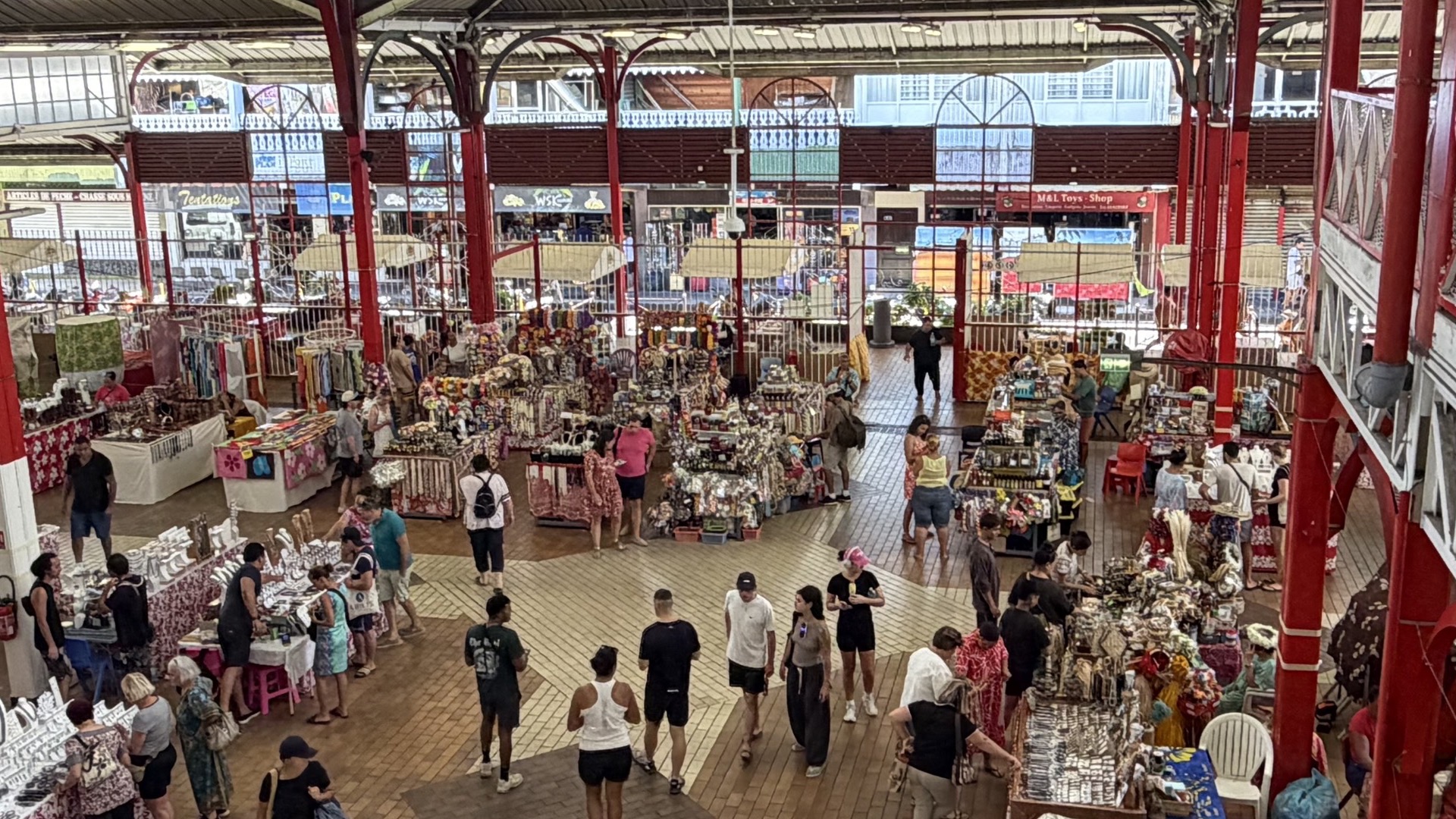
At 04:30 AM, the equatorial humidity clings to the collar like a wet wool rag. Papeete does not wake gently; it cracks open. In the blue-black shadows of Rue François Cardella, the damp asphalt slicked with engine oil and condensation begins to thrum. Underneath the towering, iron-ribbed canopy of the Marché Municipal, the silence is broken by the heavy thud of timber crates sliding from flatbed trucks. The air is thick, a heavy mixture of crushed ginger, wet diesel exhaust, and the sharp brine of yellowfin tuna dragged from the outer reefs. Here, the soft Pacific of postcards is incinerated. This is the raw bone of Tahiti.
Geography & The Stakes
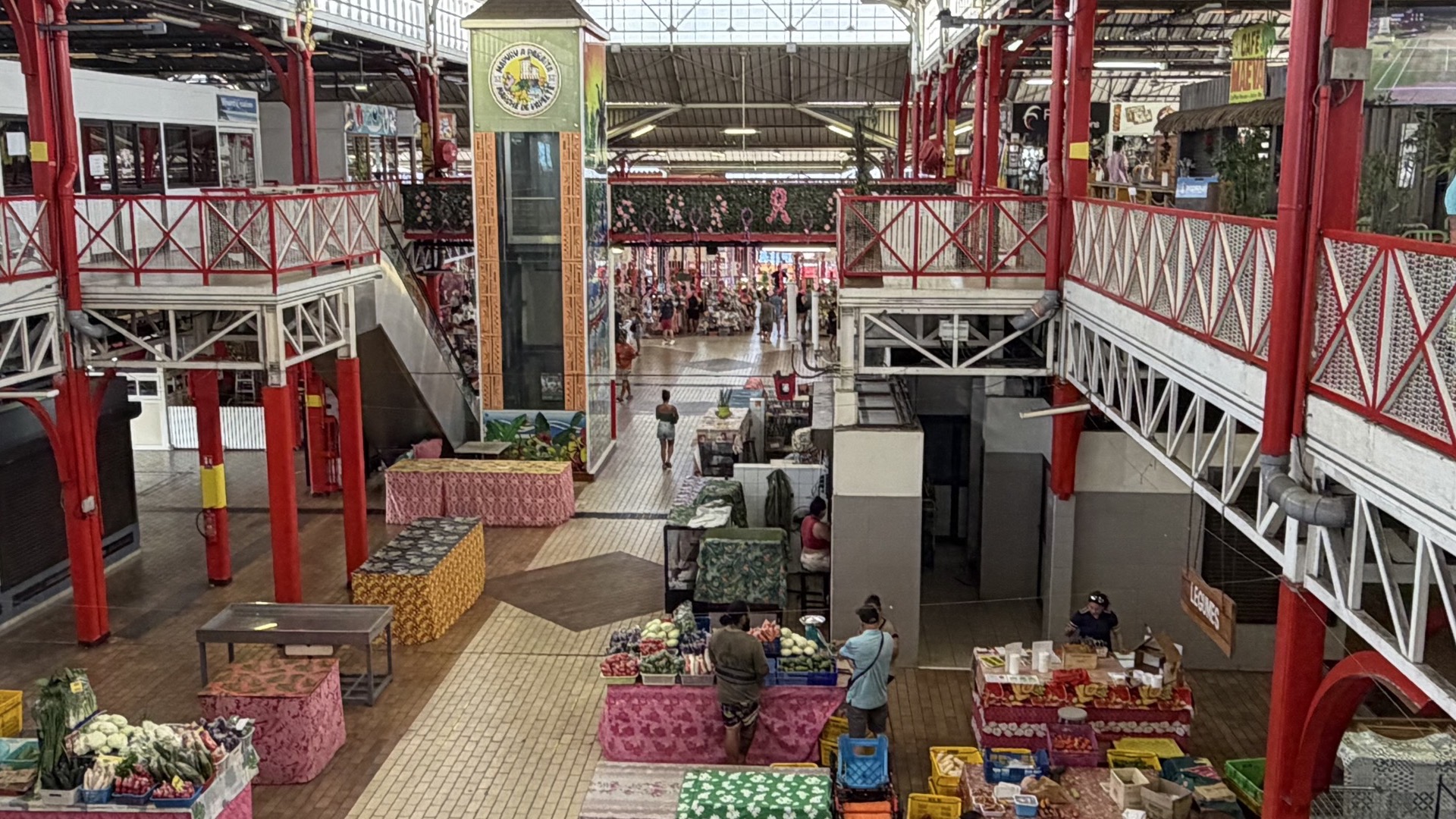
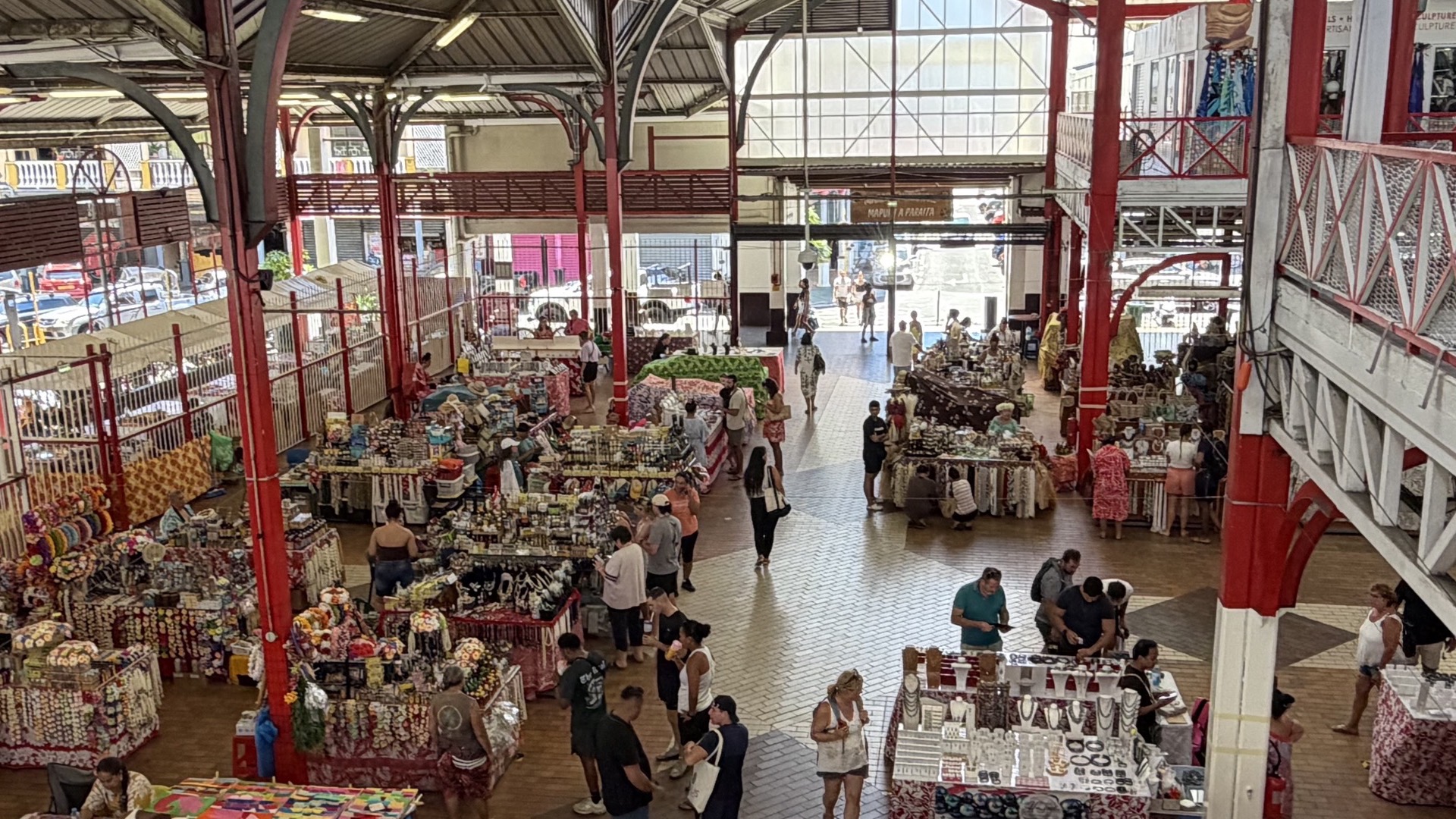
To understand Tahiti, one must bypass the manicured overwater bungalows and confront this iron-and-glass crucible at latitude 17.53° S, 149.56° W. Erected as a testament to late nineteenth-century industrial optimism, the market’s architecture fuses Art Nouveau elegance with the brutal realities of tropical moisture and salt air. It stands as a defensive bulwark of indigenous commerce against the sterilizing march of globalized retail. This coordinate is not merely a commercial depot; it is where the maritime resources of the Tuamotu archipelago and the volcanic soils of the Society Islands collide. To navigate its aisles is to witness a daily struggle to preserve a hyper-localized economy against the tide of imported convenience, demanding absolute physical stamina from both the vendors who haul the harvest and the chronicler who seeks its truth.
The Logistics & The Movement
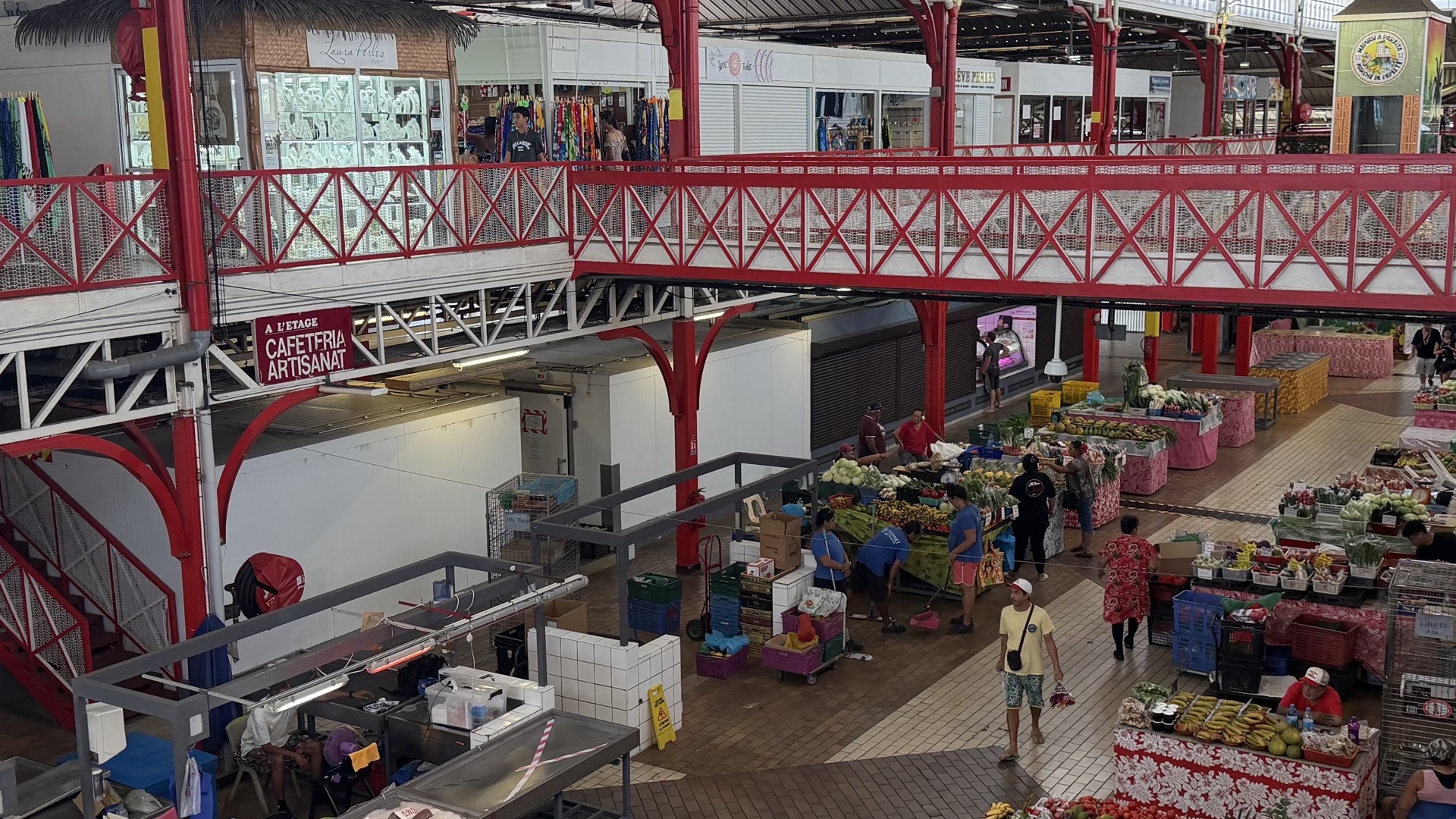
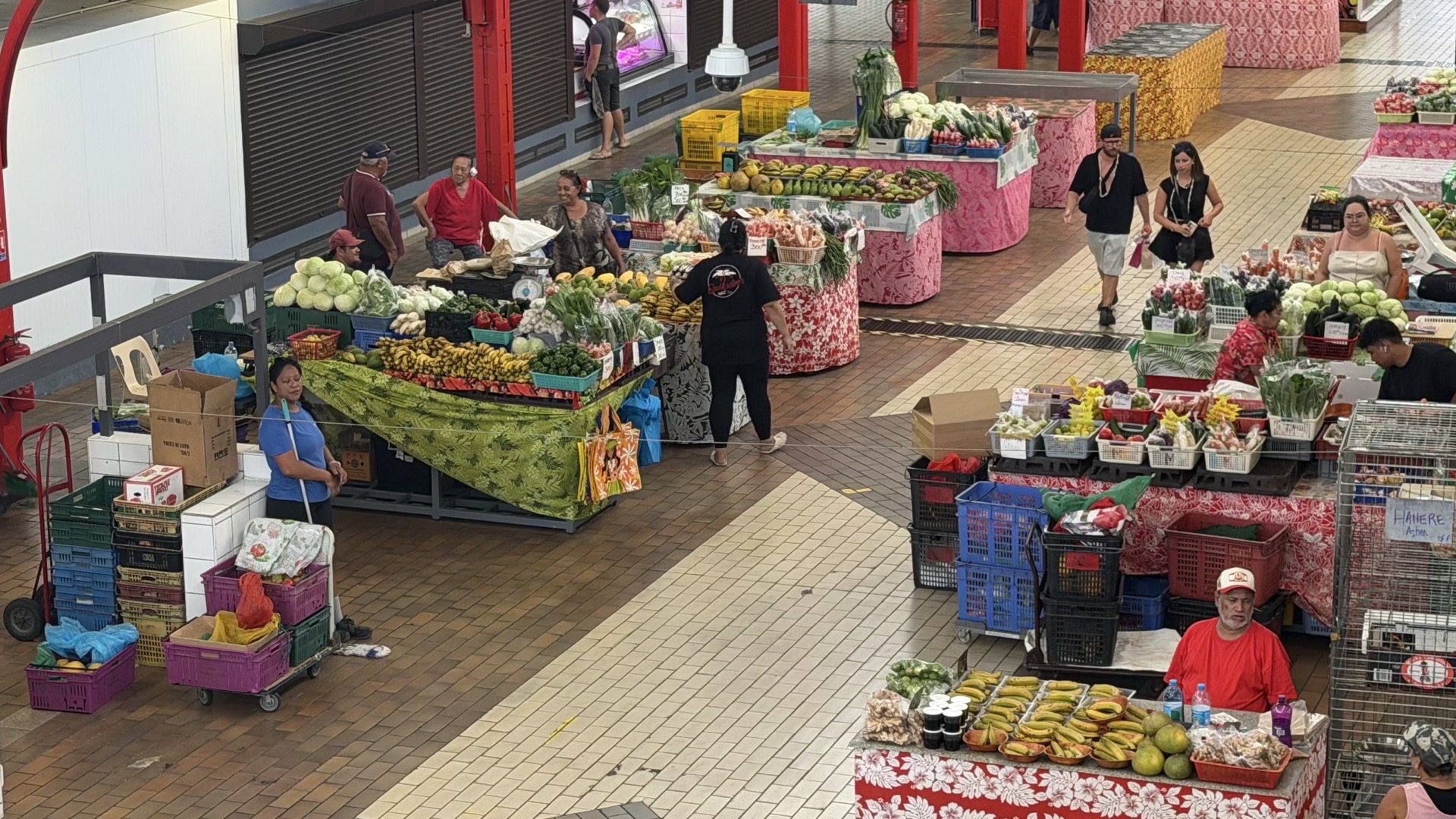
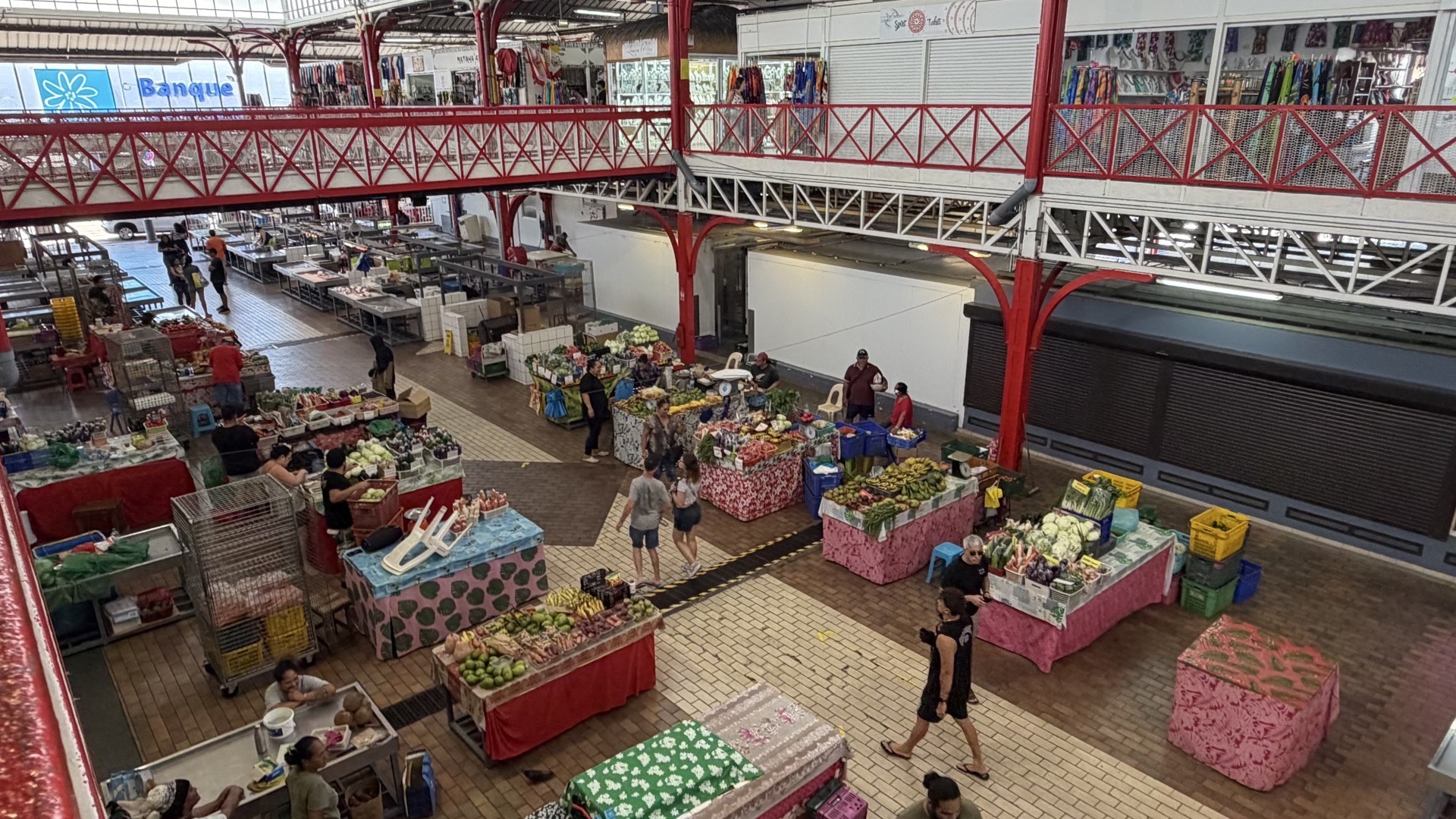
Tactically, the market must be approached with the precision of a military recon mission. The peak operational window is Saturday at dawn, when the surrounding streets are choked with temporary stalls spilling onto the curbs. Entering from the northern portal, the ground floor presents a physical gauntlet of textures and temperatures. To the left, the fish section is a wet, cold laboratory of maritime extraction. Here, skipjack, mahi-mahi, and parrotfish are laid out on beds of crushed ice, their iridescent scales dulled by the fluorescent glare. The vendors wield heavy carbon-steel cleavers with rhythmic, mechanical accuracy, segmenting flesh for poisson cru while salt water splashes against heavy-gauge rubber boots. Moving inward, the density increases as the temperature rises. Navigating the central aisles requires constant lateral adjustments to avoid low-slung baskets of taro and heavy bunches of plantains still coated in dark, volcanic mud. One must observe the structural layout: the ground floor is dedicated to immediate sustenance—the blood, muscle, and starch of the island—while the upper mezzanine, reached via concrete stairs slicked with humidity, houses the dry goods, woven pandanus baskets, and black pearls of varying grade and luster. In the transition zone between these two tiers, the olfactory environment shifts dramatically. The metallic tang of raw fish gives way to the heavy, cloying humidity of the flower section. Here, master artisans work with rapid, calloused hands, threading jasmine and tiare buds into dense, heavy crowns. The logistics of their trade are brutal; these blossoms must be harvested at night, kept cool, and woven under tight time constraints before the midday sun wilts the delicate petals. To trace this route is to experience a highly coordinated logistical ballet, where supply lines stretching across hundreds of miles of open ocean converge in a tight, two-story steel grid.
The Human & Cultural Echo
Within this dense steel framework, the human element emerges not as a performative spectacle for visitors, but as a resilient cultural continuum. The market is populated by multi-generational dynasties of vendors. Women with skin cured by the trade winds sit on upturned plastic crates, their fingers moving with mechanical speed as they construct intricate floral coronas. These crowns are not mere decorative trinkets; they are fragrant armor, worn by locals of all backgrounds to signal connection to the land. The language spoken here is a rapid, guttural mix of Tahitian and French, a linguistic hybrid that mirrors the architecture of the market itself. To converse with a third-generation fishmonger or a vanilla grower from Taha'a is to understand the deep-seated pride of the Maohi people. Their presence here is an act of quiet defiance, preserving ancestral trading patterns, agricultural techniques, and communal bonds in the very heart of an increasingly westernized Pacific capital.
The Calibration & The Horizon
Leaving the Marché Municipal as the midday sun beats relentlessly on the metal roof, the senses are exhausted but calibrated to the true rhythm of the island. The journey through this crowded, humid arena offers no sanitizing comfort; instead, it demands a physical and mental engagement with the raw mechanics of survival and culture. It forces the traveler to discard romanticized illusions of passive paradise. The reward is a profound realization: the soul of Tahiti is not found in the sterile silence of a secluded beach, but in the sweat, noise, and enduring grit of this historic marketplace.