Navigating the tectonic, color-drenched, and austere geography of Peru's historic monastic enclave.
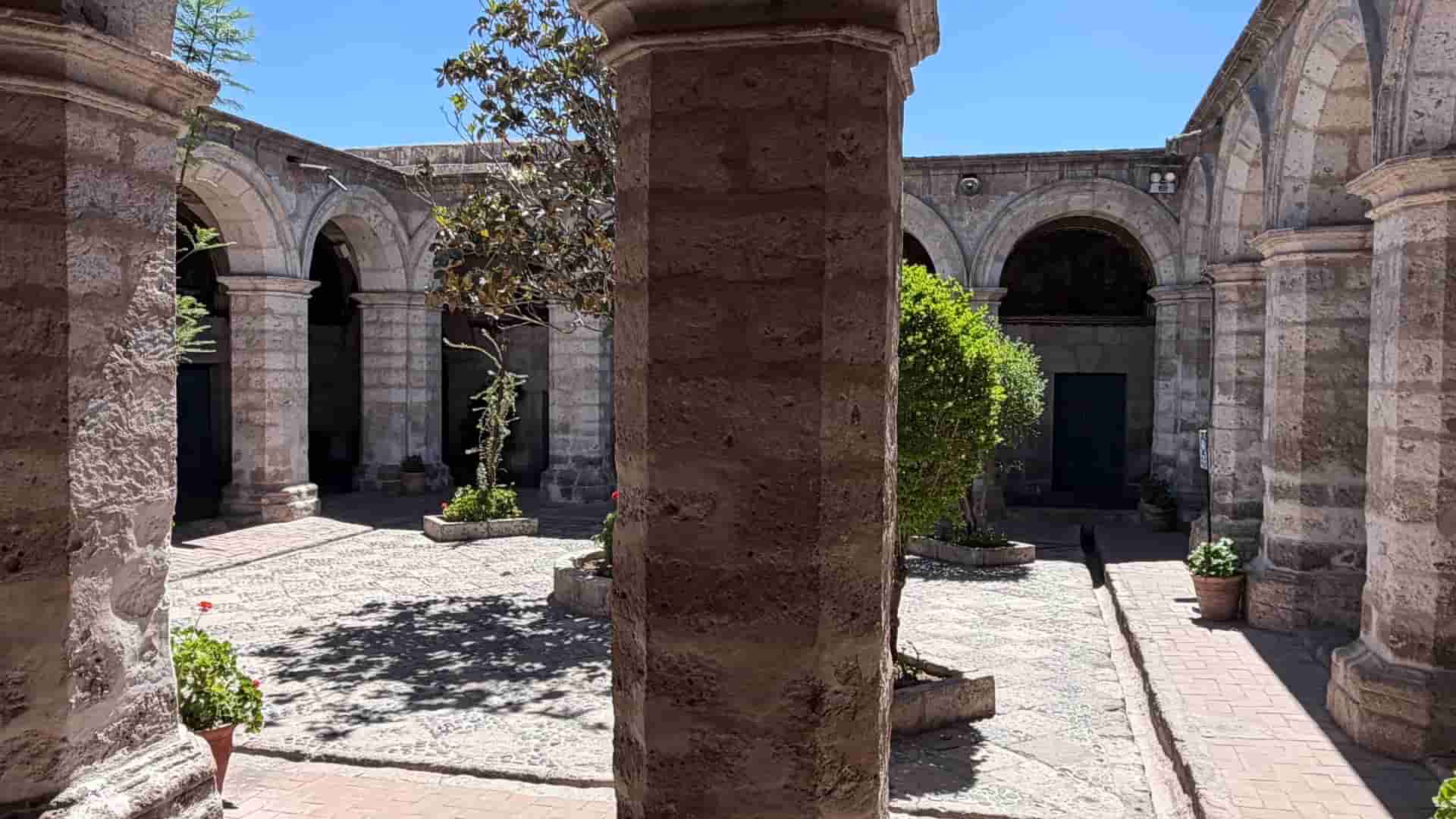
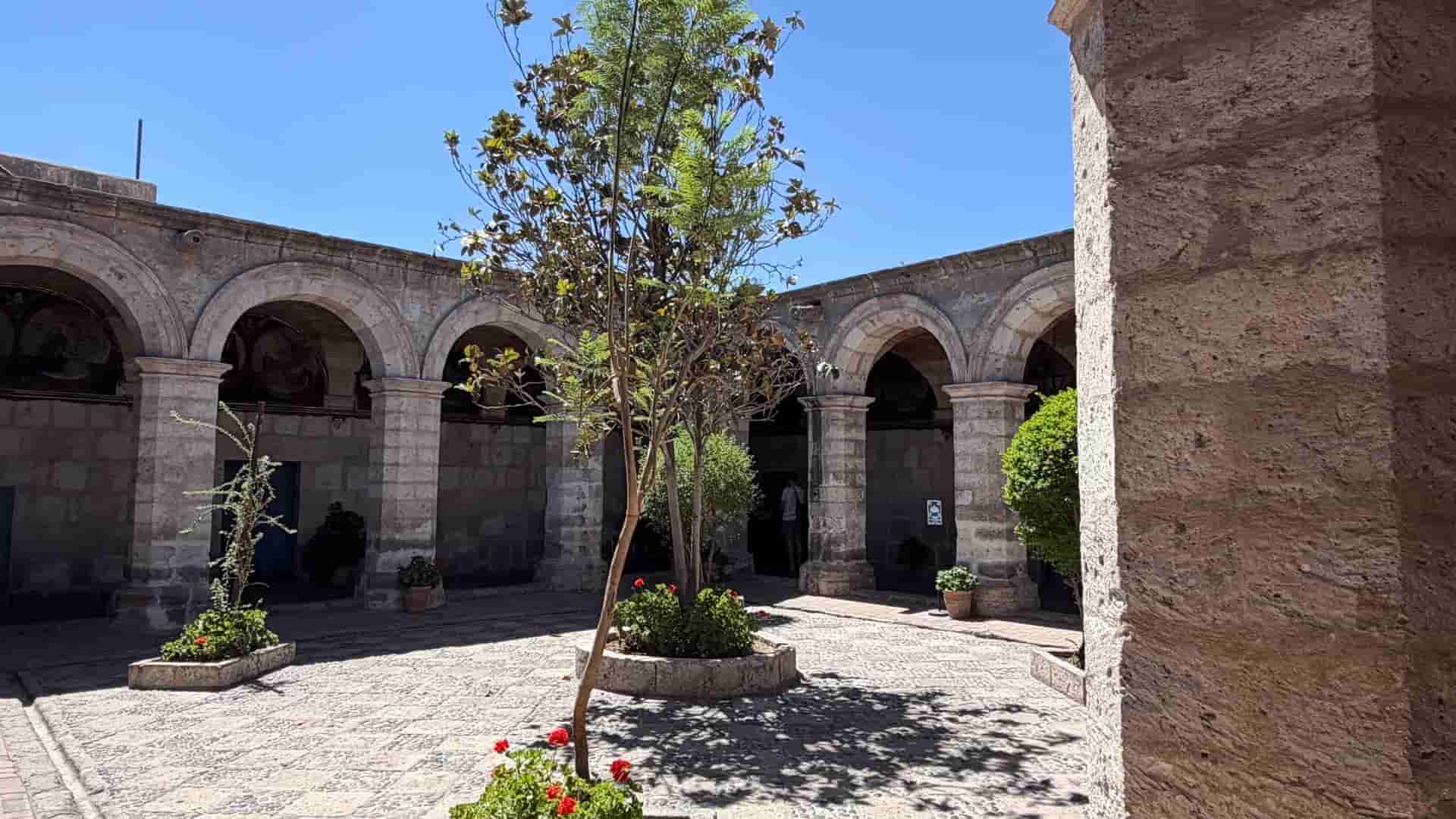
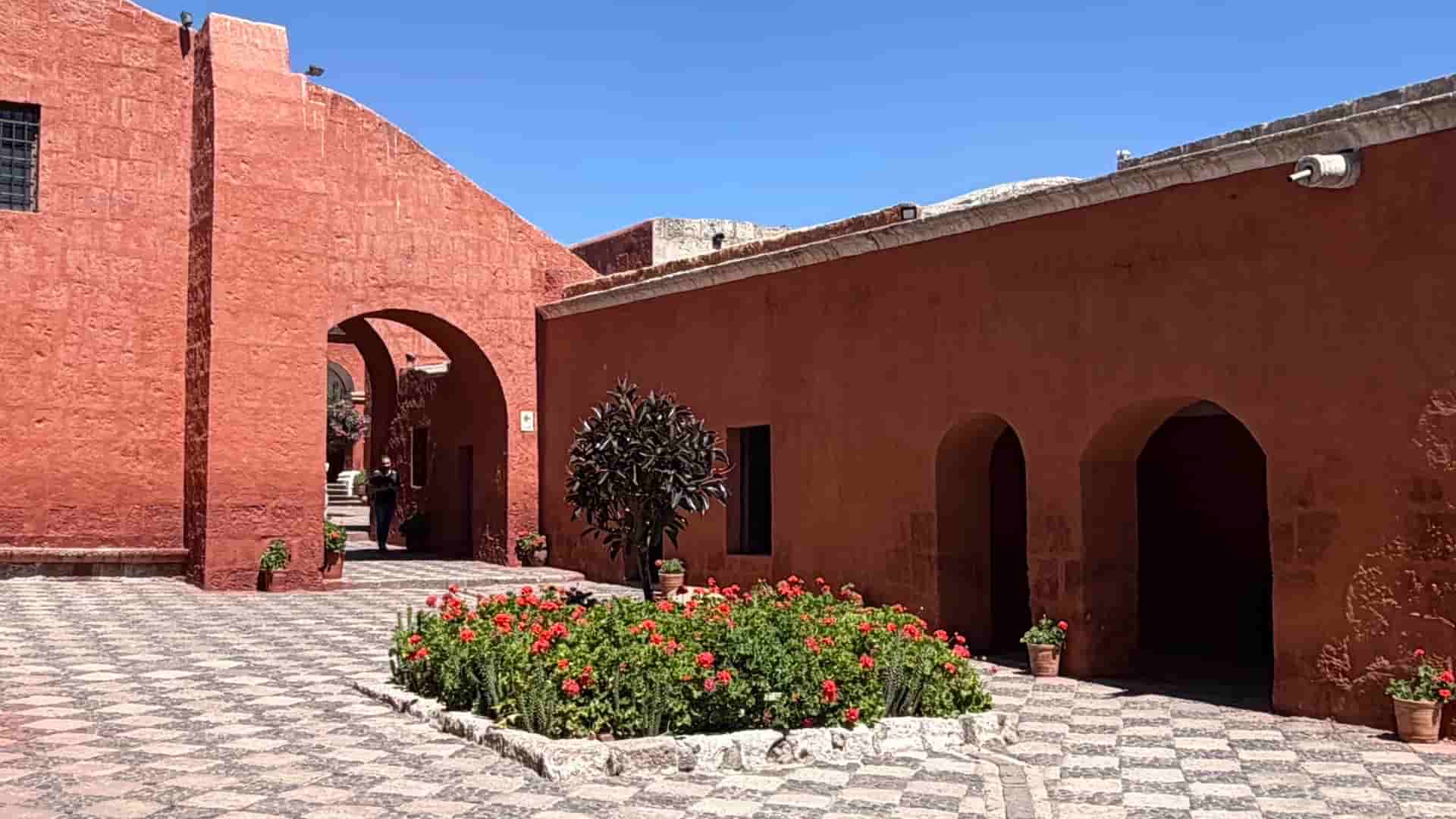
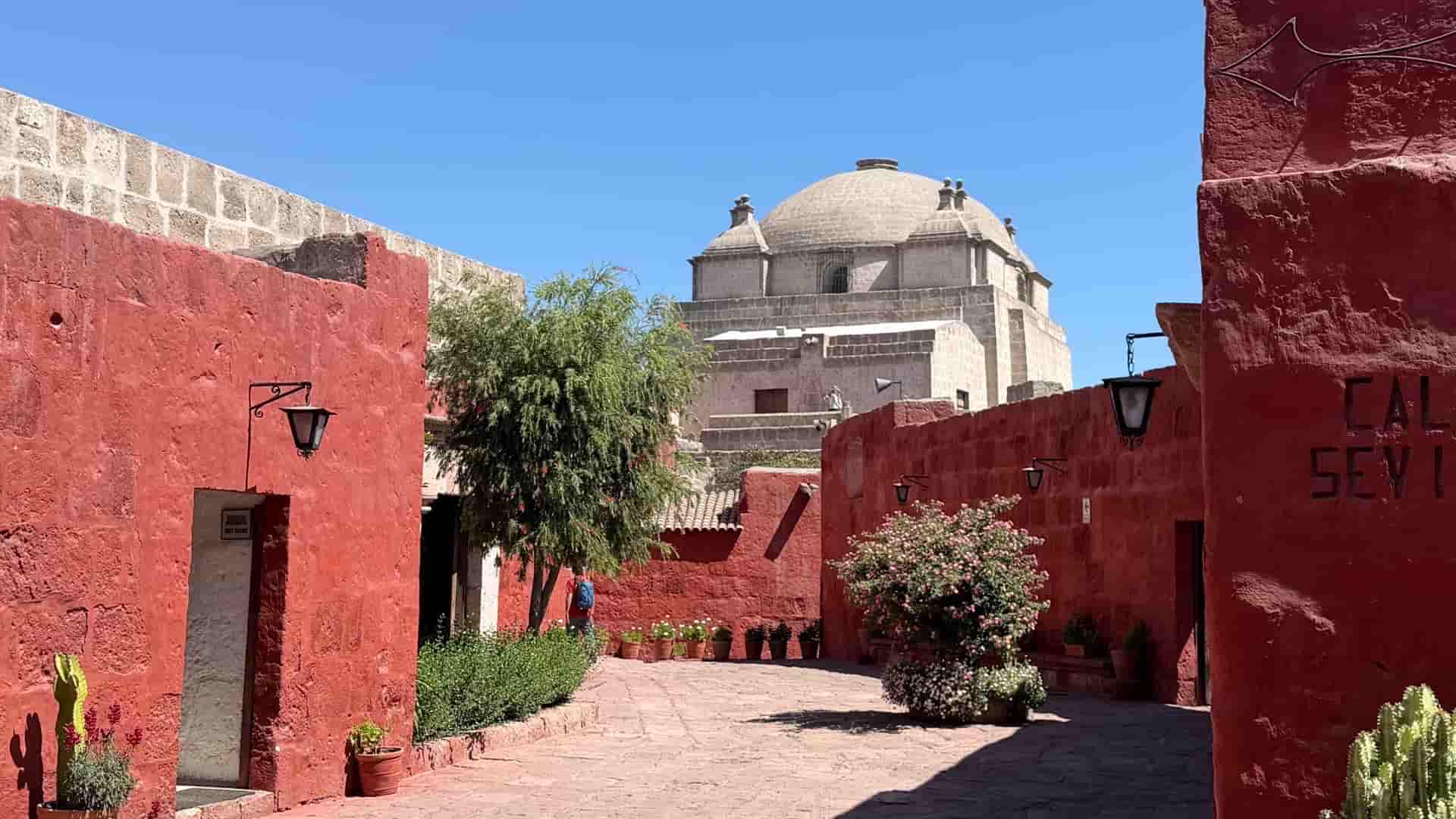
The transition is violent, not subtle. Step through the heavy cedar portal at 2,325 meters above sea level and the chaotic diesel-choked roar of Arequipa dies instantly. Here, the thin Andean air presses cold against the temples, smelling faintly of sulfur and sun-baked volcanic sillar. Shadows cut across the flagstones with razor precision, cast by walls dyed in raw, mineral-pigmented crimson and deep cobalt blue. It is mid-morning, but the silence inside these thick ashlar barriers is heavy, ancient, and absolute. Your boots strike the uneven paving stones with a sharp, resonant crack that rebounds off vaults built to withstand the tectonic temper of the ring of fire.
Geography & The Stakes
Santa Catalina is no mere retreat; it is a twenty-thousand-square-meter autonomous fortress designed to withstand both the tremors of the earth and the turbulence of human history. Founded in 1579 beneath the white, snow-capped massifs of El Misti and Chachani, this citadel was forged from sillar—white volcanic ash consolidated under immense pressure. Its location is a paradox of fragility and endurance. The region is cursed by seismic violence, yet these thick, stocky arches and flying buttresses have absorbed centuries of tectonic shocks. Within this labyrinth, the stakes were existential. To enter was to choose a living death, a self-imposed exile from the physical world. The architecture reflects this severity: high, windowless exterior walls that repelled the colonial frontier, enclosing a highly stratified, miniature society where isolation was guarded with absolute, uncompromising fervor.
The Logistics & The Movement
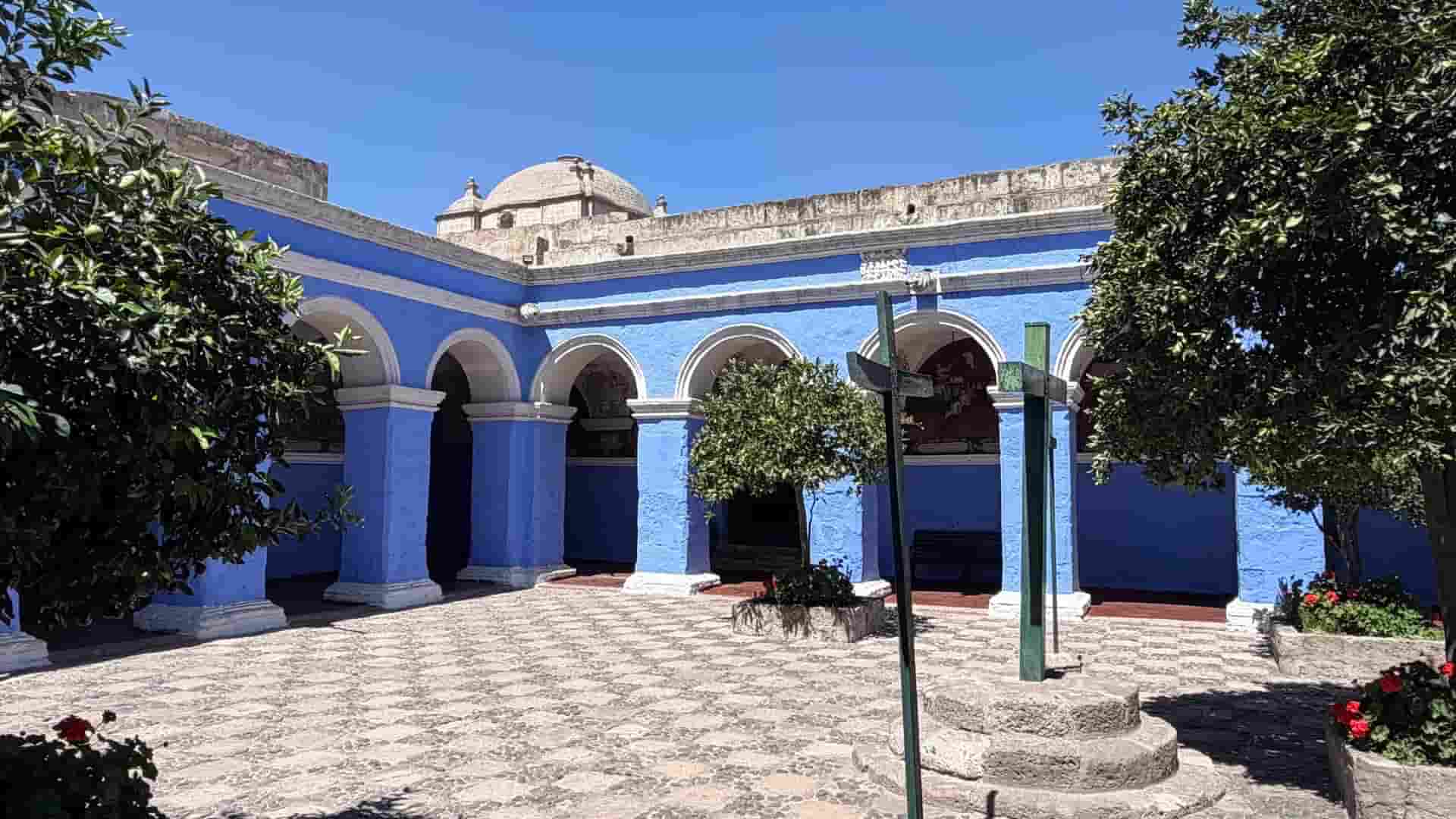
To navigate Santa Catalina is to execute a tactical exercise in spatial decompression. The route does not follow a linear grid; it mimics the organic, chaotic growth of a medieval Spanish village, adapted to the high-altitude desert. You begin in the Novice Cloister, where the walls are washed in an intense cobalt blue that vibrates under the fierce equatorial sun. The light here is merciless, bouncing off the textured sillar and forcing your eyes to adjust to the stark contrasts between blinding open patios and the frigid, black mouths of cell entryways.
Moving deeper, the corridor narrows into Calle Córdova, a stone-paved passage flanked by private residential units. Unlike European monasteries of communal austerity, wealthy Dominican nuns constructed individual multi-room villas here, complete with private kitchens, sitting rooms, and servant quarters. Every doorway demands physical concession—low lintels force a deferential bow, while heavy iron latches require a firm, deliberate grip to operate.
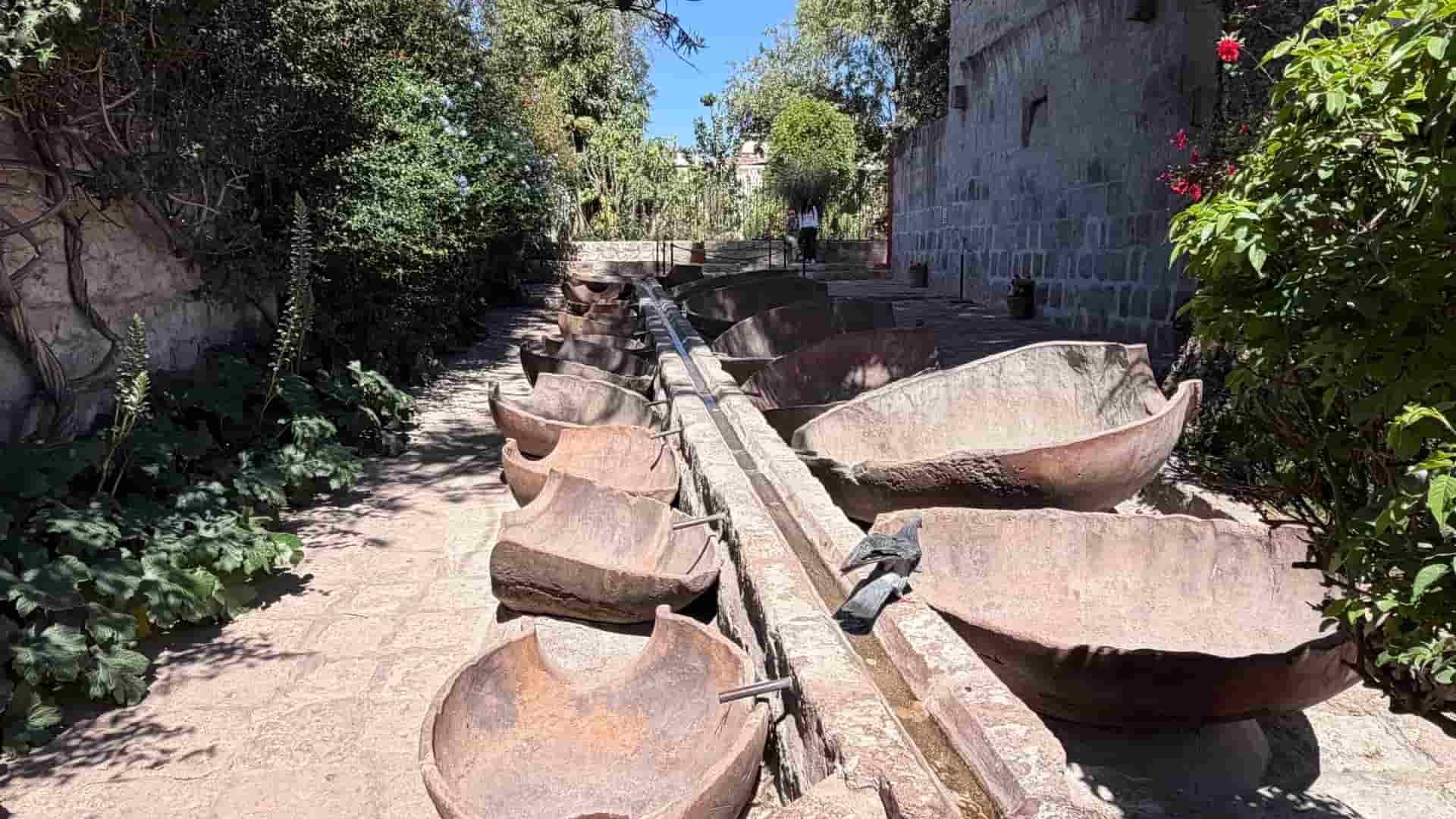
The sensory profile shifts as you reach the communal washing area. Here, the air carries a damp, mossy coolness, a stark contrast to the dry Andean wind outside. Semicircular stone channels feed water through halved earthenware jars, a rudimentary but highly functional engineering system that has survived intact for over four centuries. The footing becomes slick; the worn stones are polished smooth by centuries of leather-shod feet.
To understand the operational logic of the convent, you must study its kitchens. Step inside one of the blackened hearths. The walls are coated in thick, oily soot from centuries of burning wood and dung. There are no chimneys; smoke escaped through small, high vents, leaving a claustrophobic, charcoal-scented chamber that physically demonstrates the grinding daily labor required to maintain this cloistered existence. In these dark, volcanic vaults, the architectural precision of the Spanish builders meets the raw materials of the Andes, creating a structure that is both physically impenetrable and spiritually absolute.
The Human & Cultural Echo
The stones of Santa Catalina whisper of a highly complex human hierarchy that defied simple monastic ideals. At its peak, this citadel housed nearly four hundred women, but only a fraction were veiled nuns. The rest were servants, slaves, and young girls sent to be educated behind the high sillar barriers. The interior spaces reveal a stark class divide written in stone. While wealthy daughters of Spanish conquistadors lived in relative luxury, surrounded by imported European porcelain, fine silks, and private courtyards, their indigenous servants slept in cramped, unheated alcoves, enduring the freezing Andean nights. This was a micro-cosmos of colonial Peru, transposed into a sacred theater. Even the dead were segregated, buried beneath the flagstones according to their spiritual and social rank. As you stand in the quiet cloisters, the lingering presence of these women—who lived, bargained, prayed, and died within these color-drenched walls—feels tangible, preserved like specimens in the dry, sterile air of the high desert.
The Calibration & The Horizon
Santa Catalina demands an intellectual and physical recalibration. It is not a place for casual observation; the high altitude, the blinding solar glare, and the sheer labyrinthine complexity of the layout require active, focused engagement. The reward is not found in a panoramic vista, but in the profound understanding of how human will can carve a vibrant, self-contained universe out of sterile volcanic ash. It tests our modern obsession with transparency and hyper-connectivity. Leaving this stone fortress, stepping back into the diesel fumes of modern Arequipa, you carry the heavy weight of its silence—a reminder that some of the greatest human struggles are fought in the quietest, most secluded corners of the earth.