Deconstructing the West Building’s Neo-Classical Vaults and the Silent Collision of Renaissance and Modernist Mastery
The transition is violent in its quietude. Behind me, the heavy August humidity of Washington, D.C., clings to the pavement of Constitution Avenue. Before me, the monumental bronze doors of the West Building swing shut, shearing away the city's low-frequency rumble. Instantly, the environment re-calibrates. The air cools to a precise, conservation-grade 70 degrees Fahrenheit at 50 percent relative humidity. Footsteps strike the Tennessee marble floors with a sharp, metallic ring. I stand in the Rotunda, beneath a dome modeled on the Pantheon, where dark Tuscan marble columns anchor a vast, light-filled void. This is not a casual stroll; it is an intellectual ascent.
Geography & The Stakes
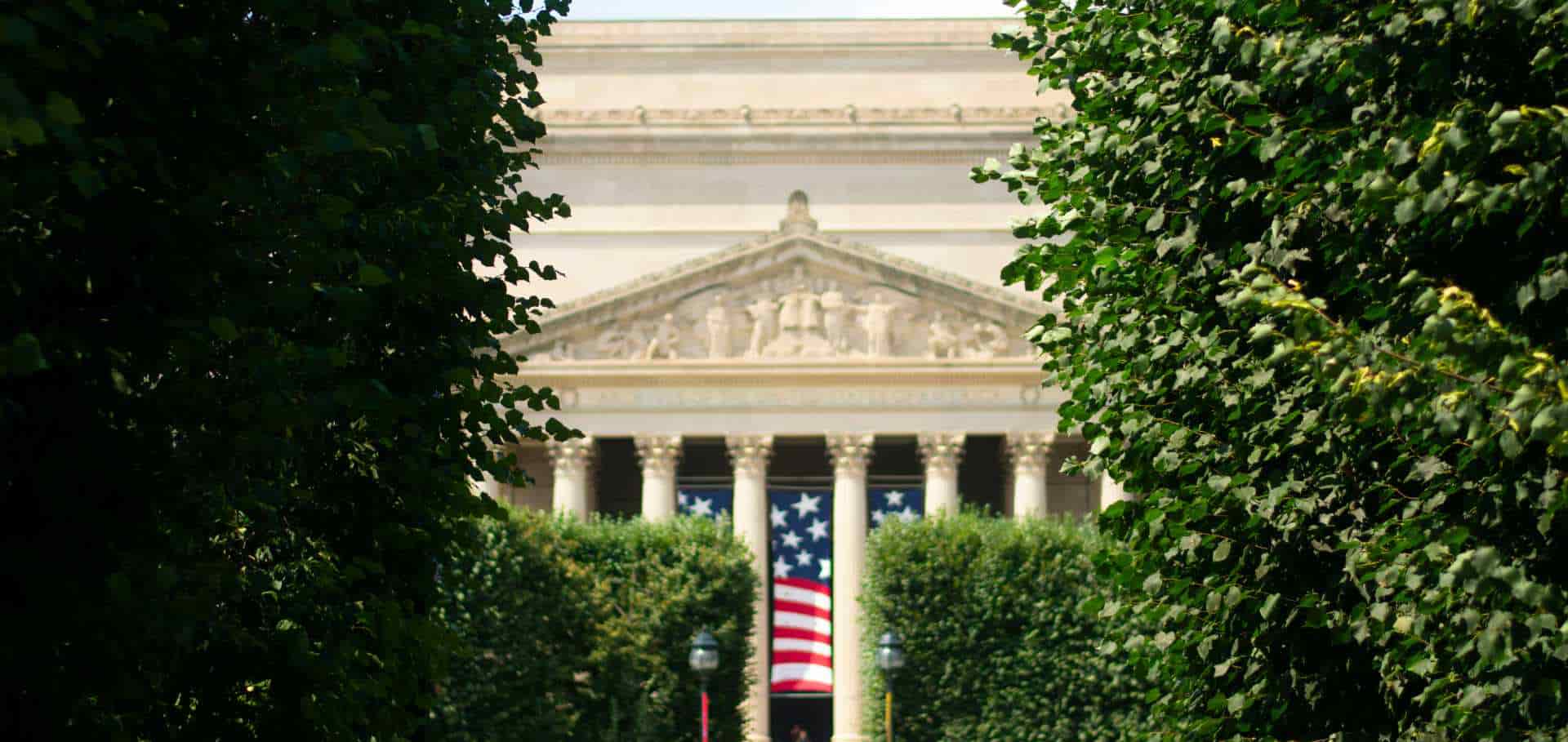
Designed by John Russell Pope and opened on March 17, 1941, this limestone fortress of culture sits directly on the axis of American power. It is a physical manifestation of a nation claiming its inheritance of Western civilization. The stakes here are structural and existential. Within these walls, we confront the raw evolution of human consciousness. The progression from the flat, gold-leafed iconographies of the Middle Ages to the dimensional rigor of the Italian Renaissance is not merely an aesthetic shift—it represents a profound neurological awakening. To navigate this geography is to trace how the human eye learned to construct space, command light, and dissect its own place in the cosmos. It demands an active mind, prepared to decode the friction between stone and soul.
The Logistics & The Movement
To conquer this terrain without cognitive exhaustion requires a strict logistical trajectory. I plot a course westward from the Rotunda into the Italian galleries. Here, the curation acts as a mechanical gear system, stepping the viewer down through the centuries. In Gallery 6, the objective is Leonardo da Vinci’s Ginevra de' Benci—the only painting by the Florentine master in the Americas. One must study the reverse of the juniper-wood panel first, where the Latin inscription Virtutem forma decorat (Beauty adorns virtue) is painted. This physical object has survived over five centuries of moisture, transport, and conflict. The paint surface, a dense network of micro-cracks, reveals Leonardo’s actual fingerprints in the oil glaze—a physical touch preserved in time.
From Leonardo, the route demands a tactical comparison. I navigate to the adjacent rooms where Raphael’s circular Alba Madonna dominates the wall. The geometry of the composition is a masterclass in mathematical tension, a perfect circle housing a complex pyramid of human limbs.
To understand the true velocity of artistic evolution, one must execute a cross-gallery comparison. Position Titian’s 16th-century portraiture next to Paul Cézanne’s post-impressionist deconstructions in the adjacent halls. Where Titian builds flesh through dozens of translucent glaze layers, Cézanne uses flat, muscular patches of pigment, treating the human face as an architectural puzzle of light and shadow.
The physical movement through this corridor is exhausting; the eyes must constantly re-adjust their focal depth. The air remains still, punctuated only by the occasional hiss of a concealed climate-control vent. I break the march at the West Garden Court. Here, among the fan palms and the steady drip of the black marble fountain, the senses recalibrate. The smell of damp soil and wet stone provides a necessary palate cleanser before transitioning to the sensory overload of the late 19th-century French galleries, where Van Gogh’s thick, urgent impasto demands a different kind of visual stamina.
The Human & Cultural Echo
The National Gallery is not merely an archive; it is a living theater of human focus. Watch the visitors. In the presence of Tintoretto’s massive canvases, human posture changes. Necks crane; shoulders drop. There is a silent, communal concentration here that contrasts sharply with the frantic digital noise of the capital outside. Here, too, are the ghosts of the workers—the stonecutters who carved the pink Tennessee marble, the curators who evacuated these masterpieces to Biltmore Estate during the height of the Second World War to protect them from potential bombardment, and the contemporary conservators who work under microscopes to stabilize centuries-old paint layers. The collection is a monument to human persistence. It represents a collective refusal to let our finest intellectual achievements decay into dust. Each canvas is a hand reaching across the abyss of time, demanding that we acknowledge the shared struggle of creation.
The Calibration & The Horizon
Leaving the gallery, descending the marble steps back into the blinding D.C. sunlight, the mind feels strangely weightless yet grounded. The physical toll of the march—the miles logged on hard stone, the intense visual focus—is repaid with a profound cognitive clarity. The National Gallery does not offer passive amusement; it demands active intellectual labor. In return, it recalibrates our sense of time. It proves that despite our modern acceleration, the fundamental questions of light, form, and human existence remain unchanged. We leave having measured our own brief lives against the enduring steel of human genius.