An Analytical Expedition through the Geometries of Artistic Will and Architectural Rigor
The transition is absolute. You step from the thick, humid air of the National Mall into the pressurized, cool sanctuary of the West Building’s rotunda. Here, the hum of the political capital dies, replaced by the hollow echo of boots on Tennessee marble and the slow, rhythmic dripping of the central fountain. The air smells of chilled stone, old oil mediums, and floor wax. Overhead, the dome arches like a secular cathedral, its dark, polished tuscan columns holding up a sky of coffered plaster. This is not a sanctuary of leisure; it is a fortress erected to preserve the volatile, beautiful residue of human consciousness.
Geography & The Stakes
To navigate this complex is to trace the physical timeline of Western expression across two distinct monuments: the neoclassical West Building, designed by John Russell Pope, and I.M. Pei’s sharp, analytical East Building. The stakes here are high. This institution was born on the eve of global conflagration in 1941, a calculated bulwark of cultural preservation while Europe burned. It houses over seven hundred years of human intellectual effort, demanding that the visitor confront the evolution of form, perspective, and belief. The geography of these galleries is a physical map of our collective mental migration, from the rigid, gold-leafed hierarchies of medieval devotion to the fragmented, anxious planes of twentieth-century abstraction. To ignore the architectural sequence is to miss the structural scaffolding of the Western mind itself.
The Logistics & The Movement
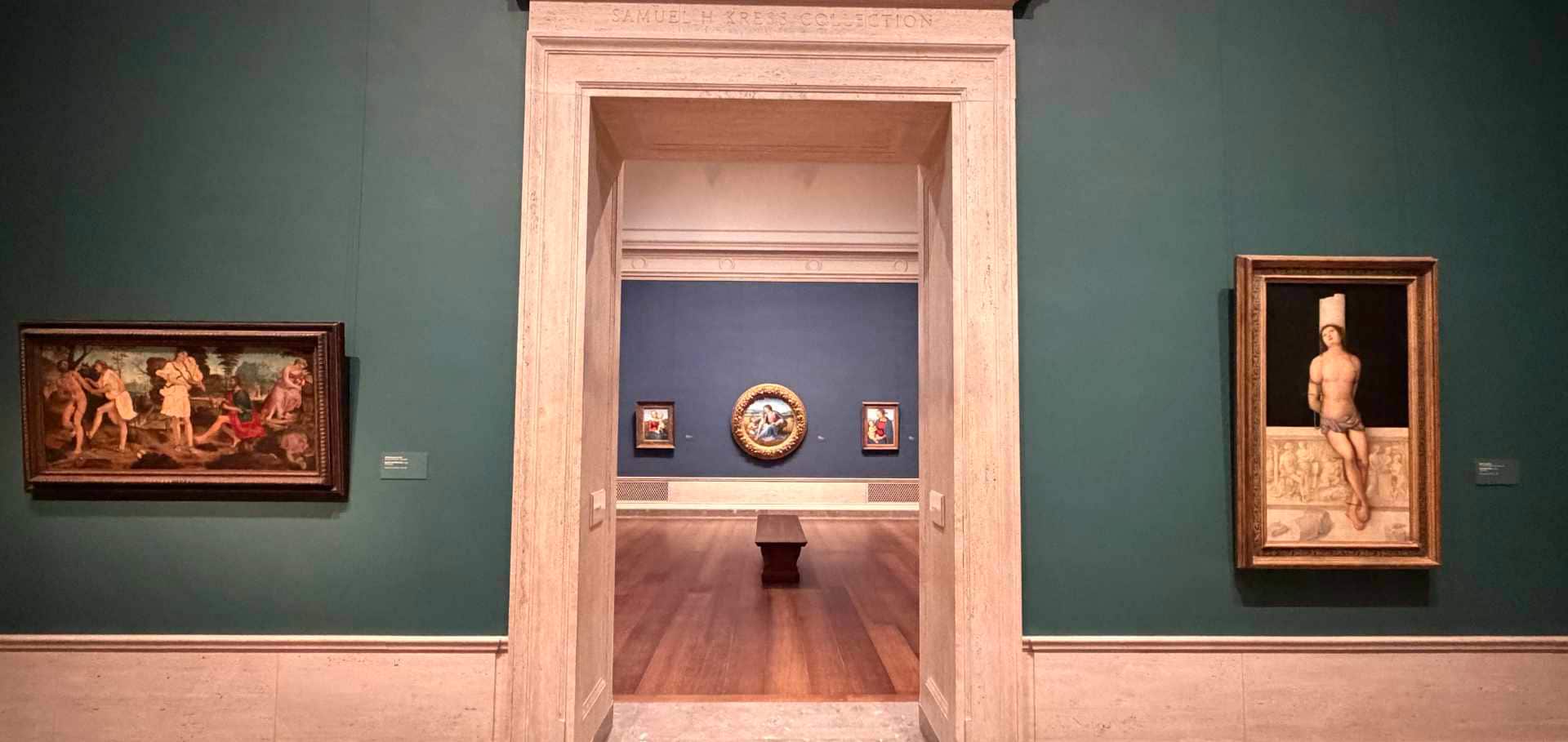
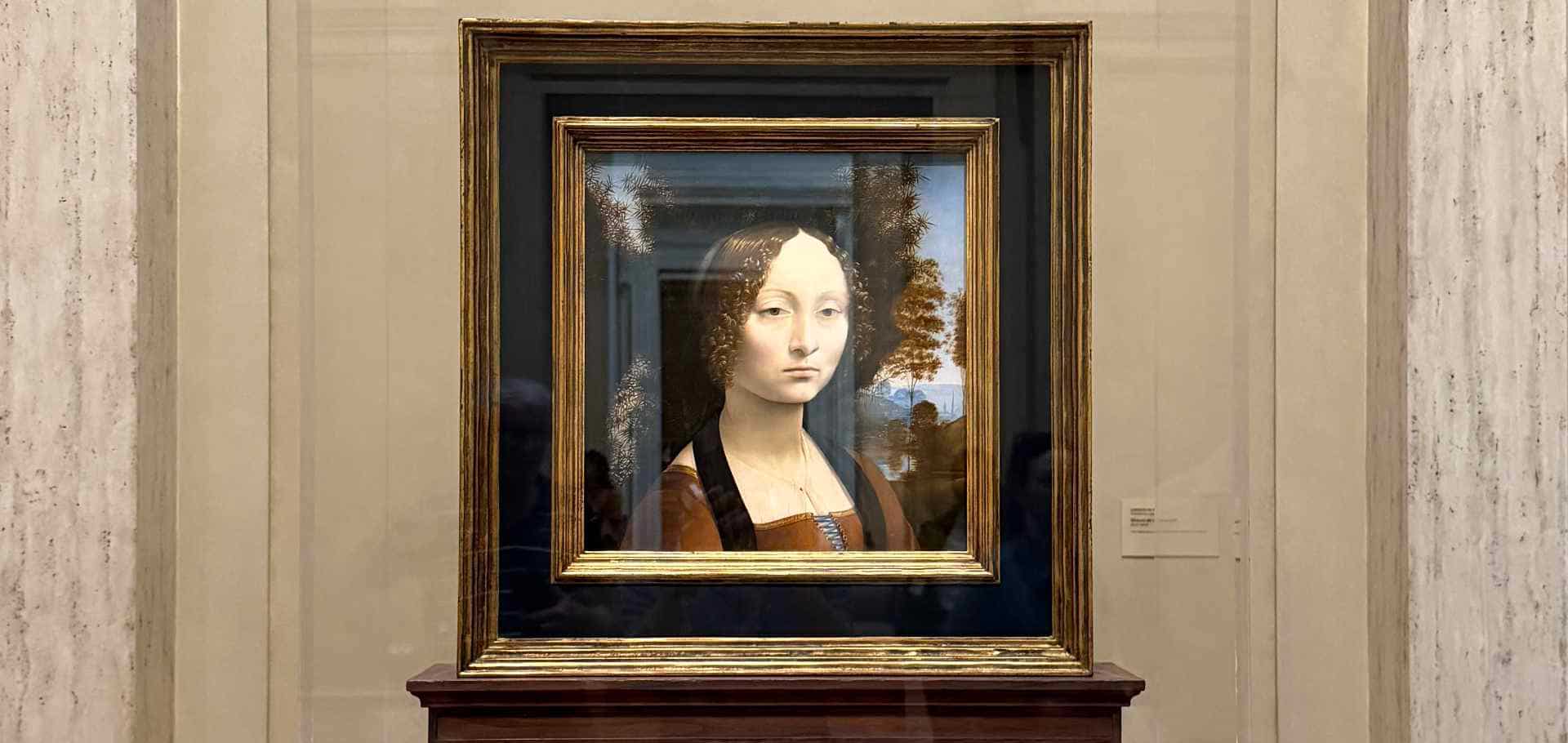
Execution requires a systematic, tactical approach to the floor plan. Avoid the aimless drift of the casual spectator; instead, execute a precise chronological march. Begin in the West Building’s main floor, navigating the northern galleries where the air is dry and kept at a constant seventy degrees Fahrenheit with fifty percent relative humidity to protect fragile wood panels. Here, you confront the only Leonardo da Vinci painting on the American continent: the portrait of Ginevra de’ Benci. Observe the reverse side of the panel, where the juniper sprig and motto are rendered with scientific discipline. Move westward to Raphael’s circular Alba Madonna, flanked by High Renaissance masterworks. Notice how the composition demands a rotational movement of the eye, a geometric lock that holds the viewer in a precise focal trap.
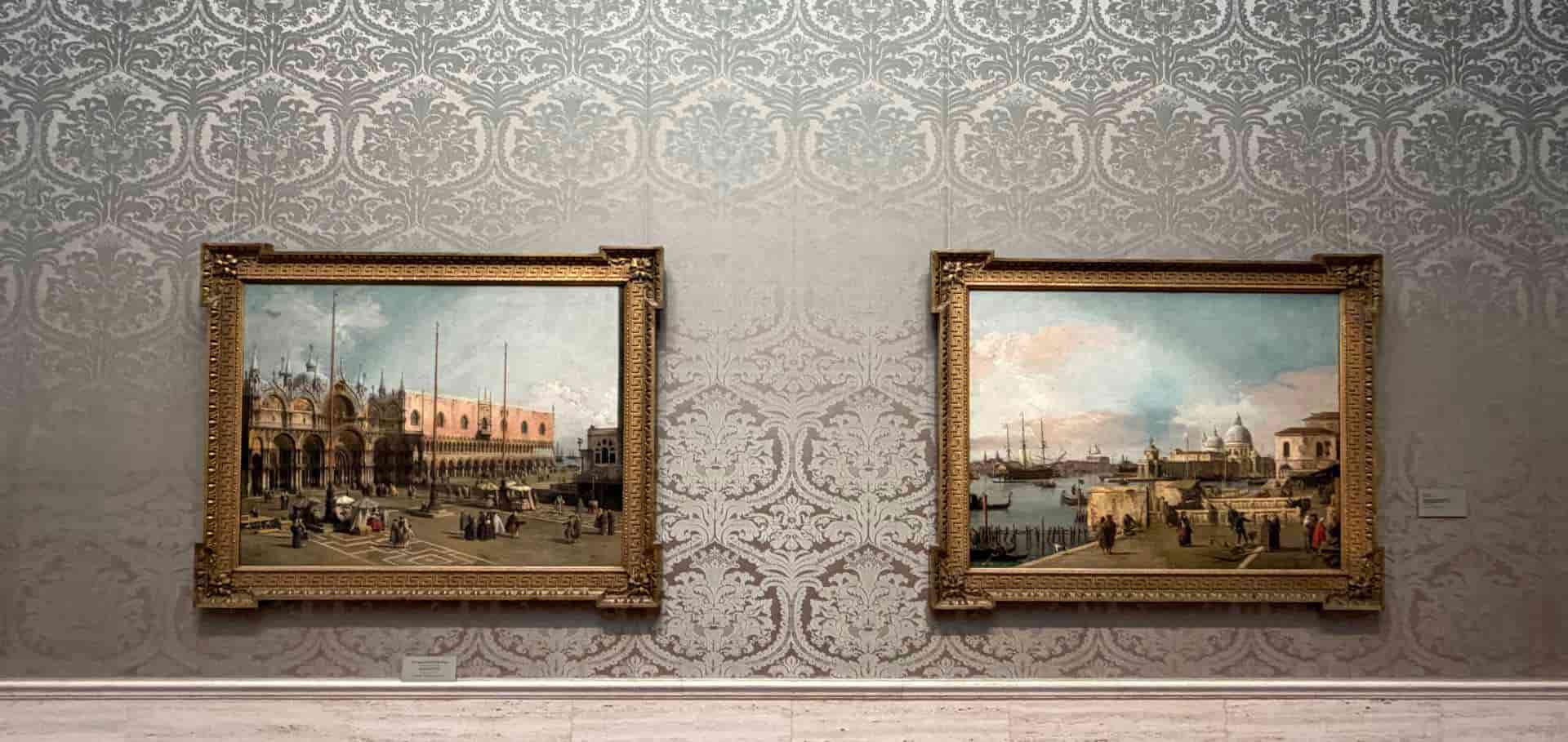
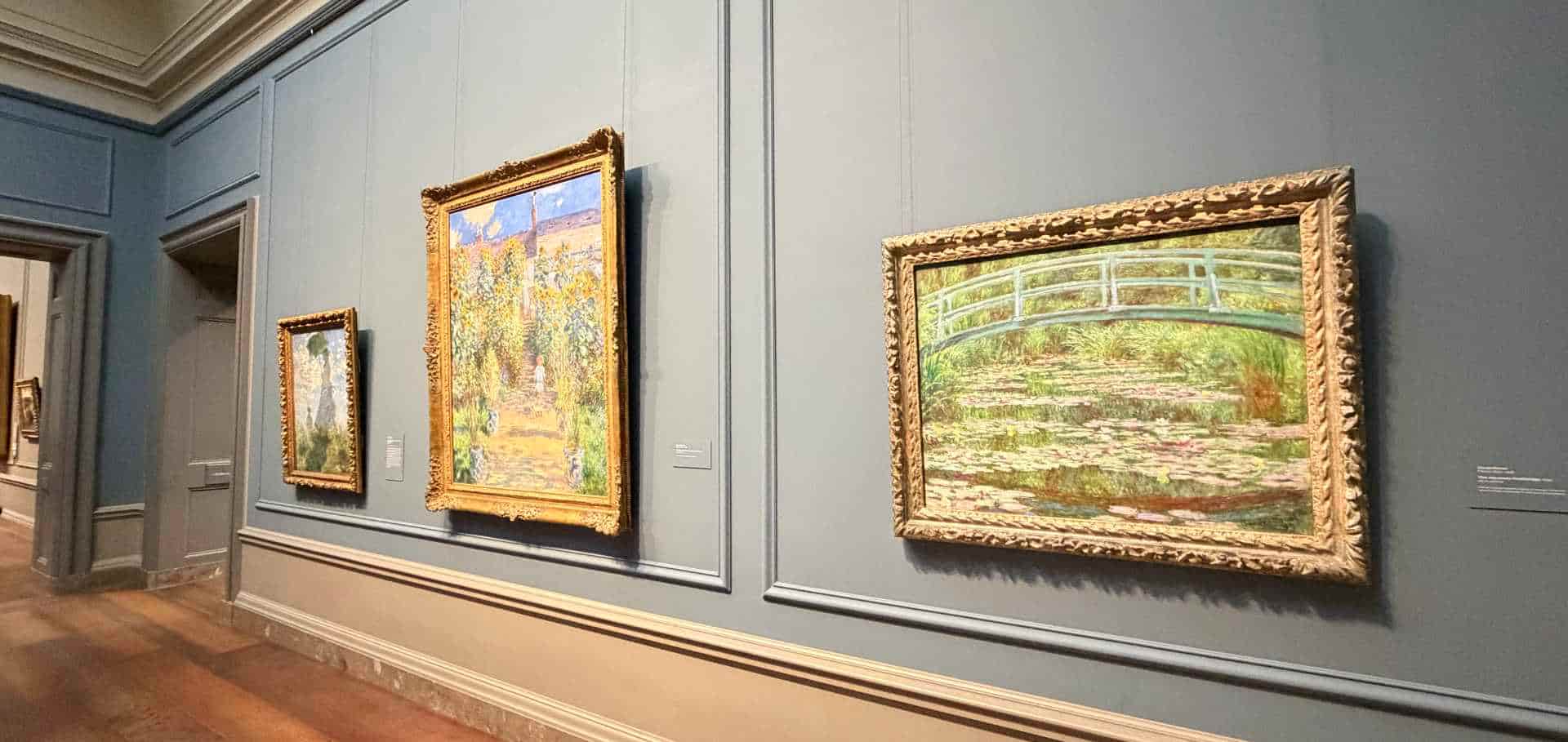
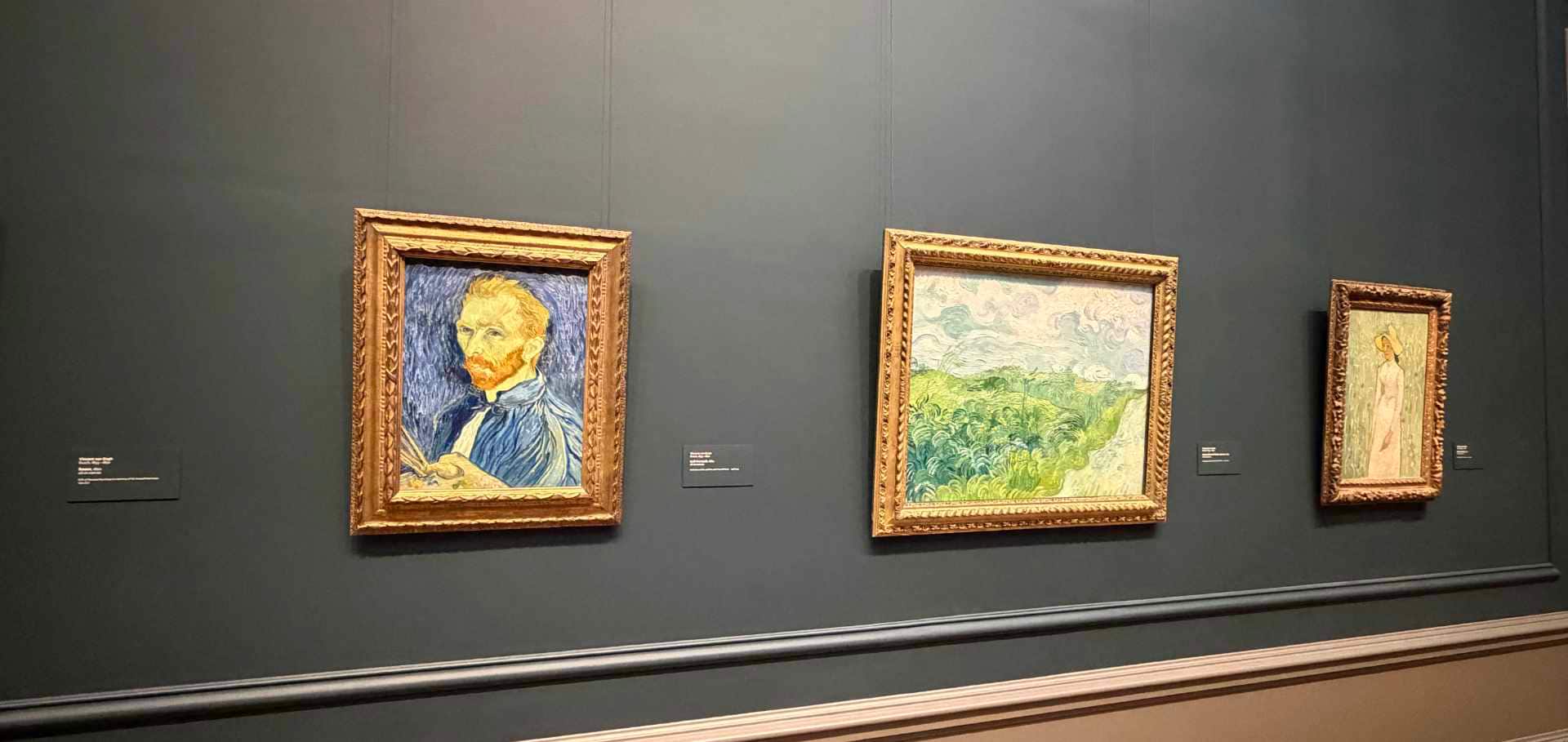
The physical friction of the route increases as you transition through the Venetian rooms—where Titian’s thick, loaded brushstrokes and Tintoretto’s muscular, dramatic lighting create a heavy, physical atmosphere—toward the nineteenth-century galleries. The transition is marked by a shift from the smooth, flat tempera of the early masters to the aggressive, thick impasto of Vincent van Gogh and Paul Cézanne.
The critical axis of this expedition lies in the comparative gallery pairing Titian’s classical portrait of a young man with Cézanne's post-impressionist response. The comparison is visceral: Titian uses micro-gradations of light to define aristocratic poise; Cézanne uses flat, tectonic patches of raw color to deconstruct the subject's skull. It is a violent intellectual leap across four centuries, executed within a ten-meter span of oak flooring.
The logistical climax occurs when moving from the West Building to the East Building via the underground concourse. Here, the physical environment shifts abruptly. The neoclassical marble gives way to the sharp, forty-five-degree angles of I.M. Pei’s concrete and glass monolith. The sensory palette changes from shadowed, cool limestone to blinding shafts of natural light pouring through a tetrahedral skylight system. You are forced to adjust your stride and your focus as the colossal, wind-driven steel and aluminum sheets of Alexander Calder's mobile oscillate overhead.
The Human & Cultural Echo
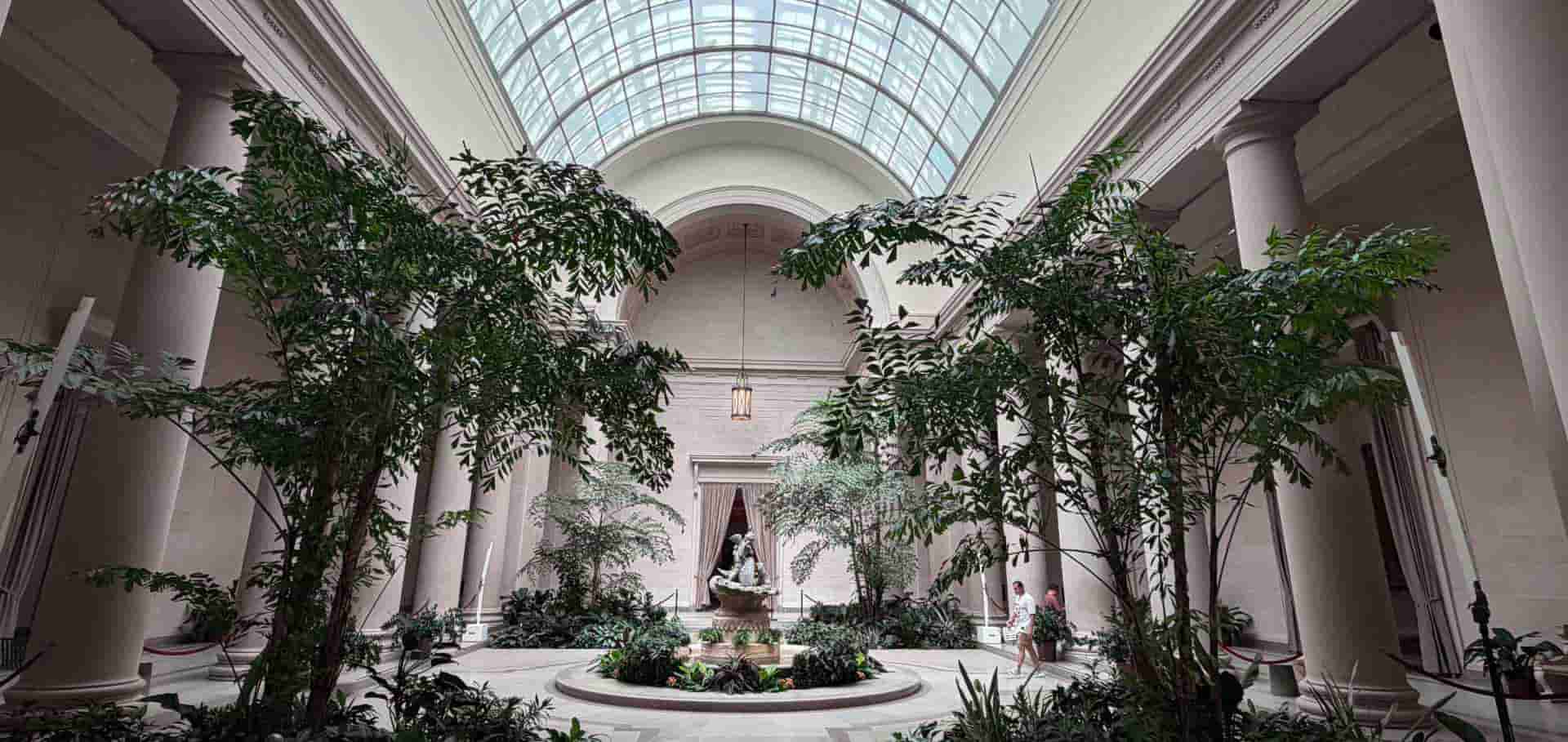
Within these silent corridors, the human element manifests not only in the brushwork of long-dead masters but in the modern figures who populate the galleries. Uniformed guards stand like sentinels at the thresholds of centuries, their quiet vigilance a testament to the collective value we place on these fragile objects. Scholars sit in quiet corners with leather-bound notebooks, translating the visual language of the Renaissance into technical prose. Occasionally, you encounter copyists sitting before nineteenth-century canvases, their eyes darting rapidly between the original and their own wet oil paints. This interaction is not merely passive observation; it is an active, cross-generational conversation. In the quiet courtyard atriums, framed by lush botanical greenery and the steady murmur of stone fountains, visitors sit with espresso in hand, their faces reflecting the fatigue of intellectual over-saturation. These spaces of respite are essential decompression chambers, allowing the mind to assimilate the vast visual data gathered from the gallery walls before re-entering the chaotic noise of the modern capital.
The Calibration & The Horizon
The physical demands of this cultural crossing are substantial; the cognitive load of processing seven centuries of human genius in a single afternoon will leave you thoroughly exhausted. Yet, the return on this expenditure of energy is immeasurable. This expedition does not offer simple, passive amusement; instead, it provides a rigorous calibration of your internal aesthetic standards. It forces you to measure your own fleeting existence against the enduring monuments of human willpower and creative grit. As you exit back into the sharp, late-afternoon light of Washington, you carry with you a sharpened perception, a mind restructured by the relentless geometry of genius.