Inside the brutal, hyper-precise world of Polynesian pearl cultivation.
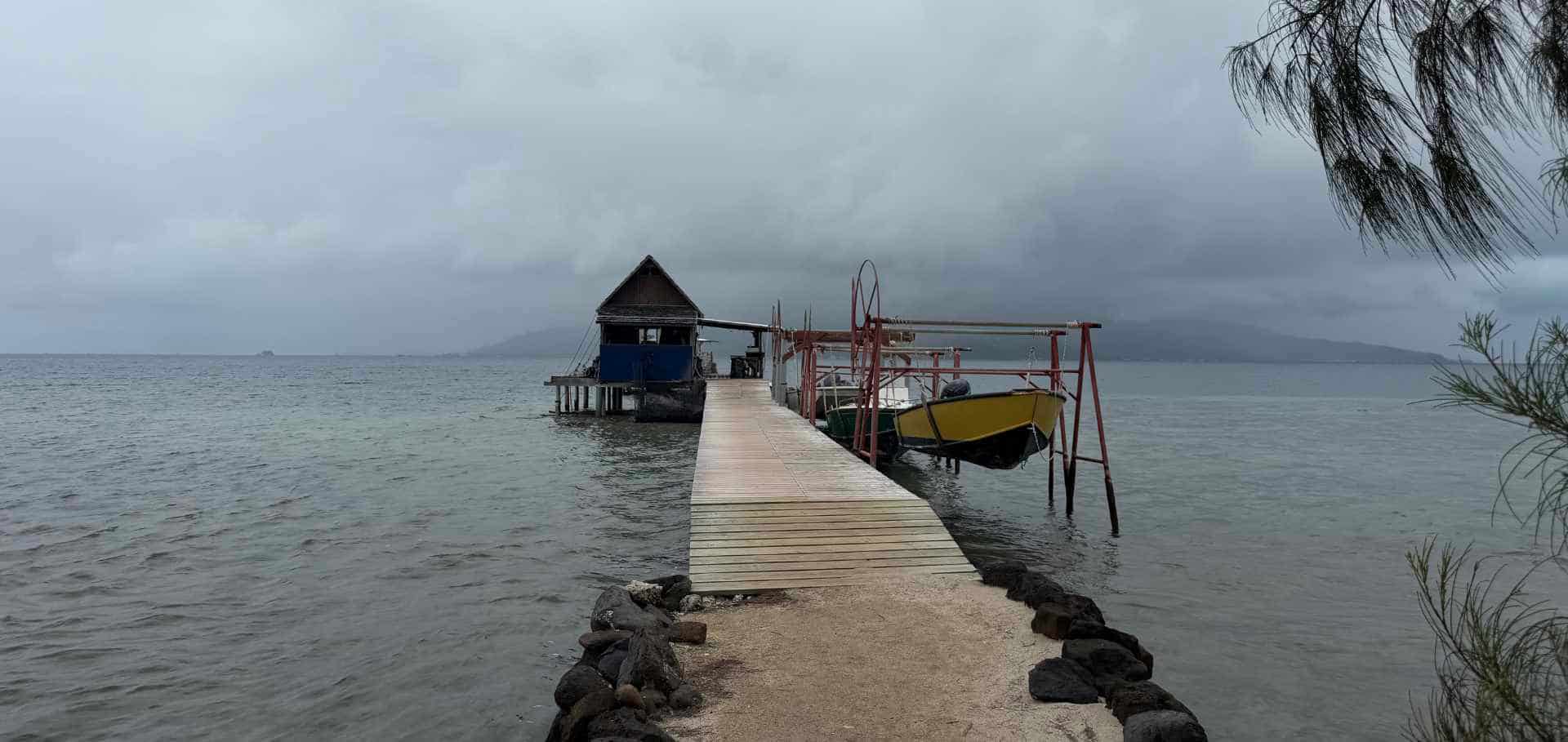
The salt mist of the South Pacific hangs heavy over the lagoon of Taha’a, clinging to the weathered, sun-bleached timbers of a stilted overwater outpost. Below, the water is a hyper-saturated, crystalline turquoise, though the air smells of raw ocean brine and rotting timber. A low, rhythmic slap of tide against the pilings provides the only metronome. Here, twenty meters from the reef edge, the morning is not a postcard; it is a humid, sweat-slick workspace. A knife-sharp wind off the barrier reef carries the tang of decaying calcium and wet wood as a local grafter prepares his scalpel for a high-stakes surgical intrusion.
Geography & The Stakes
Taha’a is an island carved by volcanic decay and buffered by an unforgiving, barrier-wrapped lagoon system. In these specific coordinates of French Polynesia, the water temperature, carbonate saturation, and tidal flush must exist in a fragile, razor-thin equilibrium. This is not a passive playground. It is an aquatic pressure cooker where the black-lip oyster, Pinctada margaritifera, fights for survival against parasitic worms, temperature spikes, and sudden storm surges. To extract anything of value from this seascape requires an intimate understanding of marine hydrology and biological tolerance. The stakes are defined by time: three years of biological investment can be wiped out in a single afternoon by an algal bloom or a shift in current. Cultivation here is a calculated gamble against the raw inertia of the Pacific.
The Logistics & The Movement
The tactical reality of pearl cultivation begins on the wet deck of the stilted platform. The process is devoid of heavy machinery, relying entirely on manual dexterity, anatomical precision, and physical stamina. First comes the harvesting of the nuclei—perfectly spherical beads carved from the thick shells of Mississippi River mussels, shipped halfway across the globe to act as the biological catalyst.
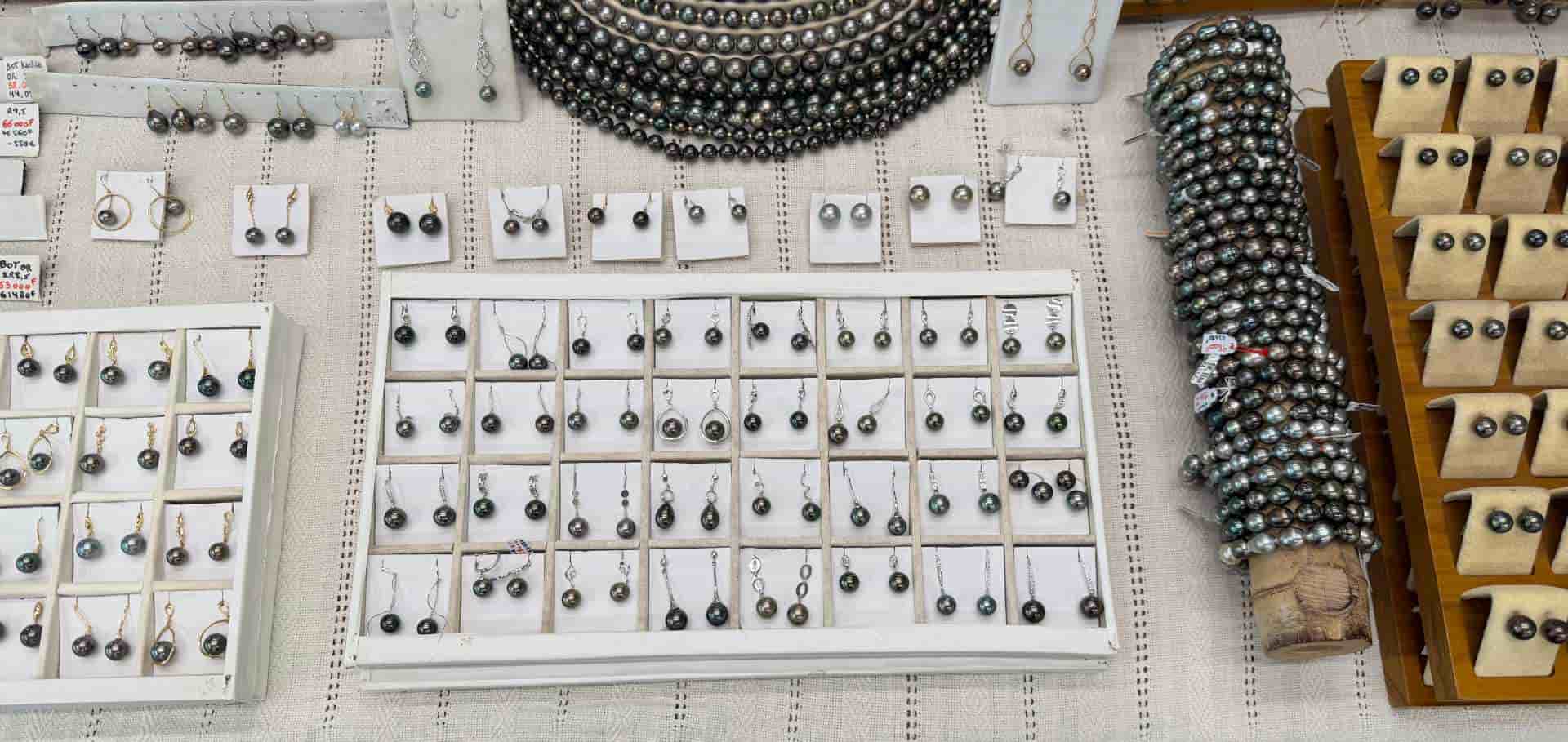
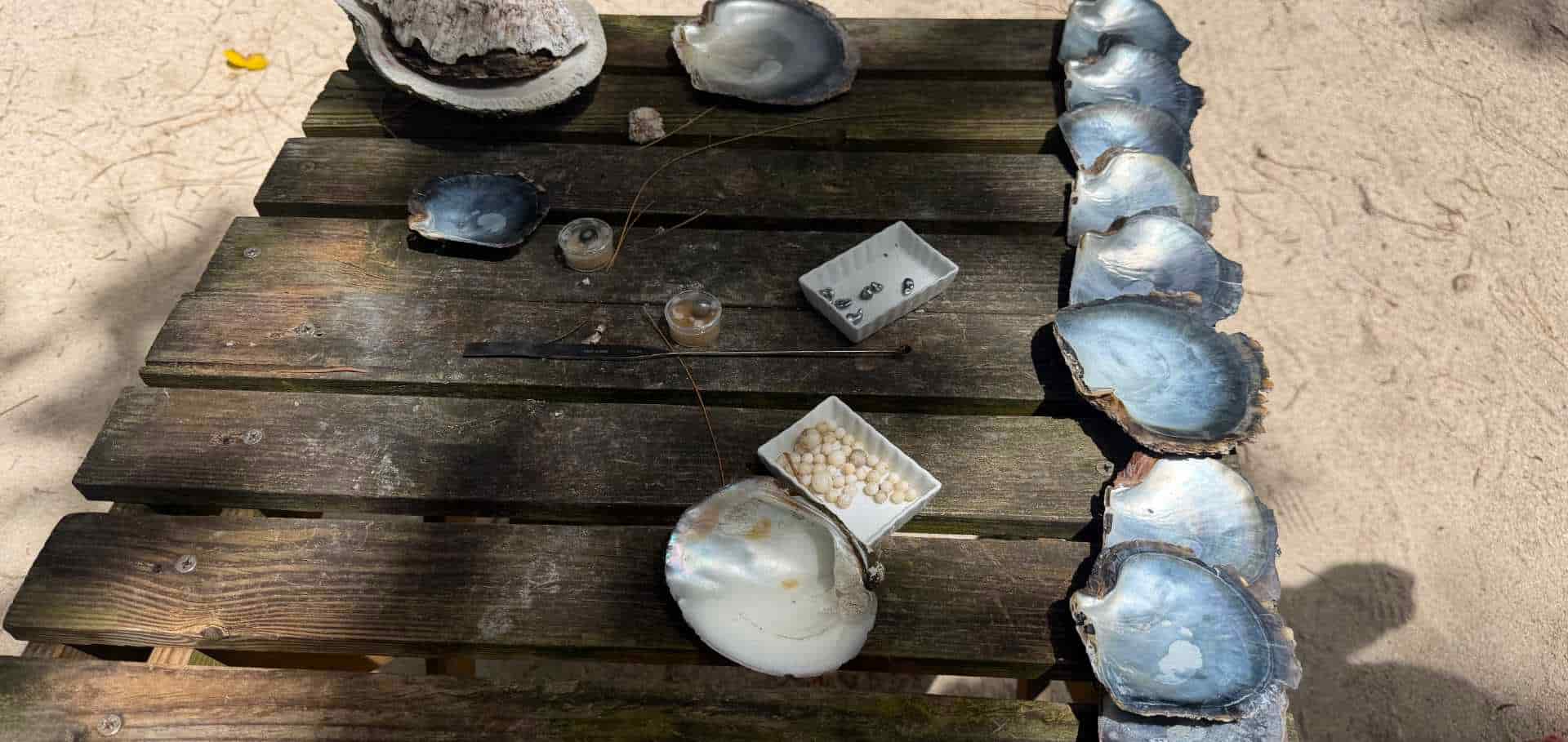
The operator's hands must be steady despite the sway of the overwater shack. With surgical forceps, a microscopic incision is made into the gonad of the host oyster. Then comes the critical maneuver: inserting the shell nucleus alongside a tiny mantle tissue graft harvested from a donor oyster. This donor tissue dictates the pearl's eventual hue—the prized peacock green, charcoal, or deep silver. If the graft misaligns by a fraction of a millimeter, the host rejects the nucleus or dies, rendering years of preparation useless.
The physical movement is relentless. Operators shuck, clean, and inspect thousands of oysters, their fingers calloused from handling the sharp, encrusted outer shells. Once grafted, the oysters are secured in heavy protective mesh pockets and suspended from longlines sunk three to five meters below the lagoon's surface.
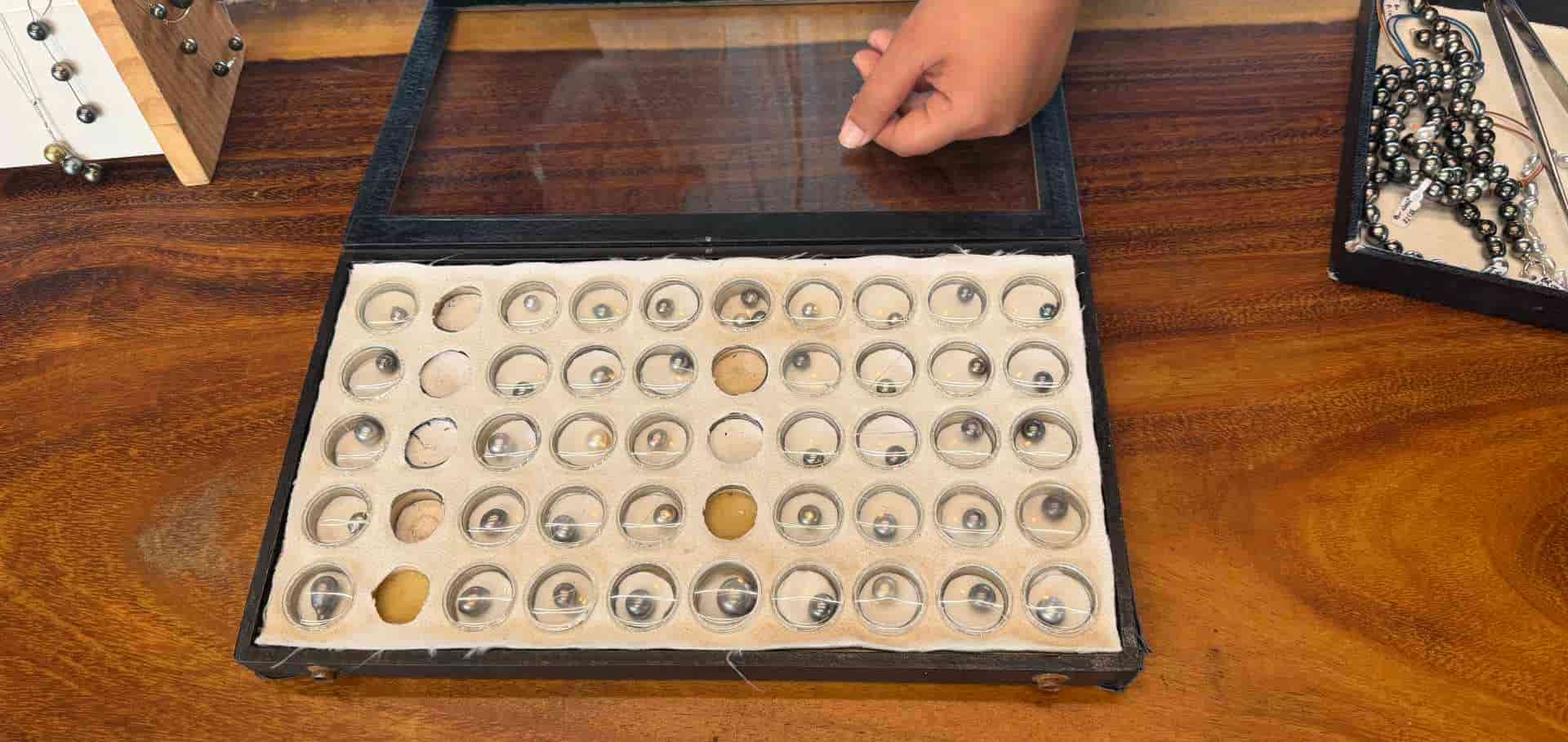
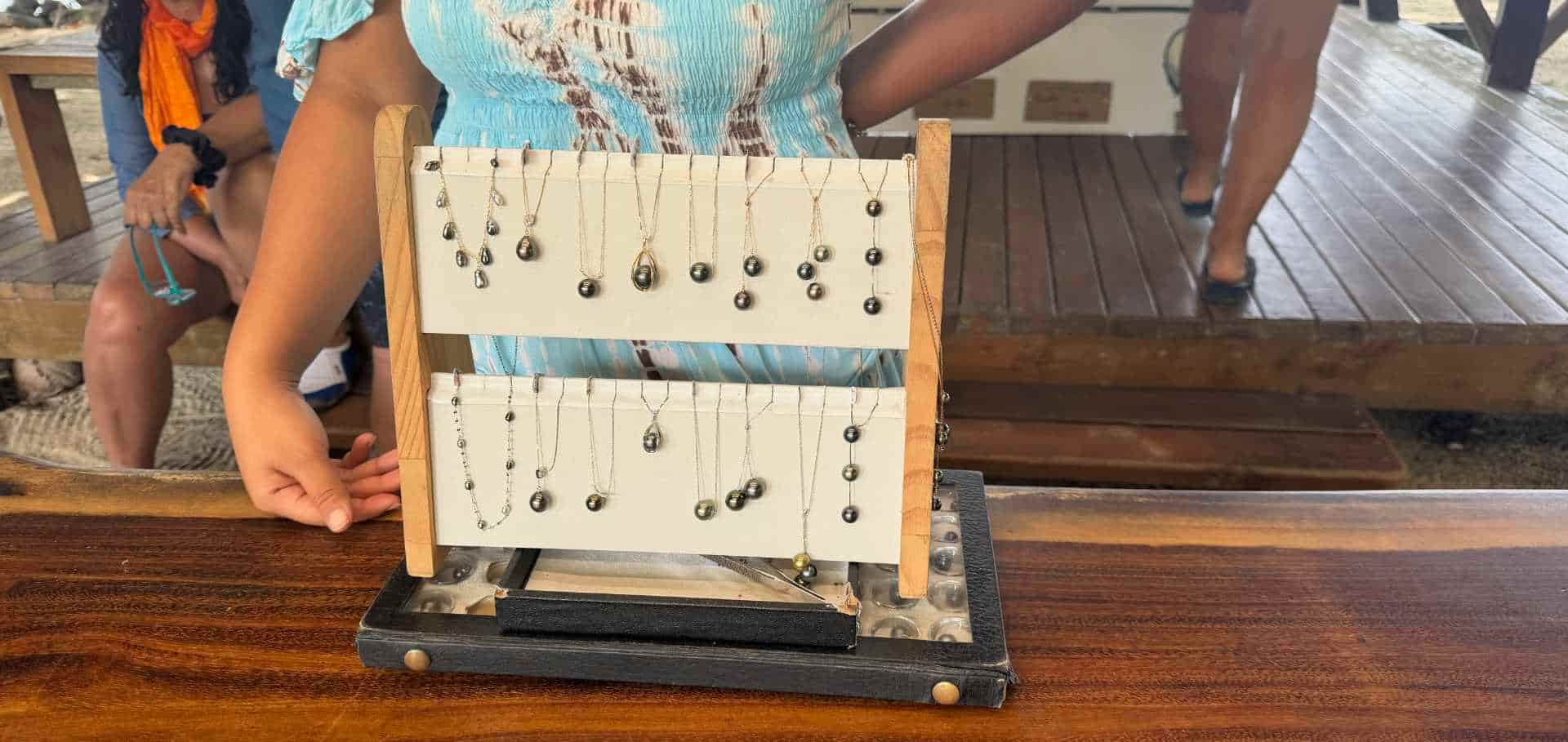
For up to thirty-six months, these lines must be raised, scraped clean of barnacles and algae, and submerged again. It is a grueling cycle of physical friction, back-breaking lifting, and constant exposure to the blistering equatorial sun. There are no shortcuts. The success rate hovers around seventy-five percent, but even within that margin, only a fraction of the harvest yields the flawless, symmetrical spheres demanded by the global market. Those rare specimens that achieve absolute spherical perfection are left undrilled and unblemished, destined to be suspended in delicate, custom-built gold cages rather than pierced by steel drills—a testament to preserving the raw work of nature.
The Human & Cultural Echo
The men and women who staff these stilted platforms are the custodians of an ancient relationship with the sea, modernized but fundamentally unchanged in its demands. Watching a master grafter work is like watching a watchmaker operate in the middle of a gale. There is a quiet, meditative silence in the workshop, broken only by the slosh of the holding tanks and the scraping of metal spatulas. These artisans possess an intuitive, non-verbal understanding of the bivalves they manipulate; they can tell an oyster’s health by the resistance of its shell valve or the subtle coloration of its mantle edge. This is not merely an industry; it is a form of marine stewardship that has survived colonialism and commercialization. The knowledge is passed down through families, preserved not in manuals, but in the muscle memory of fingers wet with saltwater and stained by the dark iridescent slime of the mollusk’s interior.
The Calibration & The Horizon
To stand on the creaking dock of Taha’a, holding a single, heavy, cold peacock pearl in your palm, is to understand the true cost of patience. It is an exercise in extreme delay of gratification. In a world obsessed with instantaneous output and synthetic perfection, this slow, friction-filled dialogue between human hand and marine biology offers a stark recalibration. The lagoon does not bend to human schedules. It demands sweat, blood, and years of silent endurance, only to offer up a handful of dark, lustrous spheres that hold the very soul of the Pacific within their layers of nacre.