Demanding Geography, Ancestral Metallurgy, and the Volatile Spirits of the Mana'o Distillery on Taha'a
Rain falls hard on the thatched roof of the low-slung outpost, its rhythm competing with the damp hum of the lagoon three hundred meters to the east. Inside, the air is thick—a heavy, hot suspension of fermenting sugar cane juice, damp earth, and the sharp, medicinal sting of high-proof alcohol. You do not arrive here by chance; you arrive soaked, wind-scoured by the passage across the channel from Raiatea, and smelling of salt. Before you sits a raw chunk of purple cane, split by a rusted machete, sweating its pale nectar into a glass of white distillate that burns with clean, vegetative heat.
Geography & The Stakes
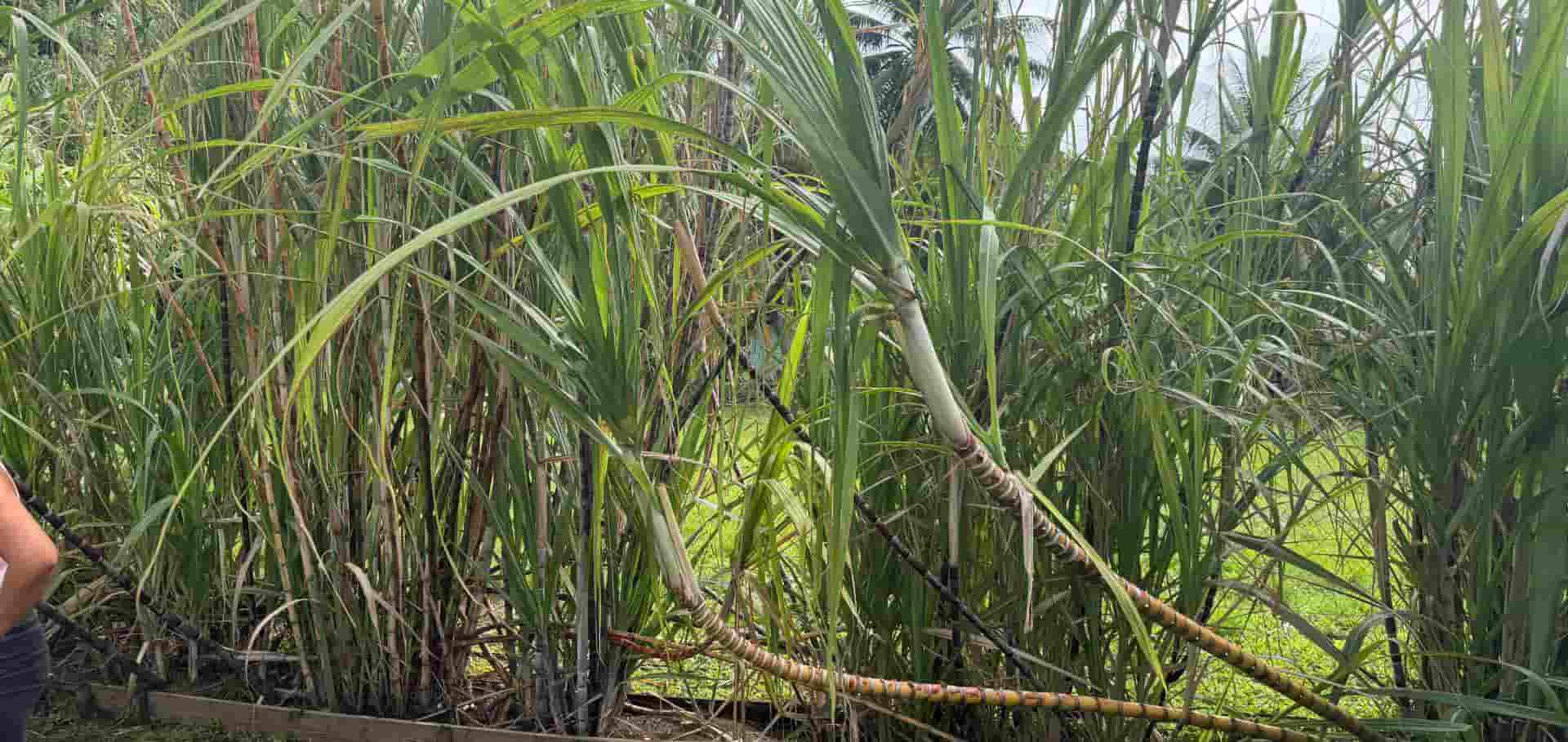
Taha'a belongs to the Leeward Islands, a volcanic cluster in French Polynesia defined by its shared barrier reef with Raiatea. This geography isolates the island’s soil, a rich, iron-heavy basaltic clay that dictates the character of everything grown here. Here, the sugarcane must struggle against high humidity, sudden tropical downpours, and saline winds that sweep over the outer reef. It is not an easy landscape for agriculture; the steep ridges and dense jungle cover restrict cultivation to small, hand-cleared plots. This isolation preserved ancient, fibrous sugarcane varieties like the O'Tahiti, which elsewhere succumbed to high-yielding industrial hybrids. To harvest cane here is to battle the thick tropical undergrowth, mud-slicked paths, and the constant threat of quick rot in the oppressive heat.
The Logistics & The Movement
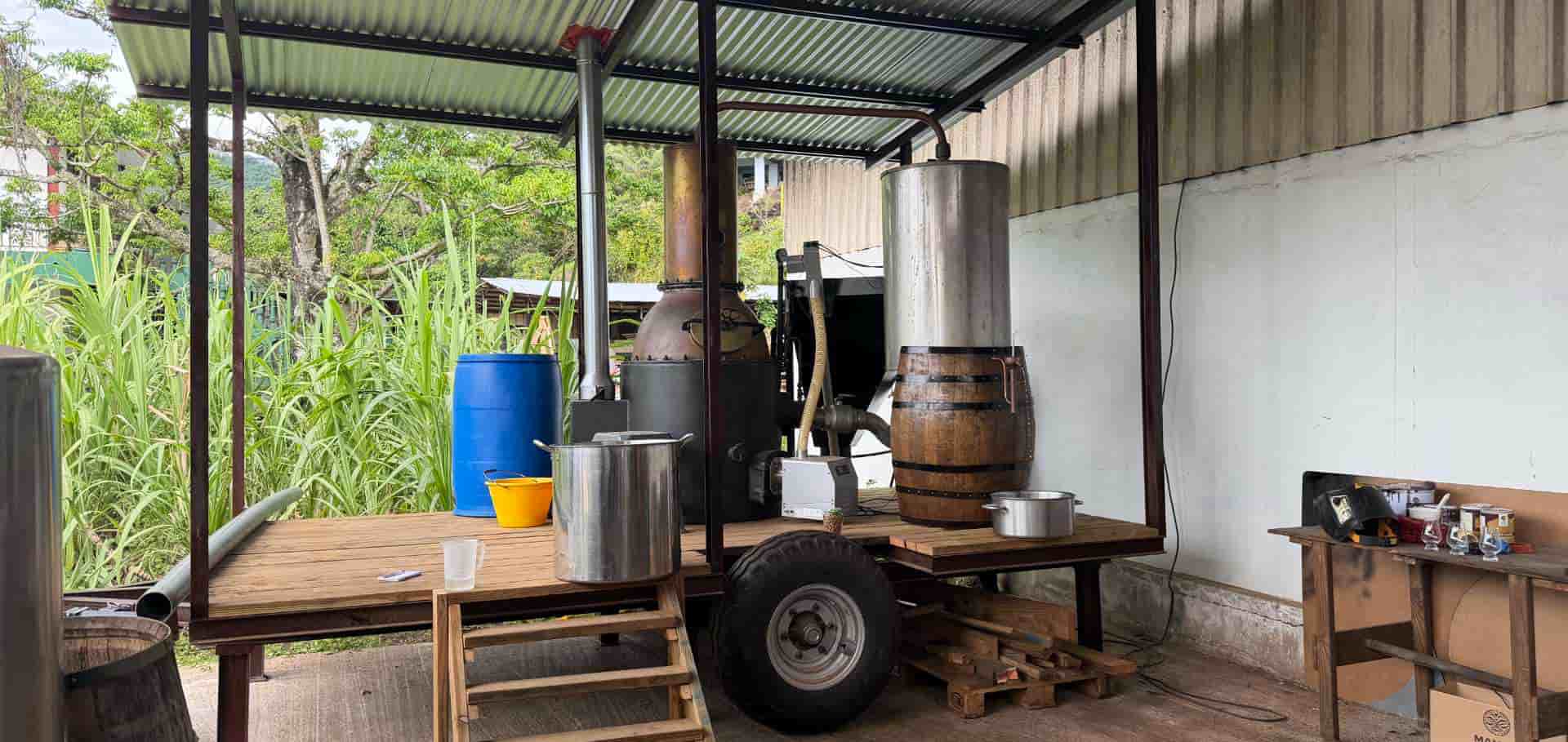
Navigating to the distillery requires a small, shallow-draft vessel capable of skimming the lagoon’s shifting sandbanks, followed by a wet, humid trek inland through clay-heavy tracks. The facility itself resembles an agricultural outpost more than a modern distillery—a rustic shed built of local timber and corrugated iron plates, sheltering highly calibrated machinery. The mechanical heartbeat of the operation is an old industrial press that crushes the hand-cut stalks.
To achieve the desired profile, the distillers utilize three distinct local sugarcane varieties, processed within hours of cutting to prevent premature fermentation. The raw juice is transferred immediately to stainless steel fermentation vats, where natural yeasts convert the sugars over a seventy-two-hour cycle. Temperature control is entirely manual, reliant on the distiller's senses rather than digital readouts; they monitor the bubbling mash by ear and scent, measuring the thermal spike against the sweltering ambient air.
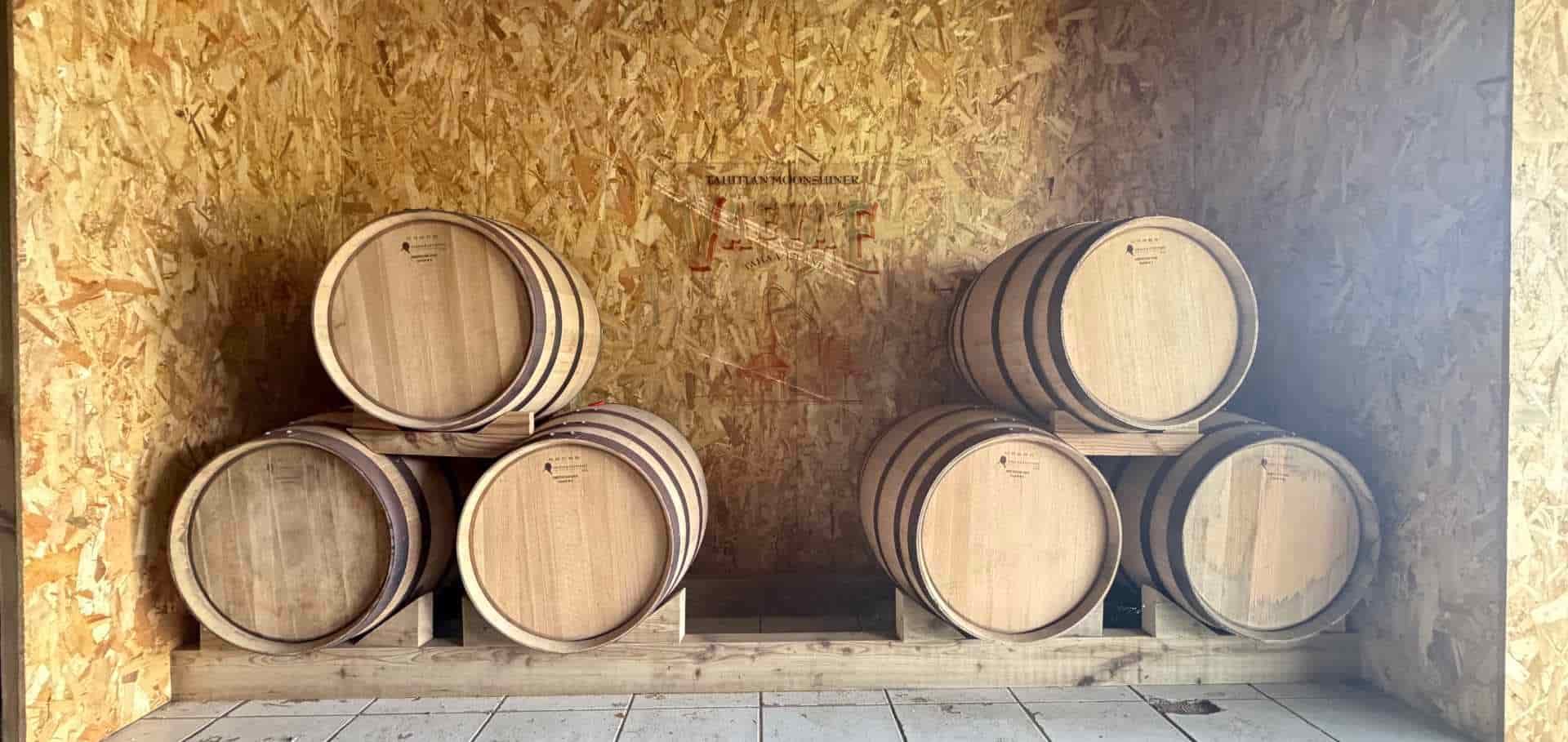
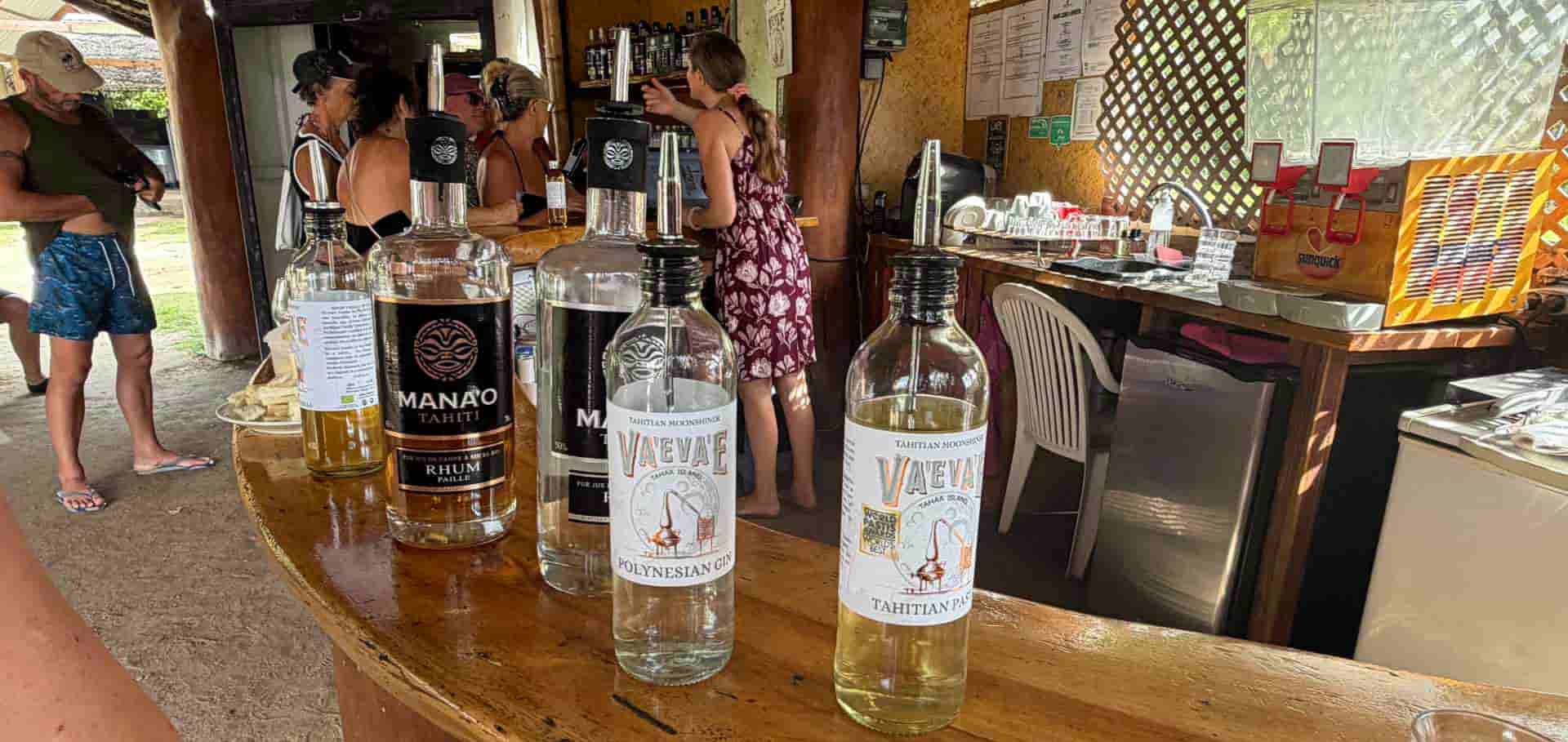
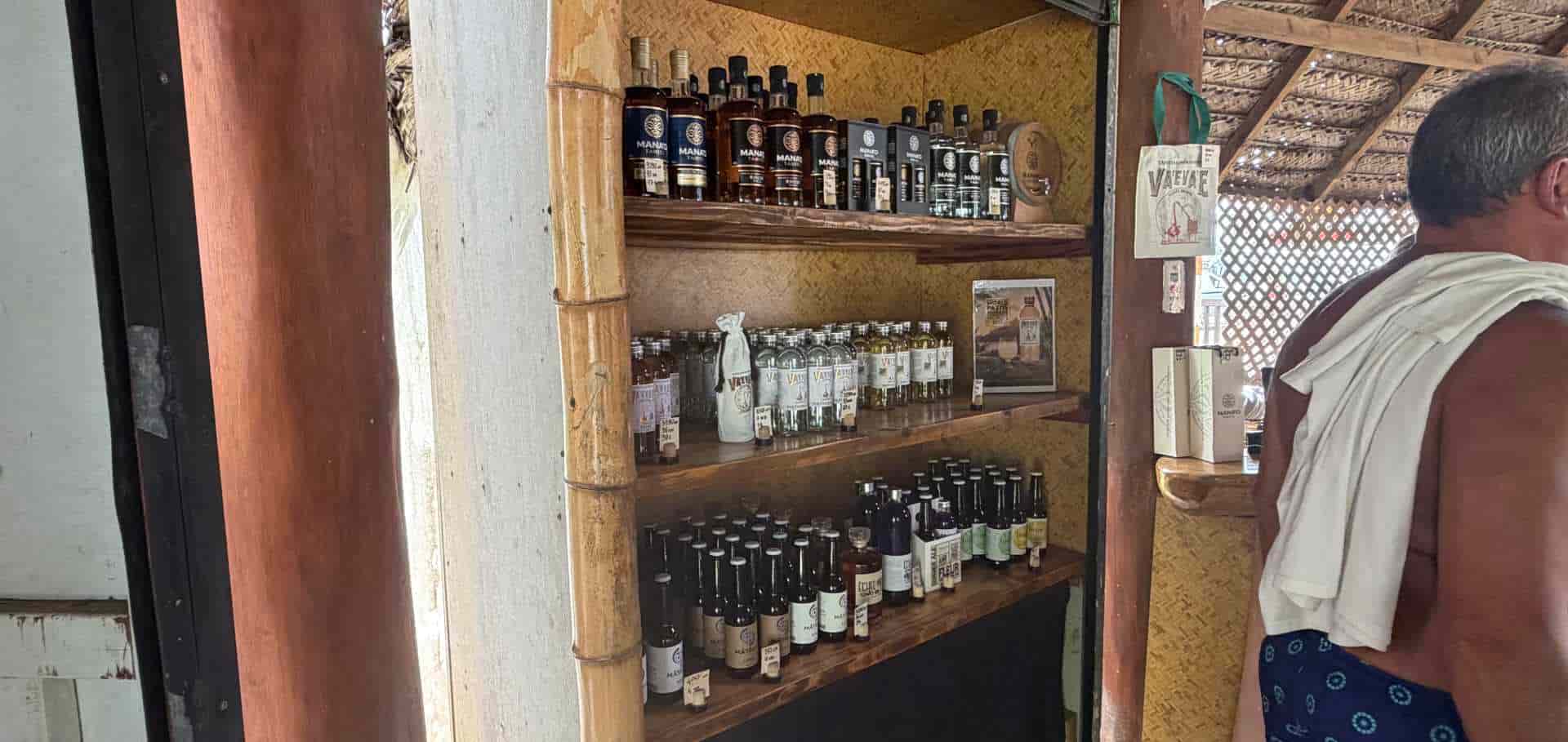
From the vats, the fermented wash enters the copper alembic still. Heat is regulated with absolute precision to vaporize the volatile alcohol while preserving the delicate, grassy esters of the cane. The resulting distillate is run through different aging regimens. Part of the yield rests in heavy French oak barrels, absorbing tannins and wood sugars that mellow the spirit over years. Another portion is infused with local vanilla beans—wrinkled, oily, and intensely aromatic—or blended with star anise to produce a traditional pastis that bridges European distilling techniques with Polynesian terroir. Moving through this space, one must navigate the radiant heat of the copper still, the heavy smell of wet dunder, and the slick concrete floors where water and crushed cane fiber pool. This is manual labor stripped of automated comfort, where every liter of spirit represents hard mechanical extraction.
The Human & Cultural Echo
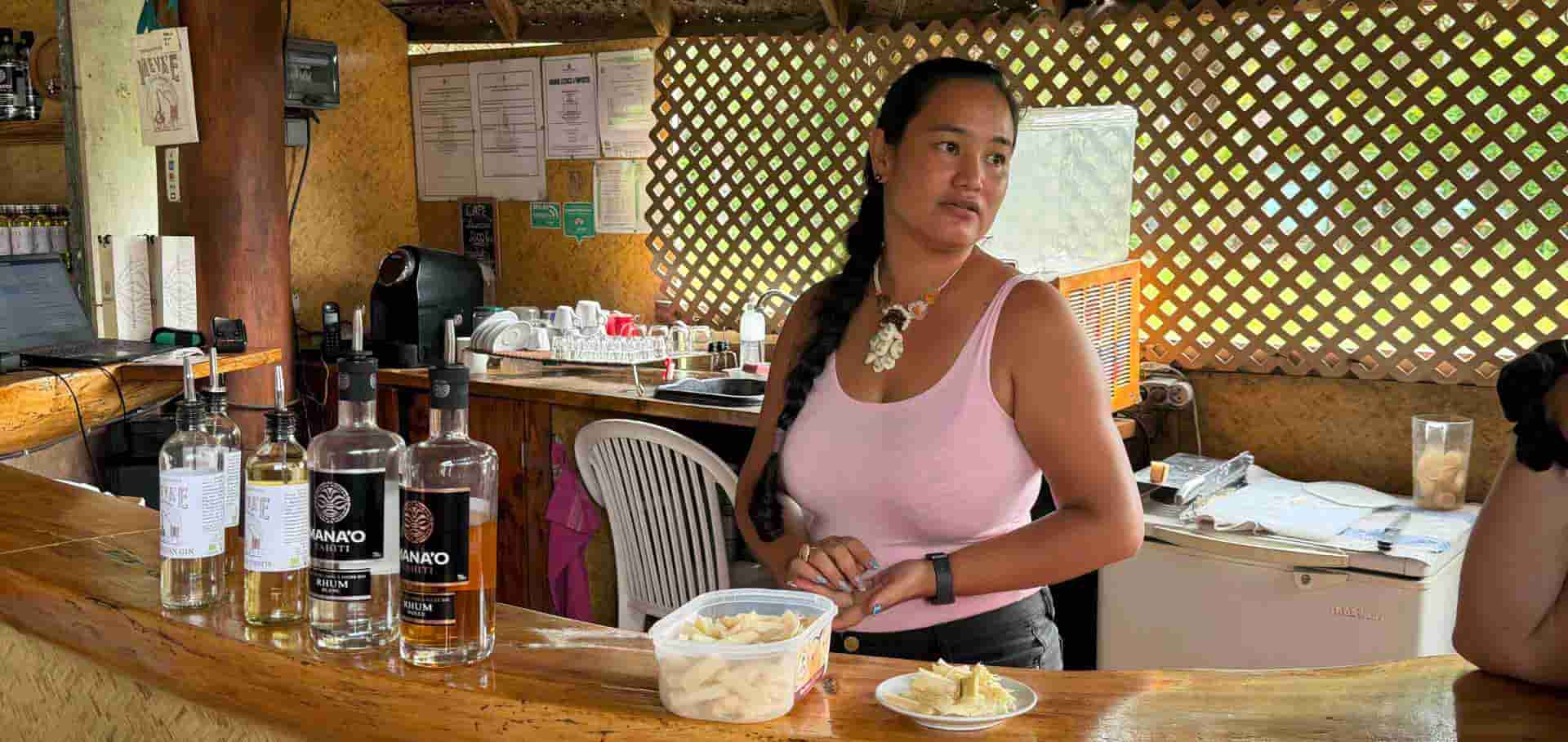
The human element at Taha'a is a study in quiet tenacity. Here, the local distillers are not corporate executives but agricultural preservationists. They speak of the cane with a quiet reverence, identifying the varieties by their old Polynesian names, pointing out the subtle differences in leaf color and stalk thickness. This is where French distillation methodology—brought over by generations of maritime trade—collides with indigenous farming. The interaction during a tasting is unscripted. Glasses are poured without ceremony over raw chunks of cane on a rough timber table. The conversation shifts naturally between the physics of copper distillation and the oral history of the land. There is an ease here, but it is underpinned by the hard reality of island life, where every spare part must be shipped from Papeete, and a broken pump can halt production for weeks. These people do not just run a distillery; they maintain an outpost of taste against the homogenizing forces of global spirits production.
The Calibration & The Horizon
The journey to Taha’a yields no easy comforts. It demands navigating rough seas, enduring oppressive humidity, and accepting the physical grit of a working agricultural frontier. Yet, the reward is an unfiltered encounter with a spirit that carries the precise signature of its soil and the sweat of its makers. In a world of standardized, sterile luxury, this rustic distillery stands as a testament to human willpower and the preservation of flavor. It reminds us that the most profound travel experiences are not those that pamper our senses, but those that challenge our resilience and recalibrate our understanding of craft, time, and survival.