A Rigorous Exploration of the Golden Hall, Where Neoclassical Form Confronts Shostakovich’s Physical Force
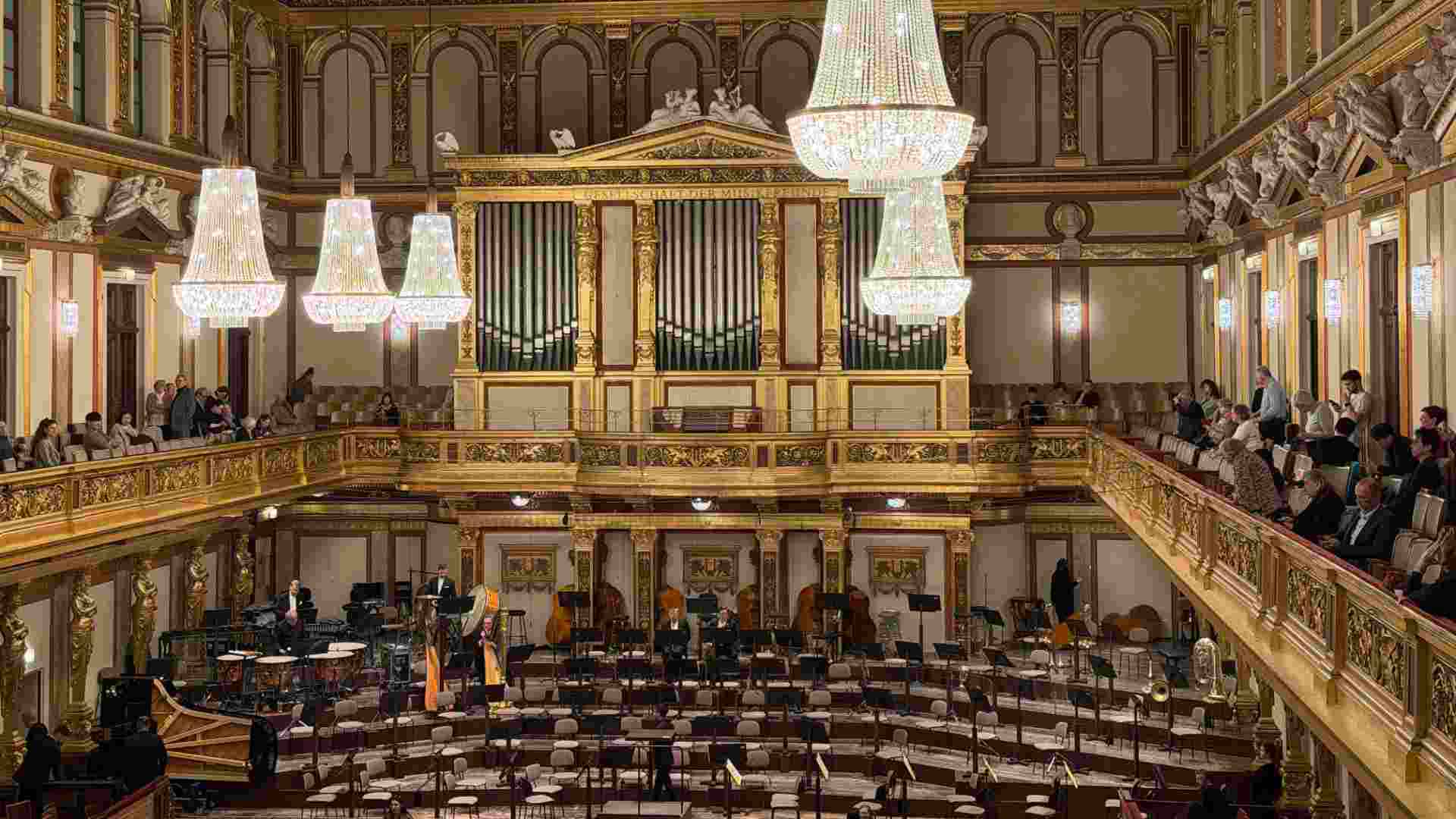
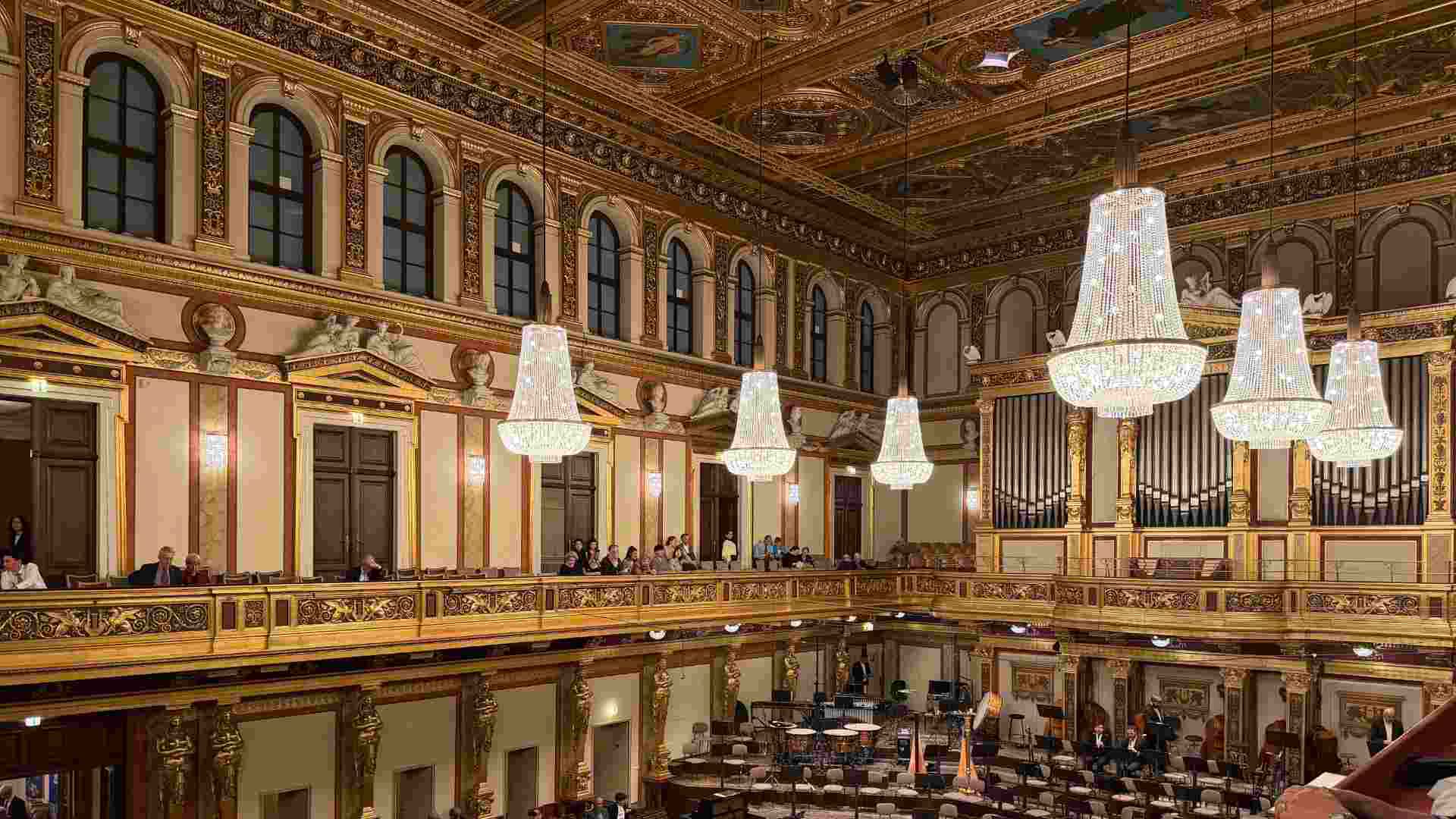
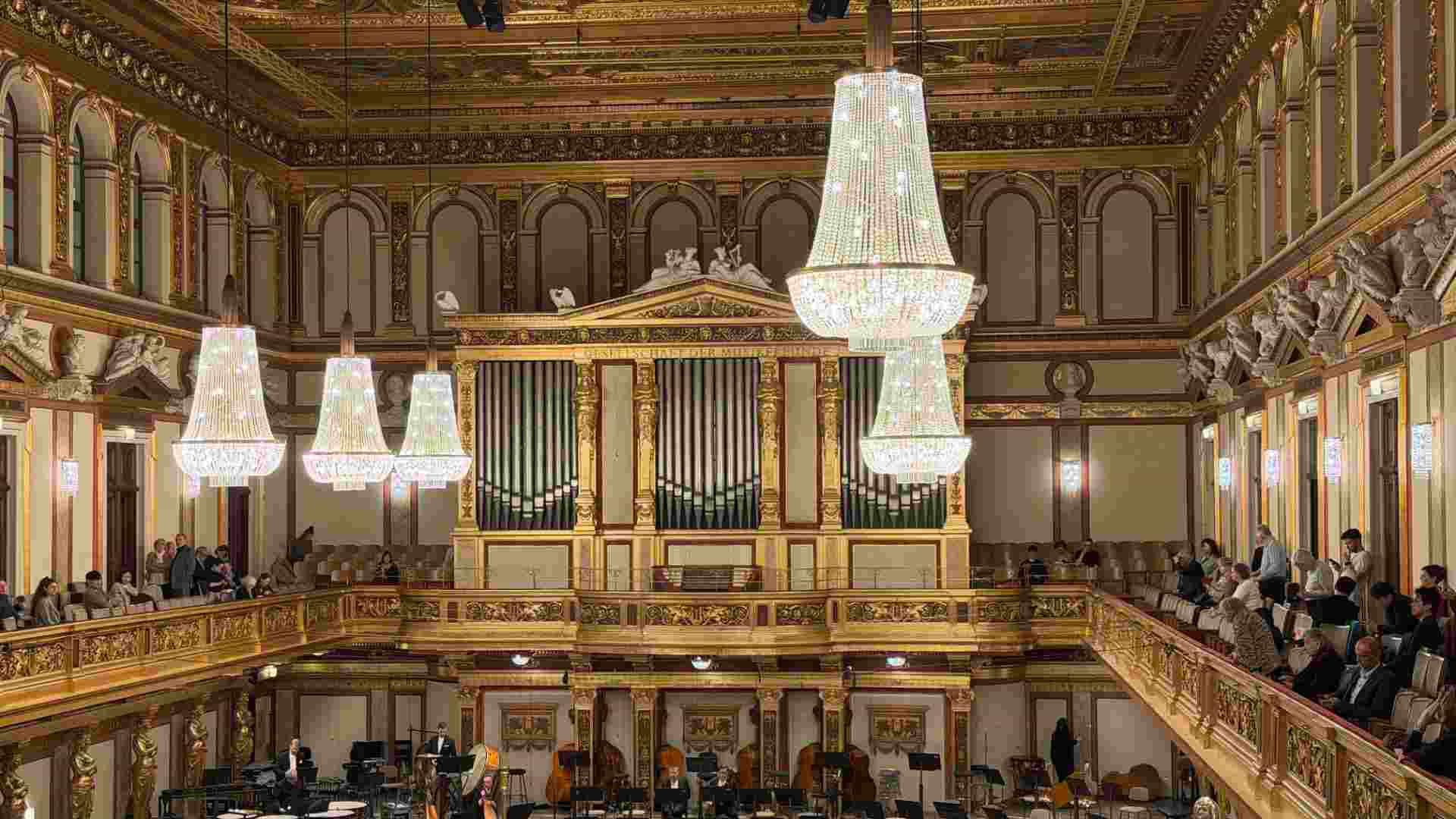
The silence of the Großer Musikvereinssaal before the first downbow is not empty; it is a pressurized, physical weight. Beneath the gaze of thirty gilded caryatids modeled on the Acropolis, seventeen hundred spectators sit suspended in a climate-controlled stasis. The heavy scent of century-old parquet wax, wool coats, and cured spruce lacquer hangs in the dry, heated air. Sir Antonio Pappano raises his baton, his posture rigid with anticipation. There is no microphone, no digital buffer, no safety net. In this cavern of gold-plated wood, the air molecules themselves are the medium of a raw, analog dialogue. When the London Symphony Orchestra strikes the opening, percussive thrust of Shostakovich’s Fifth Symphony, the sound does not merely travel; it collides with the listener’s chest wall with the kinetic force of a physical blow.
Geography and The Stakes
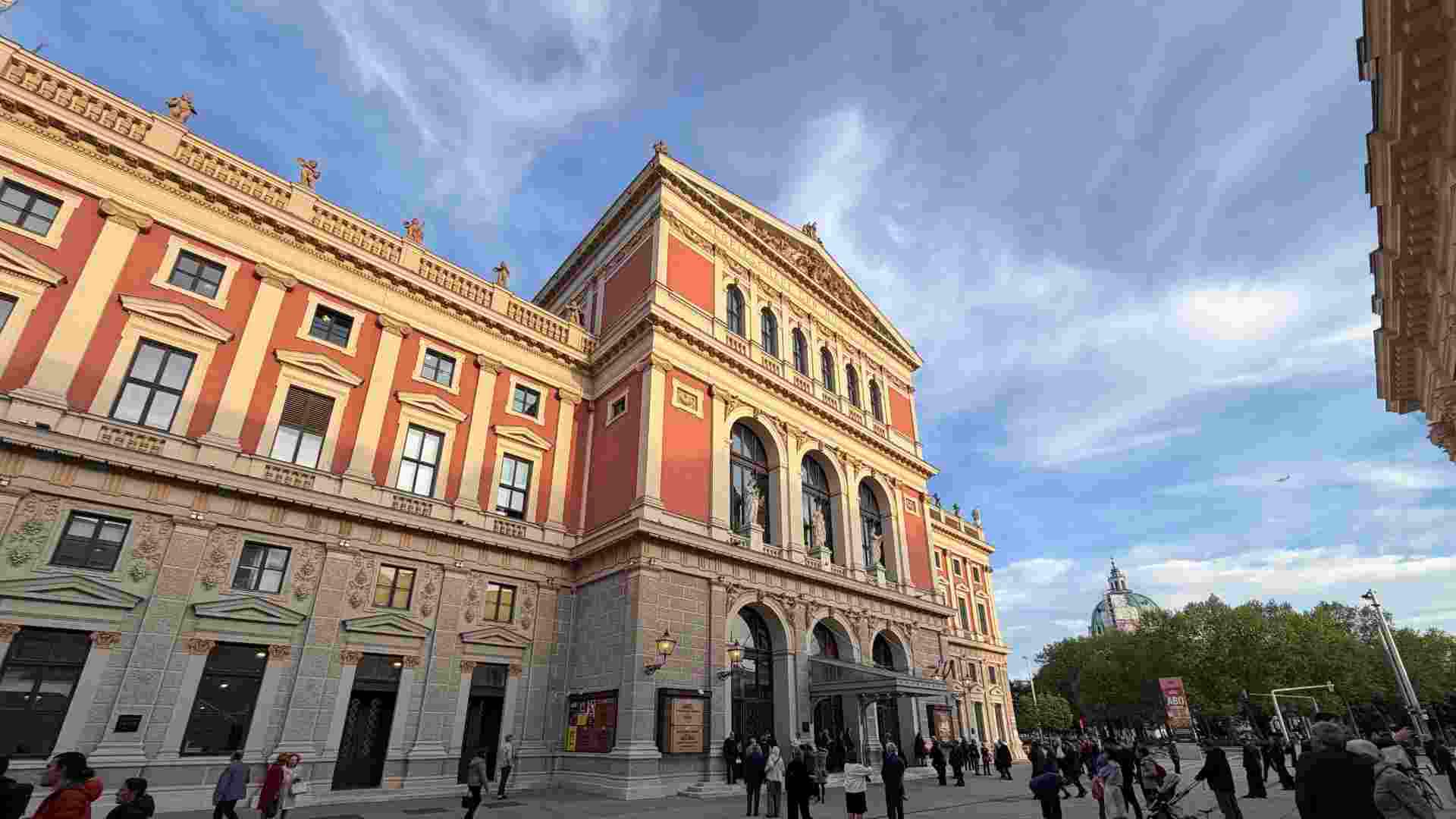
Opened on January 6, 1870, Danish architect Theophil Hansen’s neoclassical masterwork was not built with acoustic computer models; it was forged through intuitive, spatial geometry. The Golden Hall operates on a strict double-cube "shoe-box" design—measuring exactly 48.8 meters long, 19.1 meters wide, and 17.75 meters high. This precise volume of 15,000 cubic meters creates a reverberation time of exactly two seconds when fully occupied. This is an uncompromising, highly live space. Its timber floorboards act as a secondary soundboard, while the hollow spaces beneath the stage and the wooden ceiling structures amplify lower-frequency vibrations. For a visiting orchestra like the LSO, this hall is an unforgiving crucible. Every micro-second of lag, every fractionally imprecise bowing angle, or every overblown brass entry is instantly magnified and projected to the back row. It demands absolute kinetic discipline and tactical restraint.
The Logistics and The Movement
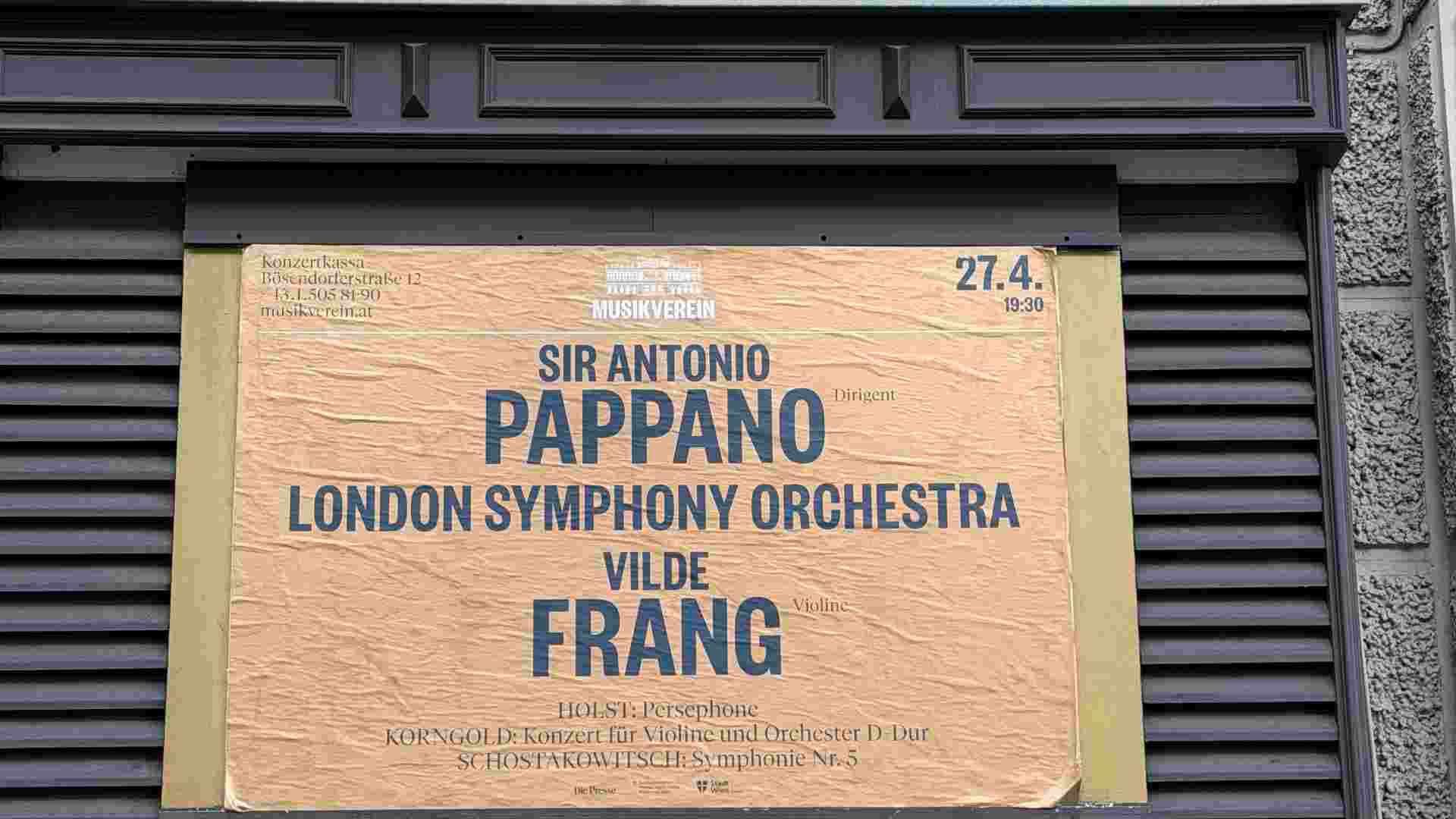
Navigating a symphonic performance of this scale requires the same tactical calculation as guiding a heavy vessel through a narrow fjord. The program—combining the physical violence of Dmitri Shostakovich, the cinematic sweep of Erich Wolfgang Korngold, and the exhausting emotional architecture of Pyotr Ilyich Tchaikovsky’s Sixth—presents a brutal operational curve. Under Pappano’s direction, the LSO must adjust its muscular, direct London projection to the highly reflective, live acoustics of the Viennese hall.
In Korngold’s Violin Concerto, the soloist confronts the hall's brilliant upper-register projection. The solo violin must pierce through a dense orchestrational thicket without forcing the instrument's physical limits. The soloist’s bow must strike the steel and gut strings with surgical precision; too much pressure destroys the resonance of the upper harmonics against the hard plaster ceiling, while too little allows the sound to be swallowed by the hall's rapid lateral reflections.
By the time the orchestra reaches Tchaikovsky’s Pathétique, the physical toll on the performers is visible. The brass section, positioned high on the tiered wooden risers, must meter their lung capacity with extreme restraint. A triple-forte in London's drier Barbican Hall requires raw force; here, that same force would overload the room, muddying the contrapuntal lines into acoustic chaos. The string players execute rapid, synchronized shifts, their forearms burning under the tension of sustained tremolos.
The logistics of this movement are mechanical. The conductor operates as a master strategist, balancing the velocity of the sound waves bouncing off the side balconies with the direct sound from the stage. He must anticipate the hall's natural latency, cueing entries a fraction of a beat ahead of the physical reflection. It is a constant, exhausting calibration between kinetic human output and the immutable physics of 19th-century brick, plaster, and gold leaf. Every musician must suppress their instinct to play louder, understanding that in this room, the architecture itself does half the work, provided they feed it with perfect, undistorted vibrational data.
The Human and Cultural Echo
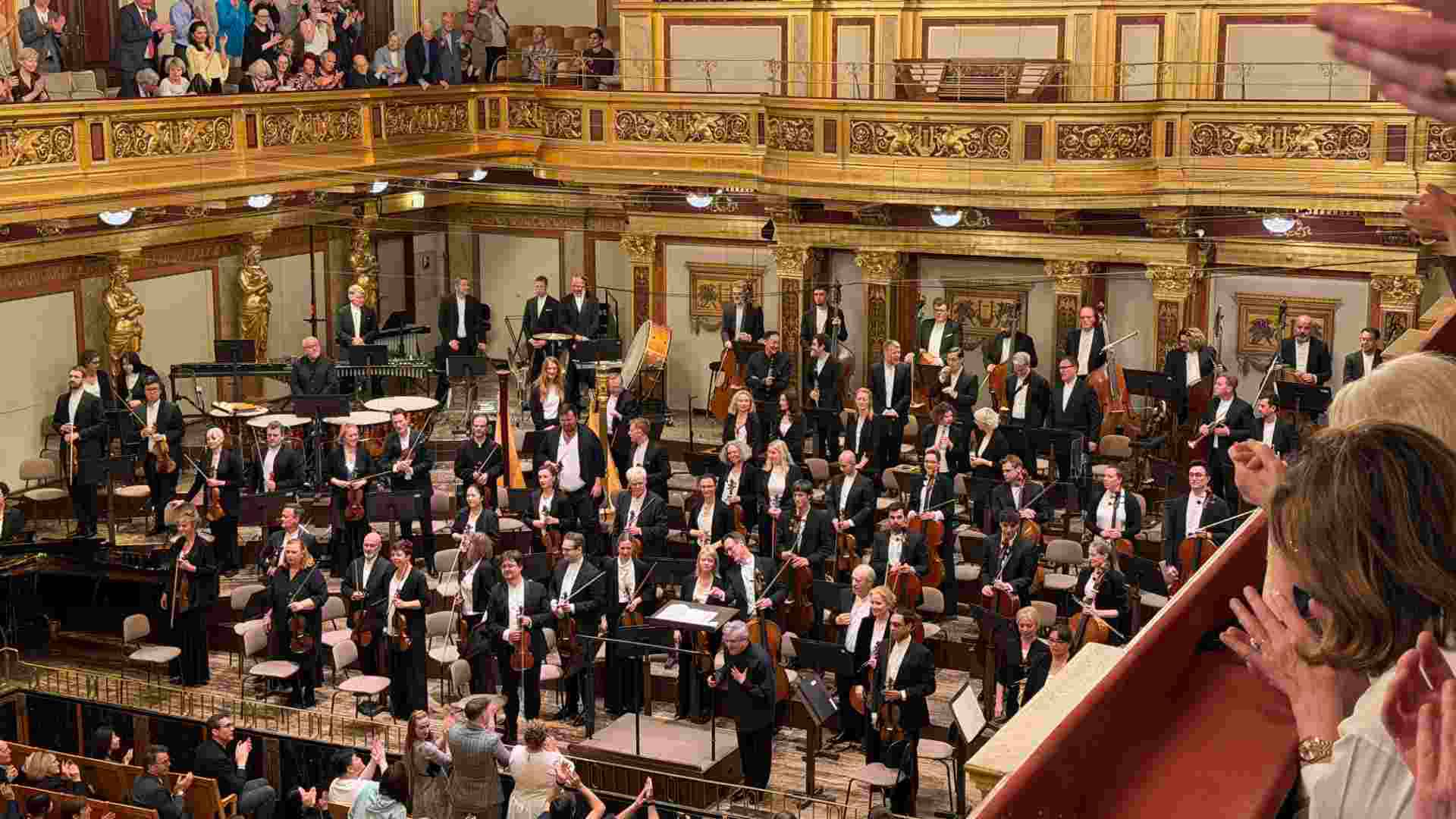
To stand in the Musikverein is to step into a cultural continuum that has survived imperial collapse, world wars, and the fragmentation of Western society. The very walls are saturated with the historical dust of Johannes Brahms, who served as the director of the Gesellschaft der Musikfreunde, and Gustav Mahler, who walked these same boards. The audience here is not passive; they are rigorous participants in a century-and-a-half-old ritual. They possess an acute, inherited acoustic memory, capable of discerning the slightest shift in orchestral balance. They know precisely how a brass crescendo should decay in the back of the second balcony, or how a solo oboe should float above the woodwinds. This collective consciousness creates a palpable tension between the stage and the seats. When the final, dying b-minor chords of Tchaikovsky’s sixth symphony fade into the floorboards, the silence that follows is not mere quiet. It is a shared, breathless suspension—a communal holding of breath that lasts for several agonizing seconds before the release of applause.
The Calibration and The Horizon
The journey to the center of the Musikverein is not a passive luxury; it is an intellectual and sensory exertion. The reward is the stripping away of modern digital compression, returning the human ear to the raw, unamplified power of acoustic physics. It tests our capacity for deep, sustained attention in an age of constant cognitive fragmentation. Leaving the hall into the cold, damp Viennese night air of the Karlsplatz, the ears still ring with the vibration of seventy-year-old spruce. You are left with the profound realization that true majesty is not bought; it is built through the relentless, physical mastery of wood, metal, and human will against the silence.