Demystifying the Ancestral Folding, Pigment Wars, and Human Endurance behind French Polynesia’s Wearable Art
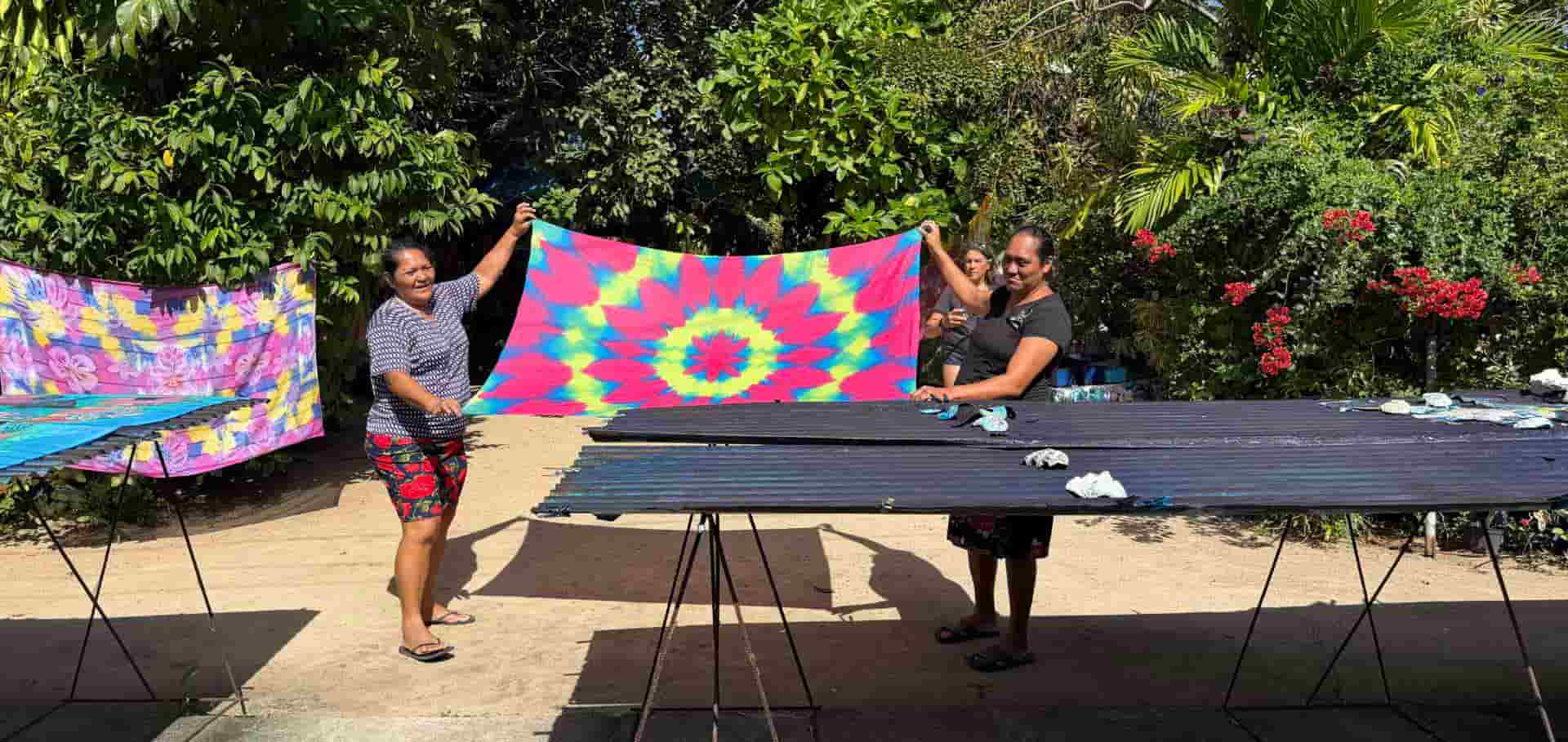
The equatorial sun beats down upon the open-air workshop in Bora Bora, driving the humidity to a suffocating saturation point. There is no air-conditioned sanctuary here. Instead, the heavy tropical breeze carries the sharp, vegetal scent of crushed hibiscus pigments and wet, unspun cotton. Under a corrugated iron roof that rattles with every gust off the lagoon, three artisans stand before deep wooden vats of liquid color. Their forearms are stained indigo and crimson, skin glistening with sweat. This is not a passive gallery; it is a high-tempo theater of physical labor where white fabric meets raw elemental force.
Geography & The Stakes
Bora Bora is too often reduced to an inert playground of overwater bungalows, yet its volcanic soil and isolated position in the Society Islands demand a harder look. The volcanic peaks of Mount Otemanu cast long shadows over an environment defined by relentless marine salt, intense UV radiation, and sudden tropical downpours. In this high-exposure crucible, the preservation of Polynesian material culture requires constant negotiation with the elements. The pareo is not a mere souvenir; it is a historical shield against the equatorial sun, an ancestral uniform of survival and identity. To produce three hundred of these hand-dyed canvases daily in an open-air studio is to engage in a constant race against the drying power of the wind and the fading effects of intense Pacific sunlight.
The Logistics & The Movement
The choreography of the workshop runs with the cold precision of an assembly line, yet it relies entirely on human muscle memory and sensory intuition. It begins with raw, unbleached cotton—dry, heavy, and absorbent. An artisan sweeps a three-meter bolt of cloth across a wooden table polished smooth by decades of friction. With rapid, geometric folds, the fabric is compressed into tight accordion pleats. There are no rulers or guidelines; the artisan’s fingers gauge the tolerances of the fold down to the millimeter by touch alone.
Next comes the submersion. The folded cotton is plunged into the dyeing vats. The pigments, extracted directly from local flora, are volatile. The liquid must be worked into the fibers through deep, rhythmic kneading, a physical effort that strains the shoulders and lower back. Timing is critical: leave the cotton submerged too long, and the colors bleed into a muddy brown; extract it too quickly, and the core remains white. The sweet spot lasts only seconds.
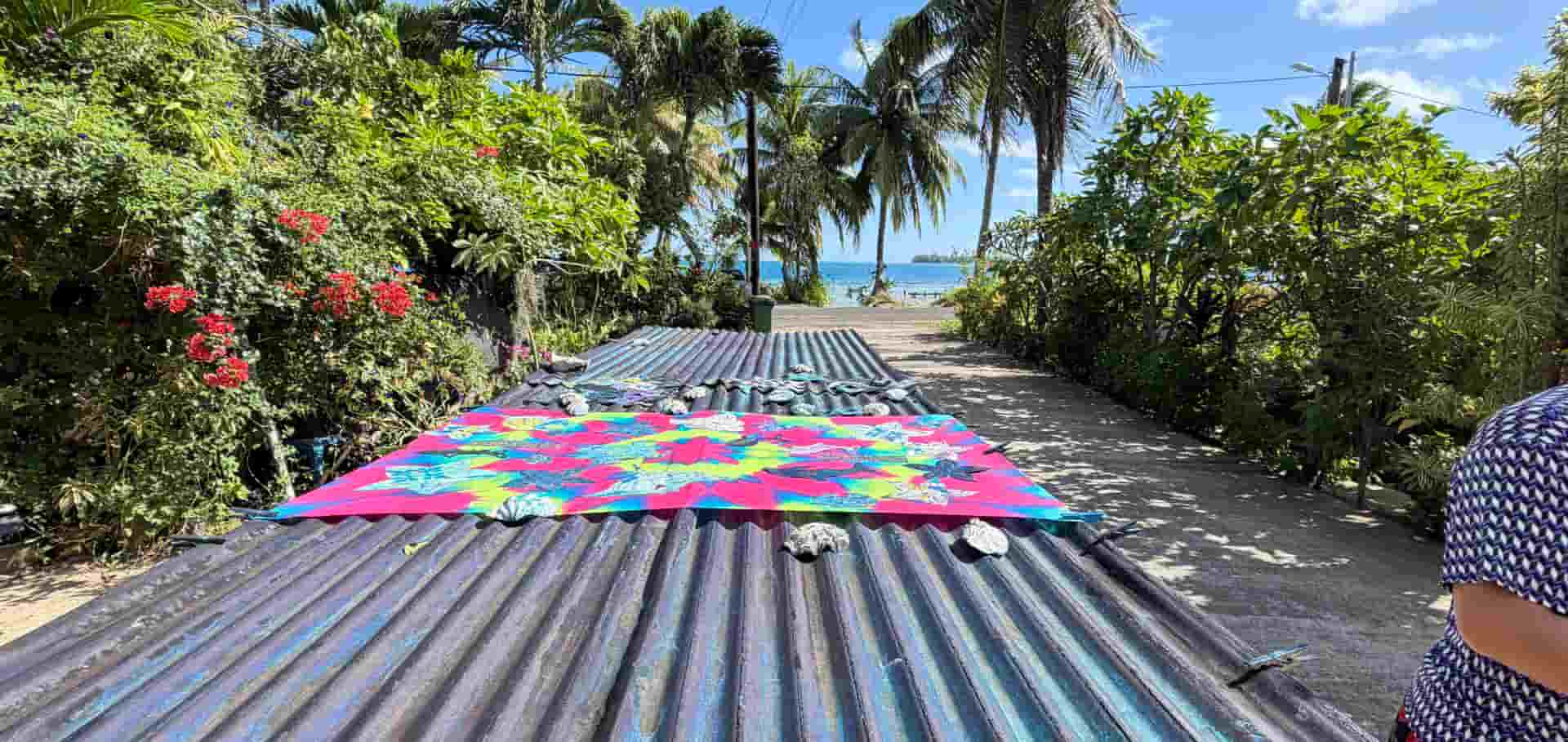
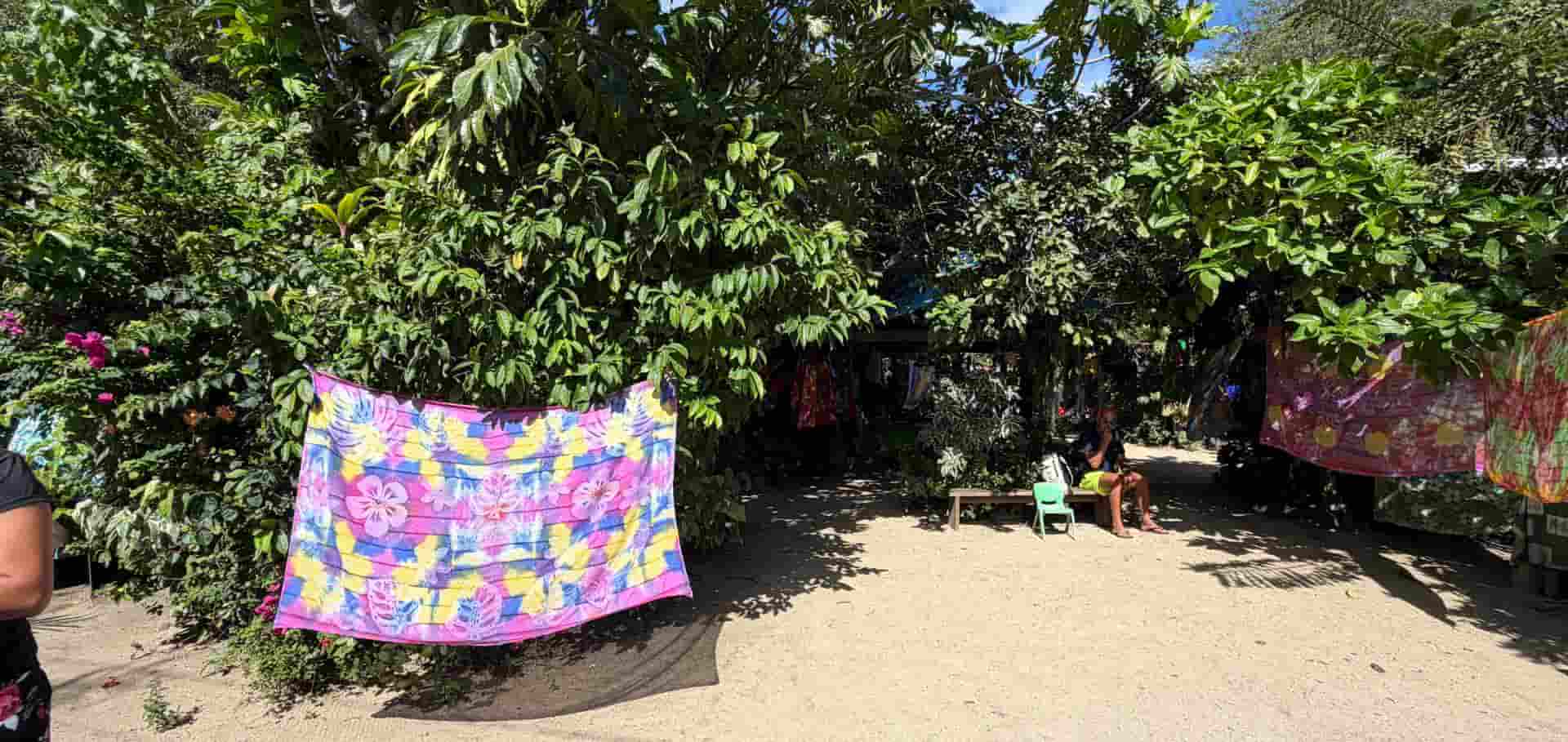
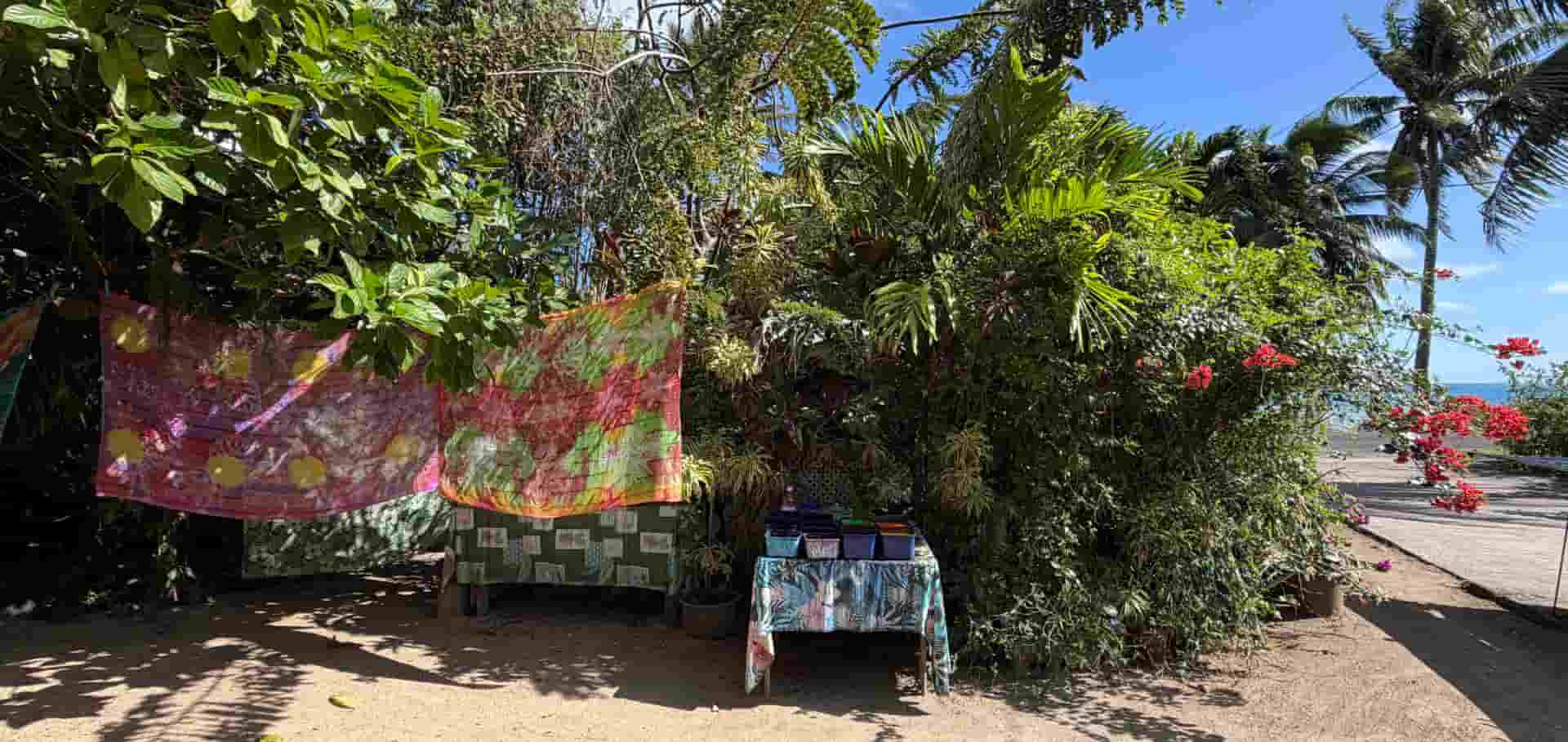
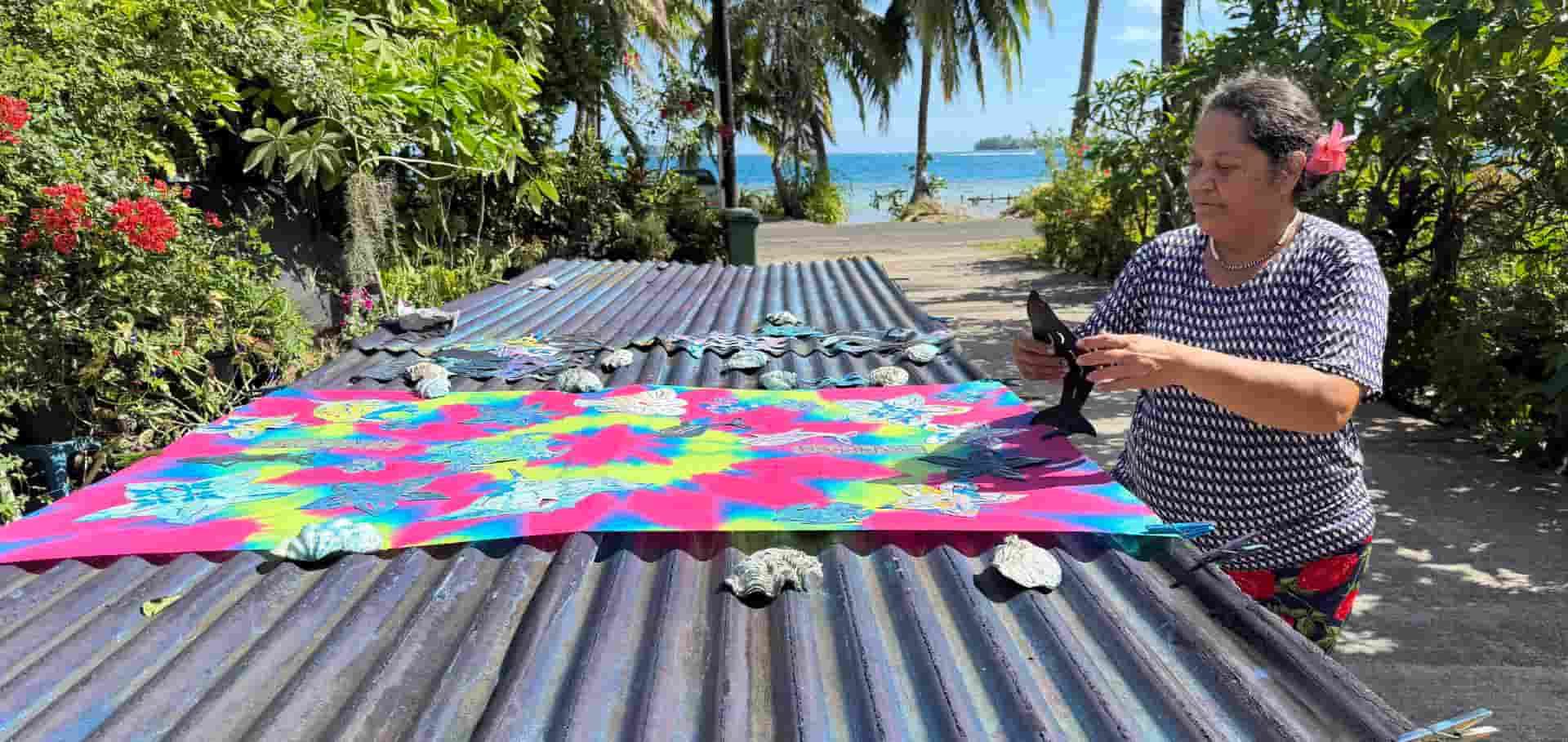
Once saturated, the wet cloth is flung open across large outdoor drying racks, catching the full force of the trade winds. Here, the equatorial sun acts as a natural setting agent, baking the pigment into the warp and weft of the fabric. As the cotton dries, shrinking slightly under the heat, a second artisan prepares the linoleum printing blocks. These blocks, carved by hand with traditional motifs of the honu (sea turtle) and stylized ocean waves, are coated in dark, viscous ink. With a heavy wooden mallet, the artisan strikes the block against the taut fabric. Each strike requires a consistent downward pressure of roughly fifteen kilograms to ensure the ink penetrates the sun-dried weave. The rhythmic, heavy contact of the mallet punctuates the wind's whistle, registering a manufacturing pace that yields several hundred completed units before the afternoon rainstorms sweep in from the reef.
The Human & Cultural Echo
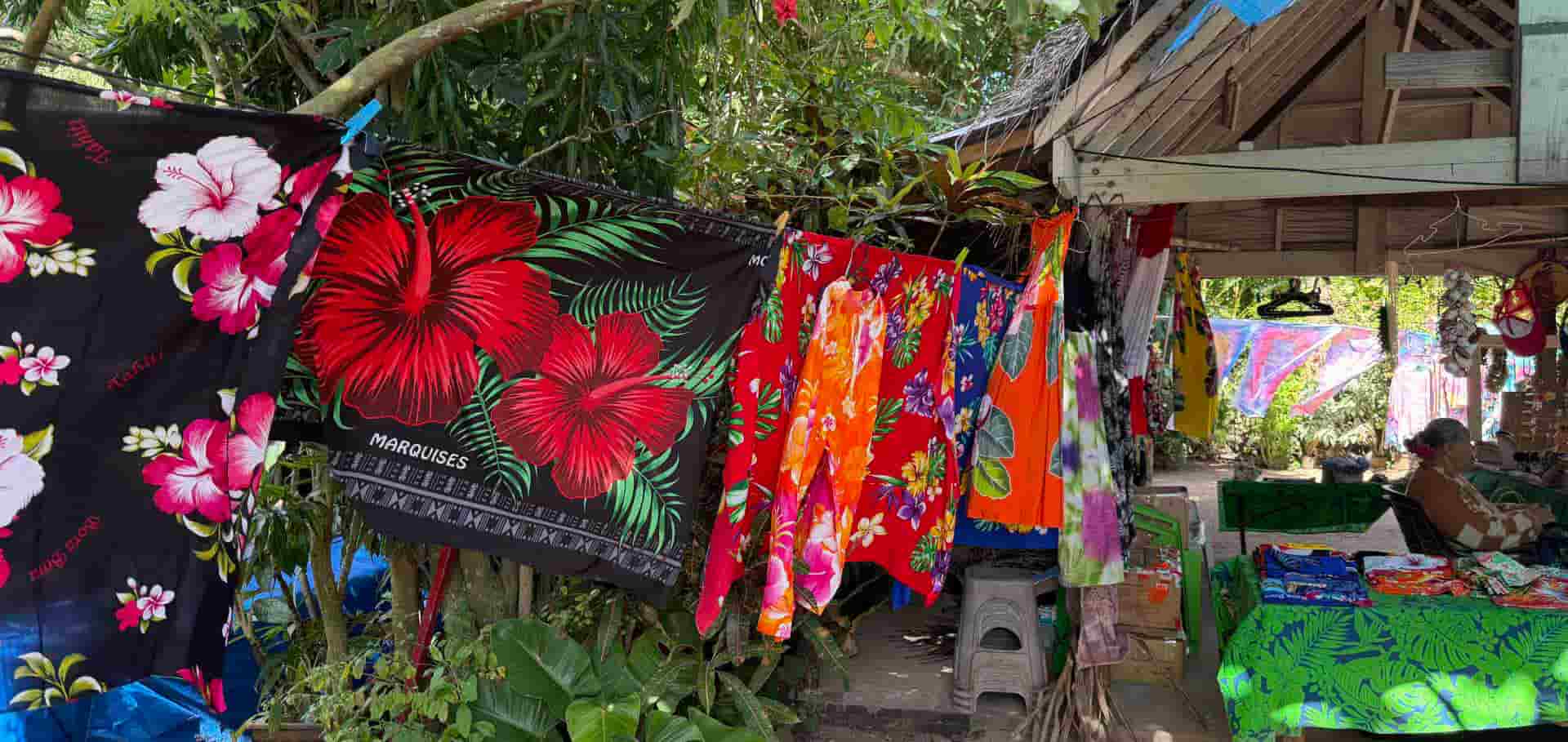
This workshop is a living archive, preserved by a multi-generational family that refuses to yield to the cheap efficiencies of industrial screen printing. The designs stamped onto the fabric are not arbitrary decorations; they are a visual language of survival and navigation. The sea turtle represents endurance across vast oceanic distances, while the stylized fish patterns symbolize the subsistence hook that has kept these remote islands populated for over a millennium. Listening to the artisans speak in soft Tahitian over the rustle of dry cotton reveals the true depth of the craft. Their hands bear the permanent calluses of the mallet and the indelible stains of wild hibiscus dye, a physical testament to a life spent upholding a tradition that globalized tourism threatens to commodify. Each pareo carries the individual signature of its maker—not in ink, but in the subtle variations of the hand-carved stamp and the unique dispersion of the color under the midday sun.
The Calibration & The Horizon
To stand in this sweltering workshop is to witness the triumph of human agency over mechanization. The true reward of this detour lies in the calibration of our own modern impatience against the slow, deliberate rhythm of ancestral craftsmanship. It forces the traveler to confront the friction required to create something of lasting value. In a world of digital replication and synthetic convenience, the raw effort, the stained hands of the artisans, and the scent of sun-warmed cotton offer a vital reminder: real culture is not purchased; it is earned through sweat, sun, and the stubborn refusal to let the old ways fade.