Tactical Observations on Wind Friction, Calving Seracs, and Hydrological Time in Torres del Paine
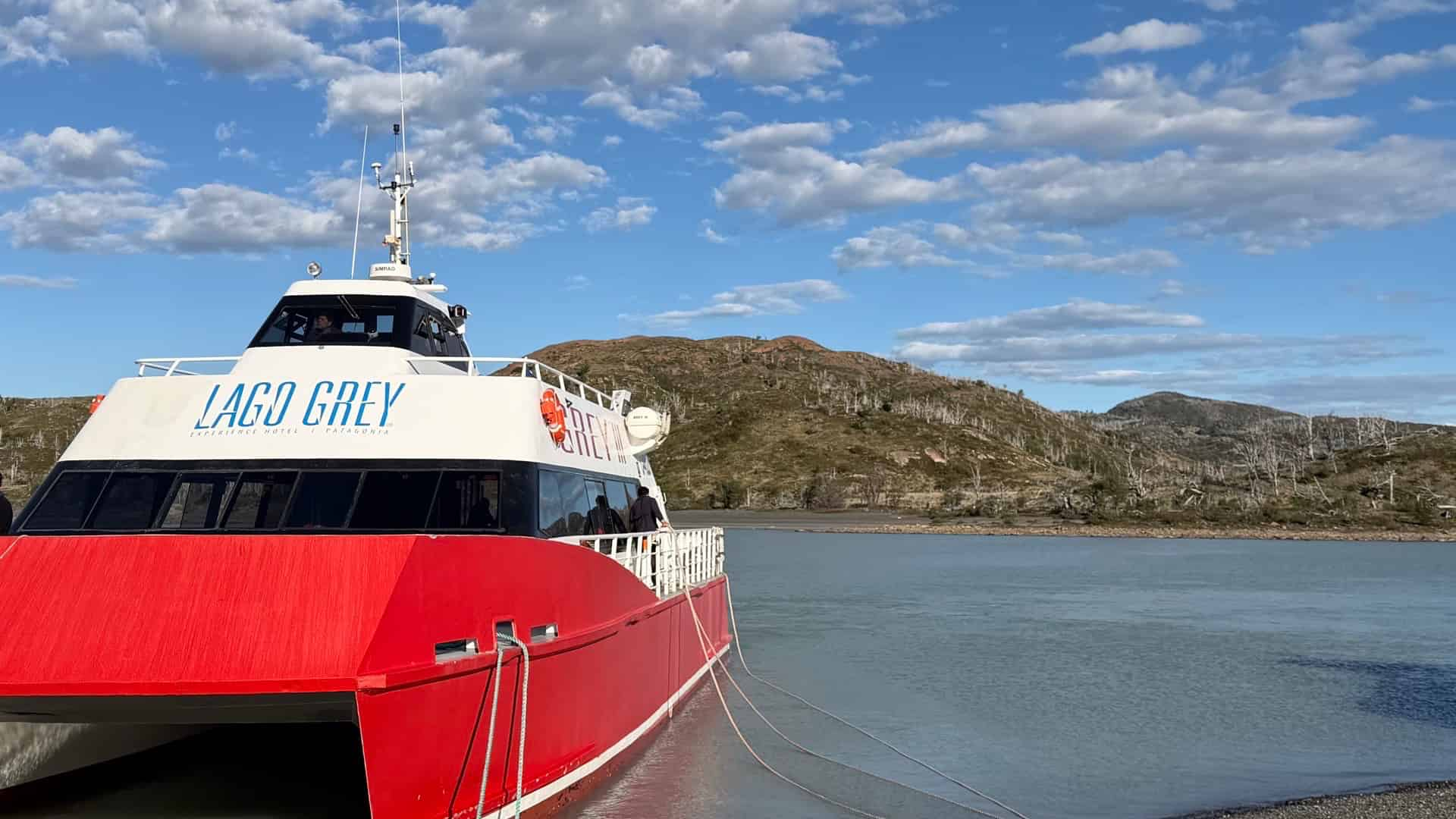
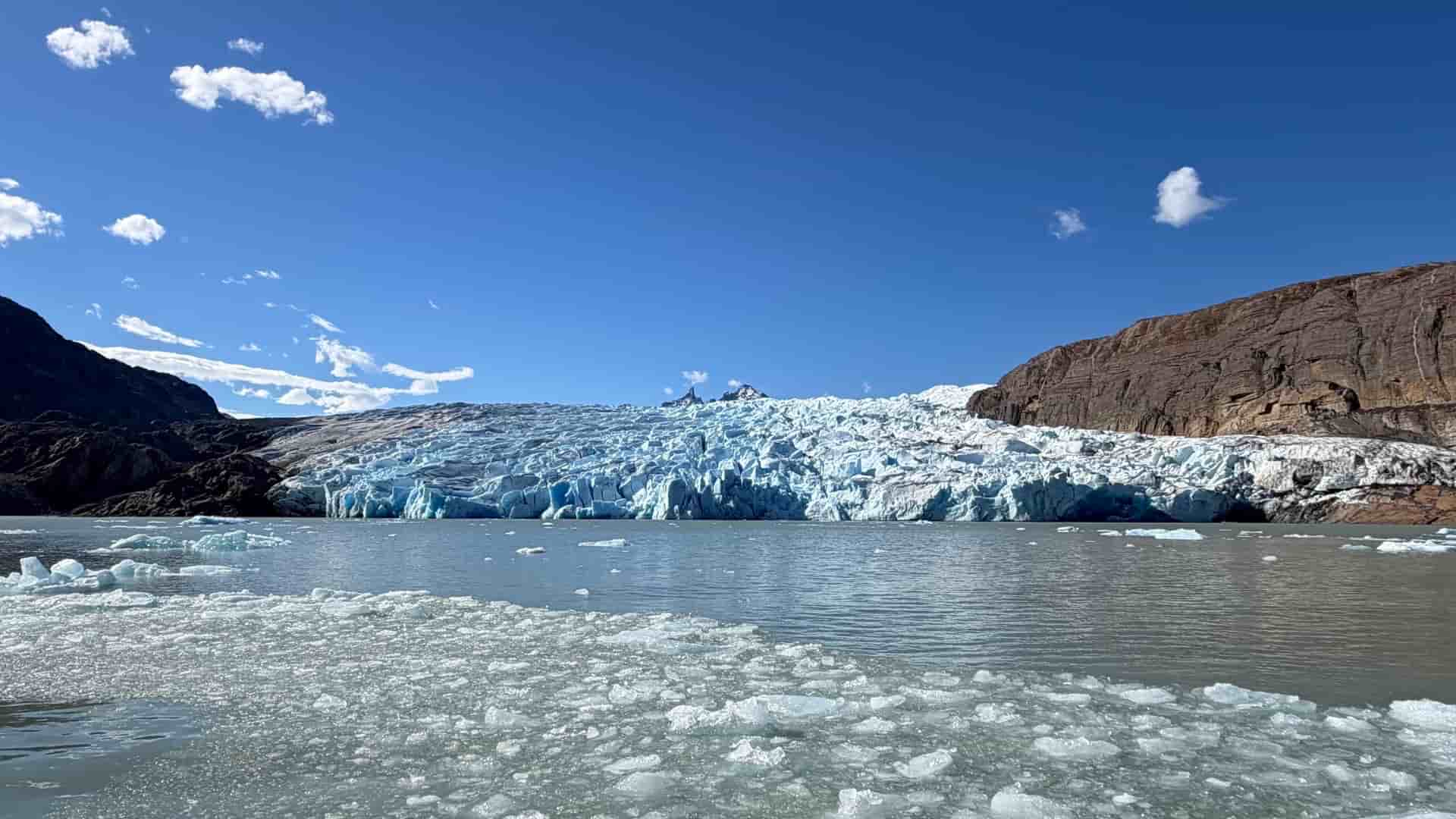
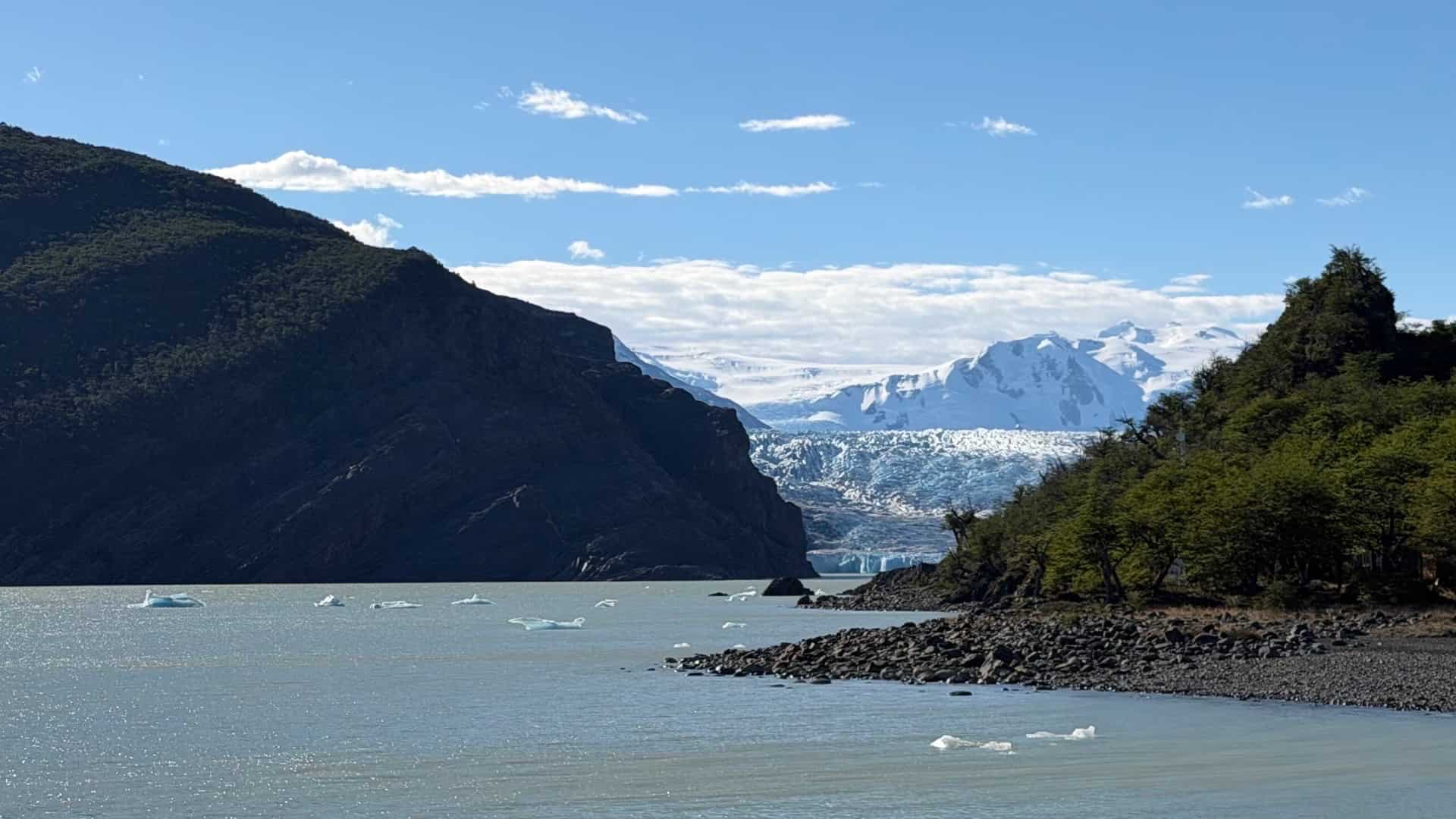
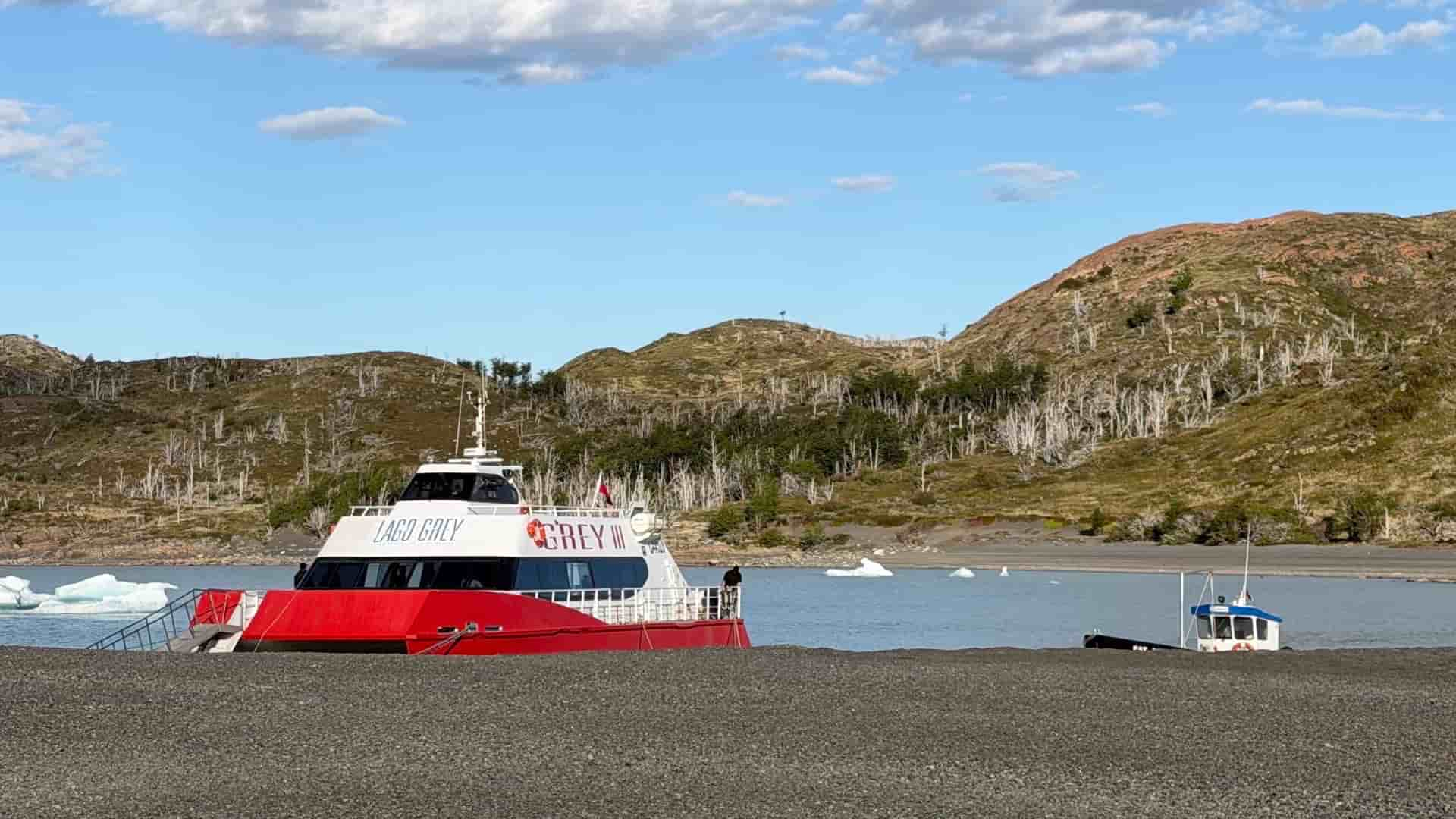
The gale strikes at forty knots, shearing across the dark shingle beach of Lago Grey before tearing into the spruce and lenga scrub. Boot heels sink into fine volcanic sediment, wet gravel crunching under heavy loads. Off the western headland, the red hull of the twin-engine catamaran strains against its heavy mooring ropes, riding a chaotic chop of mineral-heavy grey water. Icebergs—calved from the northern ice wall miles up-lake—drift like jagged blue monoliths through the mist, grinding against the shingle with hollow, resonant thuds. There is no warmth in this dawn, only the metallic smell of freezing air and the sharp, percussive warning of the southern wind.
Geography & The Stakes
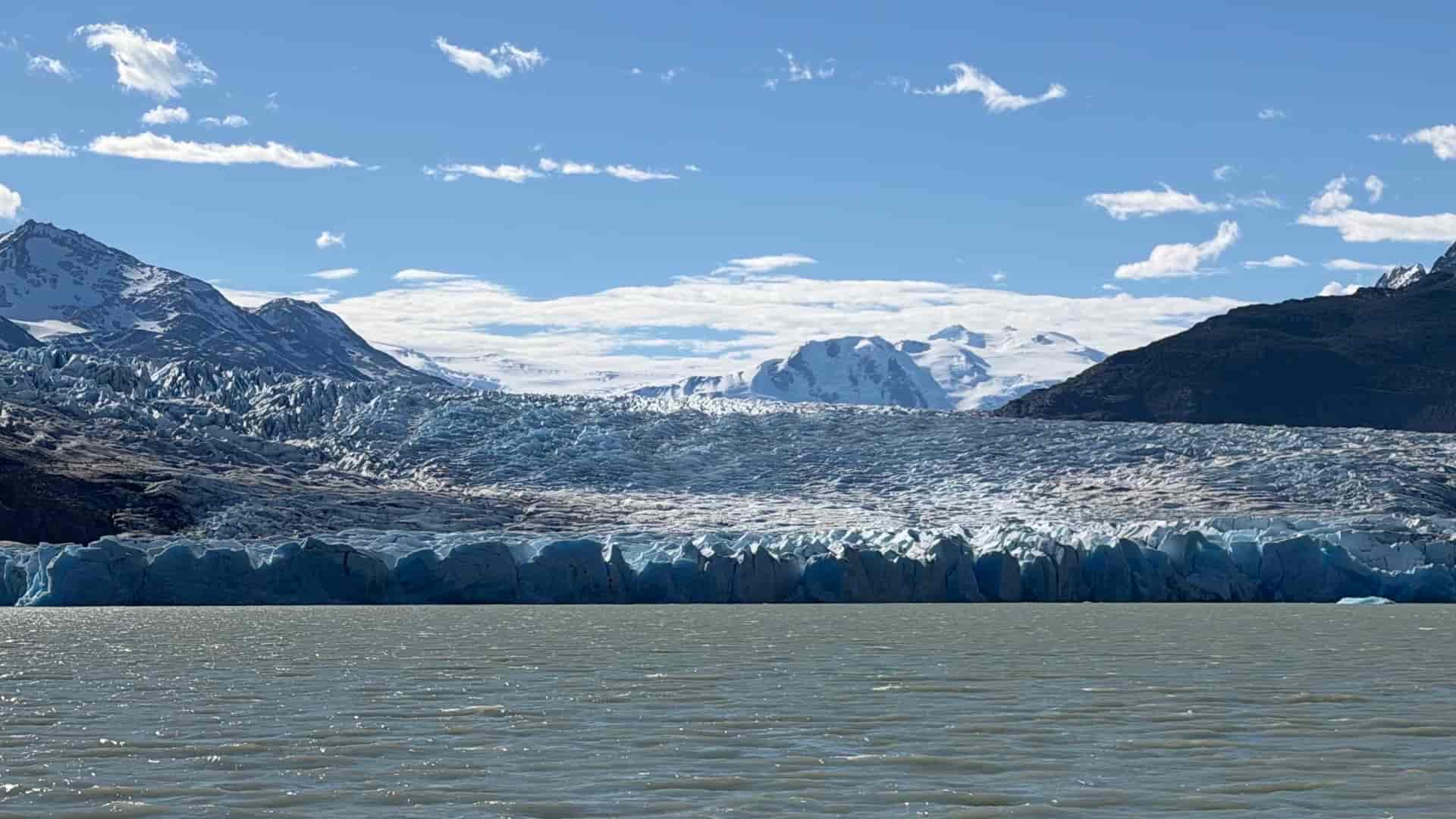
Lago Grey sits as a meltwater catchment for Glaciar Grey, a thirty-kilometer-long tongue of frozen pressure draining the vast Southern Patagonian Ice Field—the largest expanse of continental ice outside Antarctica. The lake bed, carved during the Pleistocene epoch by millions of tons of creeping ice, holds glacial flour: pulverized bedrock suspended in liquid that renders the water an opaque, graphite grey. This landscape demands total operational respect. The violent catabatic winds blowing down off the ice sheet can double in velocity within minutes, turning calm surface navigation into a combat against hull shear, freezing spray, and drifting ice hazards. To cross this sheet of water is to enter a dynamic zone of geological erosion, where human machinery operates on the precarious margins of deep time and unyielding polar weather.
The Logistics & The Movement
Departure requires a methodical thirty-minute trek across the wind-scoured sandbar connecting the mainland to the embarkation spit. At 51° South, maritime navigation hinges on precise timing; captains monitor barometric drops with hawk-like intensity before turning twin diesel propulsion units into the headwinds. The catamaran pushes offshore, its red hull slicing cleanly into the silt-laden swells. Soon, the ambient temperature drops four degrees as cold air cascades directly off the glacier's snout.
Navigation through the iceberg field demands constant vigilance. Ice blocks, eight-tenths submerged beneath the turbid gray surface, present severe collision risks. The hull shudders as floating slush and growlers strike the steel bow, sounding like scattered drumbeats against metallic plating. On board, line handlers and deck officers operate in cold-weather gear, securing gear against deck wash as spray freezes almost instantly upon the gunwales.
Halfway across the lake, the western face of Glaciar Grey materializes through the spindrift—a wall of compressed blue ice rising forty meters off the waterline. The vessel holds position two hundred meters off the ice cliff, engines revving in neutral counter-thrust to hold against the current. The visual landscape is dominated by dense cobalt fractures, where extreme pressure has expelled every air bubble from the ice crystals.
As the vessel drifts near the ice face, deck crew serve glasses of wild Calafate berry pisco sour poured over ancient, crystal-dense glacial ice harvested directly from the lake. The tart violet liquor burns against cold lips, a sharp contrast to the biting air. Suddenly, a subterranean groan echoes across the water. A serac the size of a five-story building detaches from the eastern wall, crashing into the lake with a concussive shockwave that rolls under the catamaran's twin hulls, lifting the vessel while sending a plume of frozen spray thirty meters into the air.
The Human & Cultural Echo
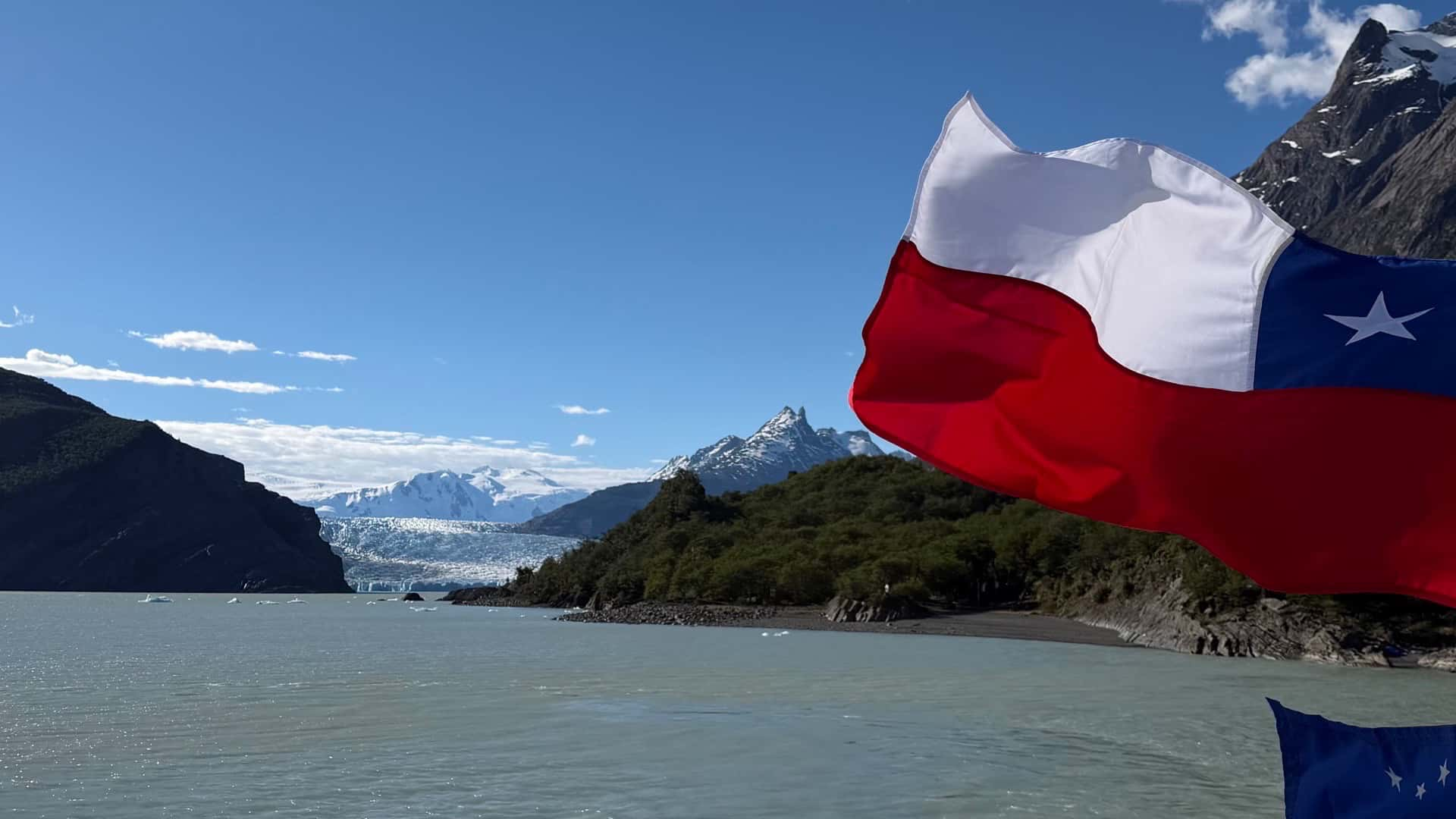
Long before diesel engines breached these meltwater channels, the indigenous Aónikenk (Tehuelche) navigated the perimeter of these ice fields, reading the severe winds and jagged topography as a living, sacred terrain. They survived this territory through total sensory awareness, treating the fierce Patagonian climate with absolute reverence. Modern Patagonian mariners who pilot these craft carry forward that tactical respect. Operating within the strict boundaries of Torres del Paine National Park, these skilled crews maintain continuous environmental monitoring, recording glacial retreat rates that exceed dozens of meters annually. The boat captains do not merely ferry observers; they serve as tactical navigators on a volatile climate frontier, translating the ice sheet's violent structural changes into real-time safety assessments for those brave enough to venture into this southern extremity.
The Calibration & The Horizon
The return leg across Lago Grey offers no soft comfort, only the steady rhythm of diesel combustion against relentless catabatic resistance. This journey strips away the triviality of modern travel; it demands physical tolerance for biting cold and an intellectual willingness to confront our brief presence against geological epochal time. The true value of navigating the glacial front lies not in conquering the element, but in recalibrating the self against absolute physical power. As the red hull docks back against the volcanic gravel, one walks away grounded, hardened, and acutely aware of the fragile, unyielding machinery of the earth.