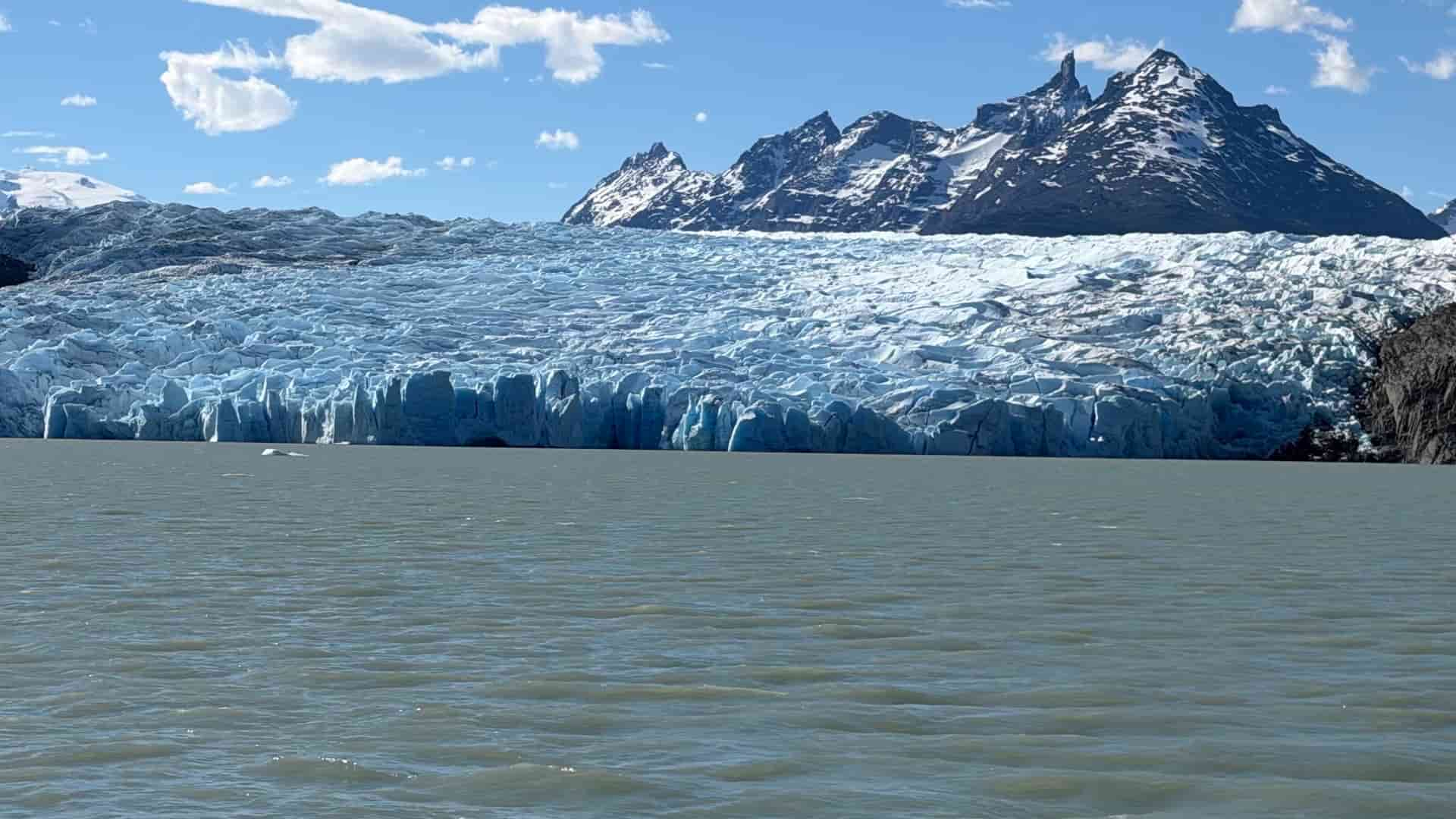
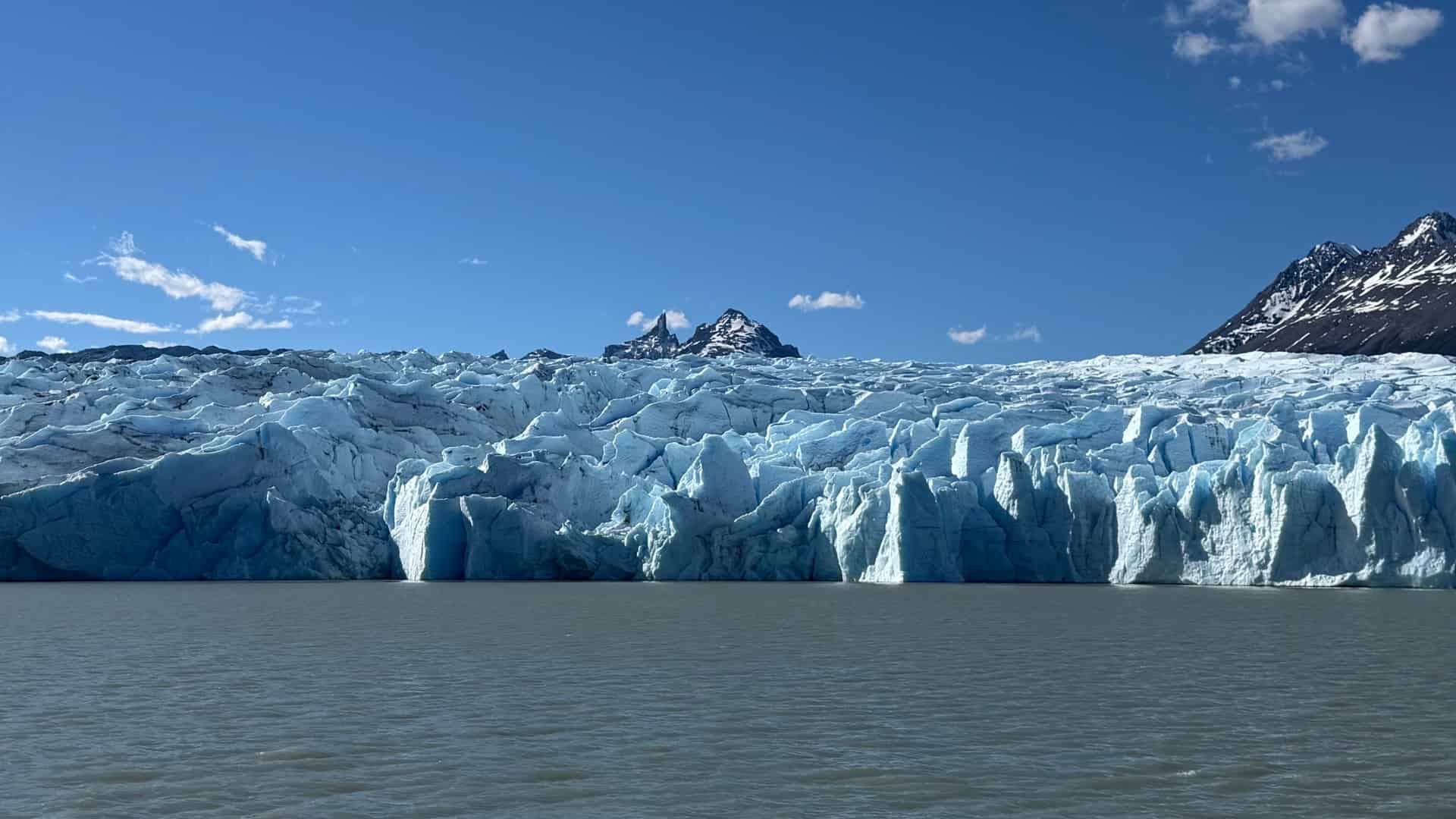
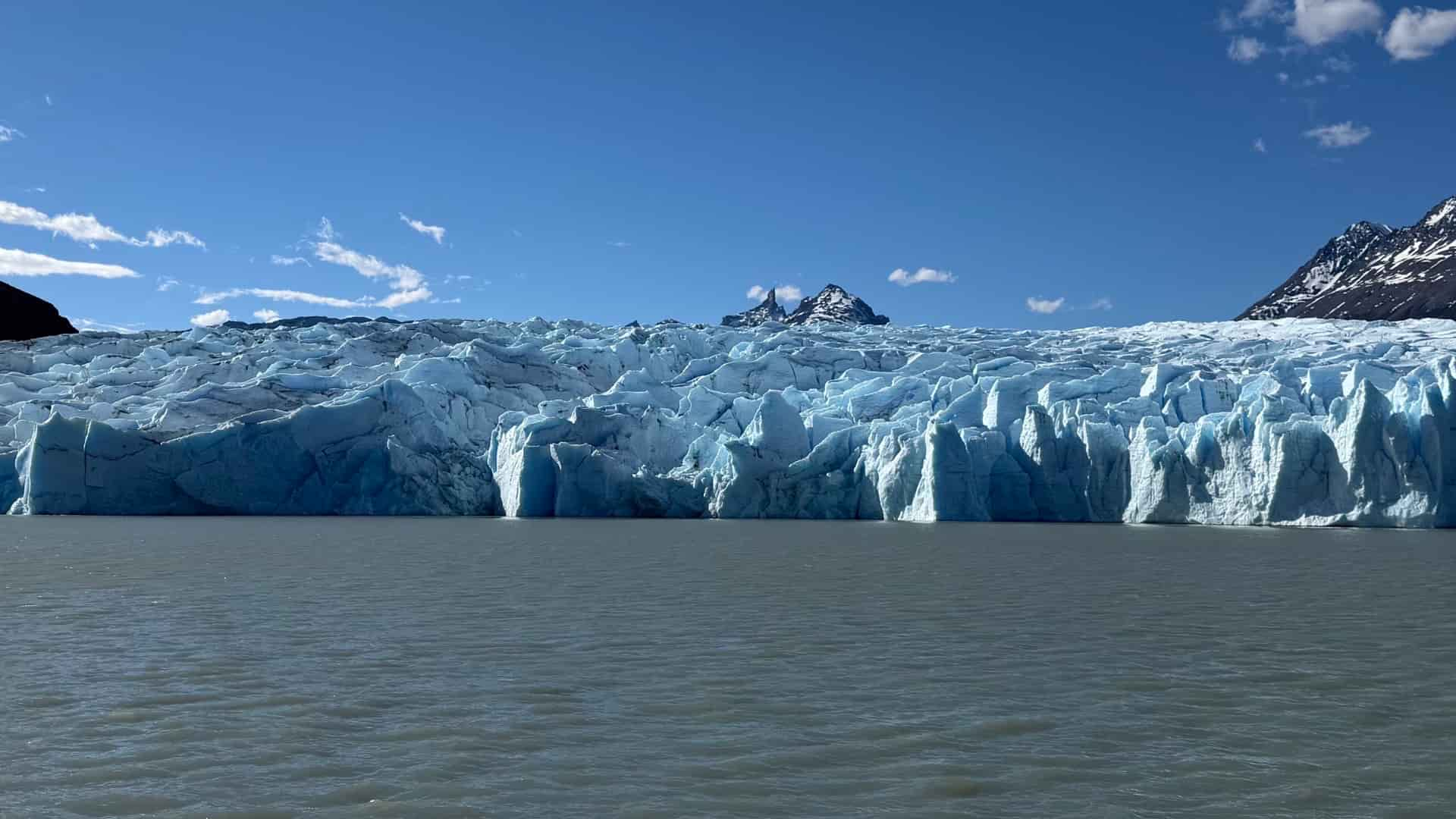
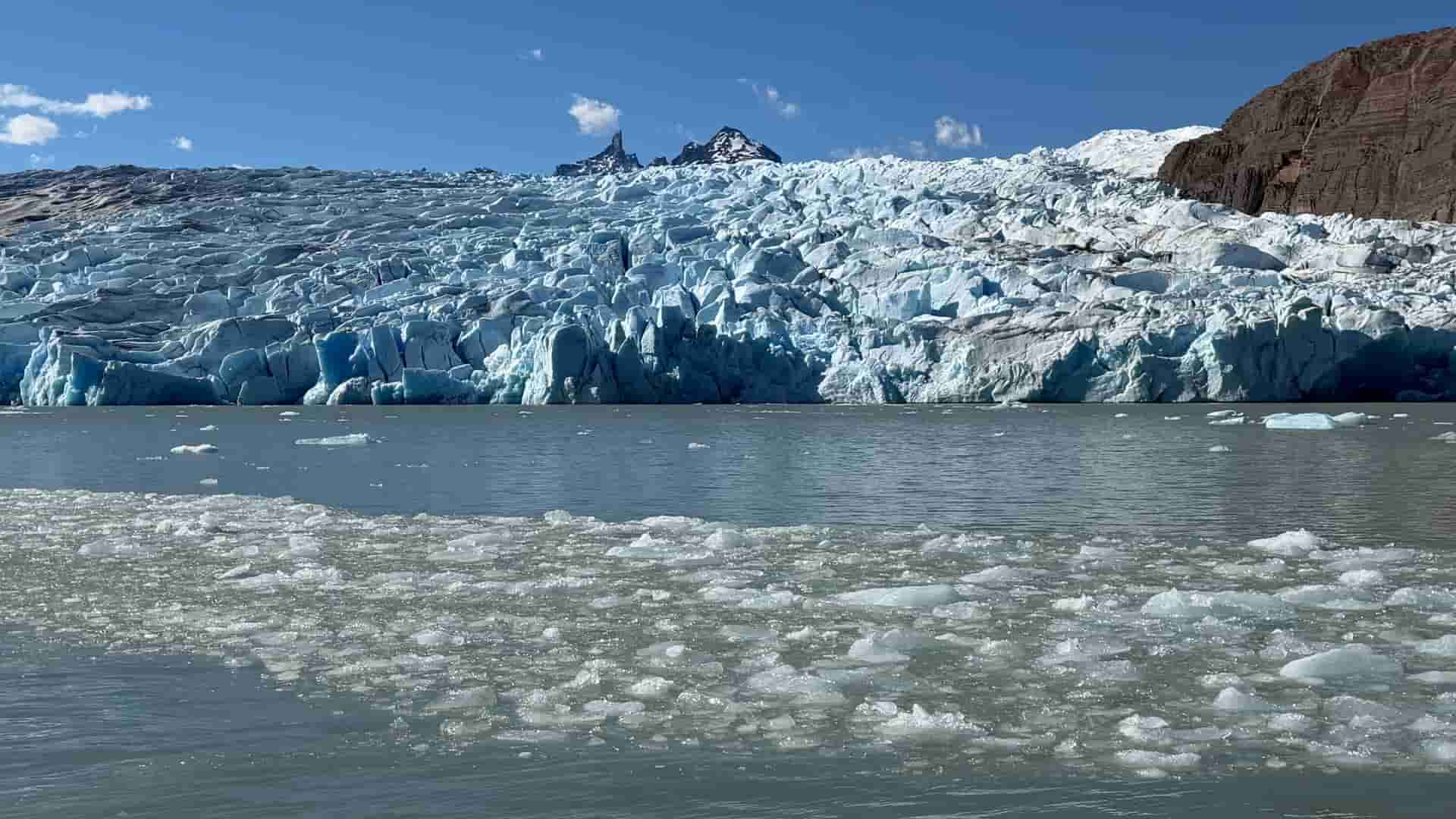
You inhale the bitter dust of bedrock pulverized under immense weight since nomadic Aónikenk hunters first tracked guanaco across these southern shores twenty thousand years ago. High above, vertical spires of frozen water crack under relentless skyward pressure. A thirty-meter cliff of pure compressed time.
Fast Facts for the Modern Explorer
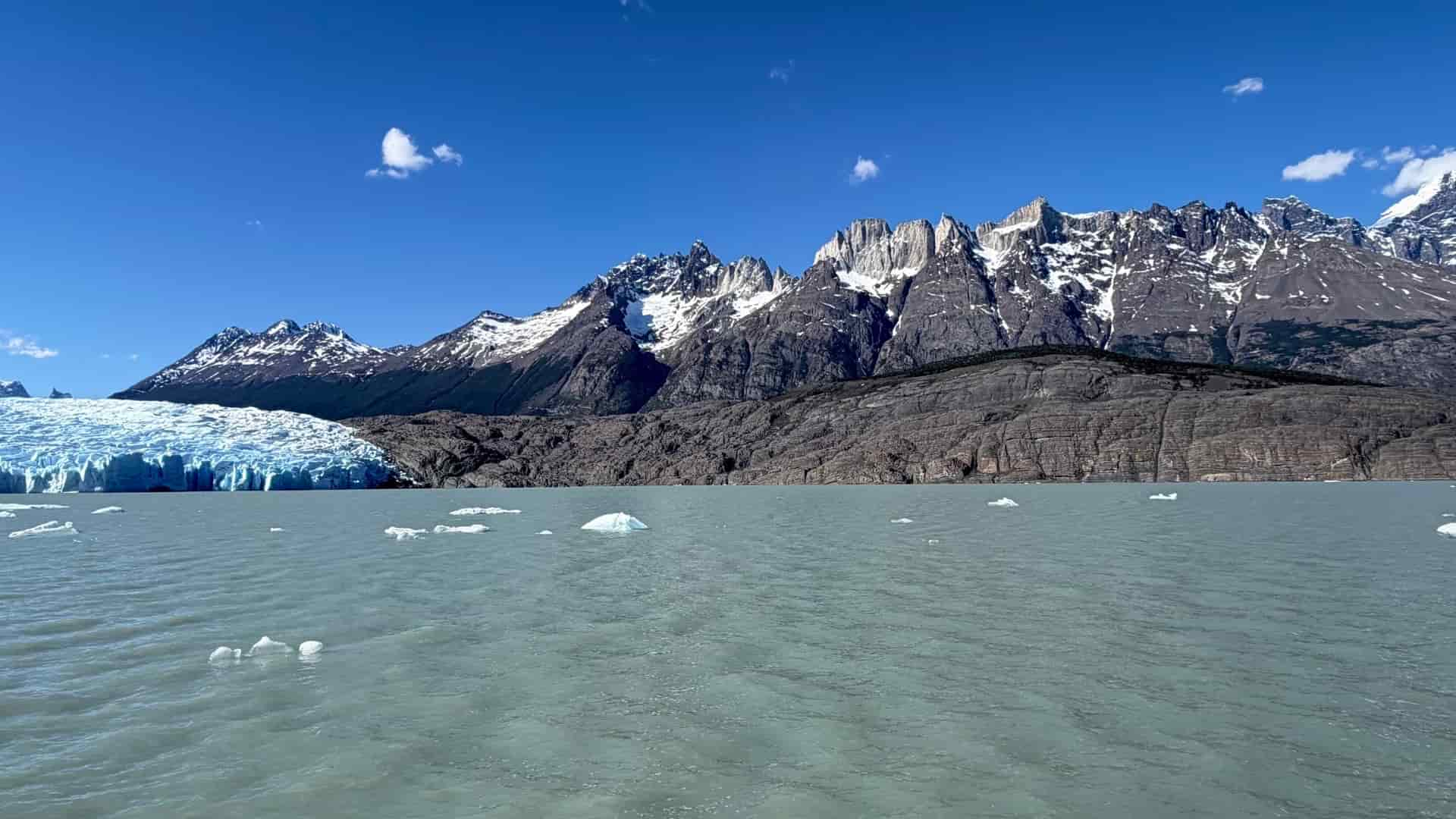
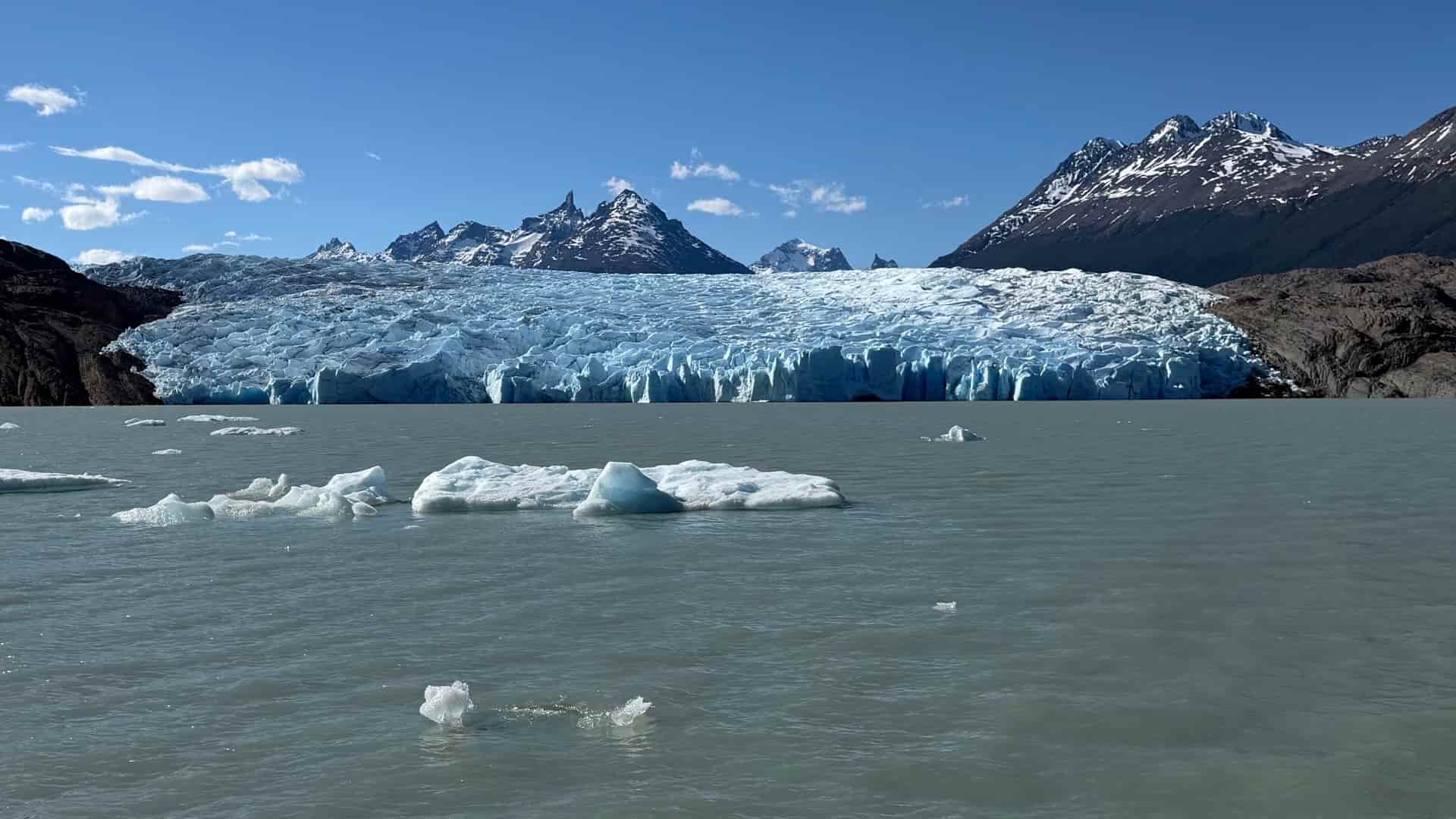
- Direct Definition: Grey Glacier is a 28-kilometer-long outlet glacier originating in the Southern Patagonian Ice Field and terminating in Lago Grey within Chile’s Torres del Paine National Park.
- Current Relevance: Rapid regional warming accelerates glacial recession, causing major calving events such as the 350-by-380-meter iceberg that detached from the main face in late 2017.
- Practical Duration: Budget three days from Puerto Natales to navigate the proglacial lake by catamaran and trek along the exposed terminal moraines.
Liquid lead fills the lake bed. Fine rock flour ground from subglacial granite hangs suspended in the water, turning the deep basin into an opaque grey mirror that absorbs the sky while setting off the ice's electric blue. Centuries of heavy snow squeeze out every air bubble, leaving a glass wall that swallows red light and spills cold cobalt across the dark water. Frozen water carved by friction, density, and sheer weight. Wind strips the warmth from your face.
Ice records human history silently. Long before Lady Florence Dixie published her Patagonian travel memoirs during the height of Victorian empire expansion in 1879, Kawésqar canoeists paddled these icy channels with small blazes burning on clay hearths inside their bark canoes. They understood the deep cracks of calving seracs as live speech, building their seasonal sea routes around the dangerous drift of blue bergs. Modern maps call this Última Esperanza, but the indigenous tribes knew it as home ground. Sacred ice, wild and demanding.
Glaciers build their own terrain. When UNESCO designated Torres del Paine a Biosphere Reserve in 1978, glaciologists began charting how the twenty-eight-kilometer ice tongue drags dark lateral moraines along its flanks like iron rails. The blue ice pushes forward while rising air temperatures pull the terminus back, creating a relentless war of mechanical friction against ancient southern rock. Dark bands of rock flour trace centuries of downhill motion across the frozen plain. Raw earth carves itself in icy silence.
Reflective Pause: A sliver of ice melts across my palm, cold enough to burn skin. I watch an air bubble trapped four centuries ago break free and vanish into the wet wind. The quiet leaden lake drinks the last blue light of evening.
Close your eyes for sixty seconds. Behind your eyelids, you do not see darkness, but a glowing blue grid burned into your retina by sunlight bouncing off centuries of compacted ice spires towering over the cold water. When major calving events in late 2017 tore a 350-by-380-meter iceberg from the wall, the splash echoed across deep geological time. The loss reminds us that this fortress of ice is fragile despite its vast scale and weight. Deep time melting in human hands.
The wind retains its bite. Leaving the shore, the taste of crushed slate and cold granite lingers on your tongue while the cobalt face recedes into the gathering grey mist of the Última Esperanza province. We travel to Grey Glacier not to conquer a wild landscape, but to witness how fast an ancient world can shift before our eyes. Frozen stone turned to water, water turned to memory. Will the cobalt light outlive our brief stay on this earth?