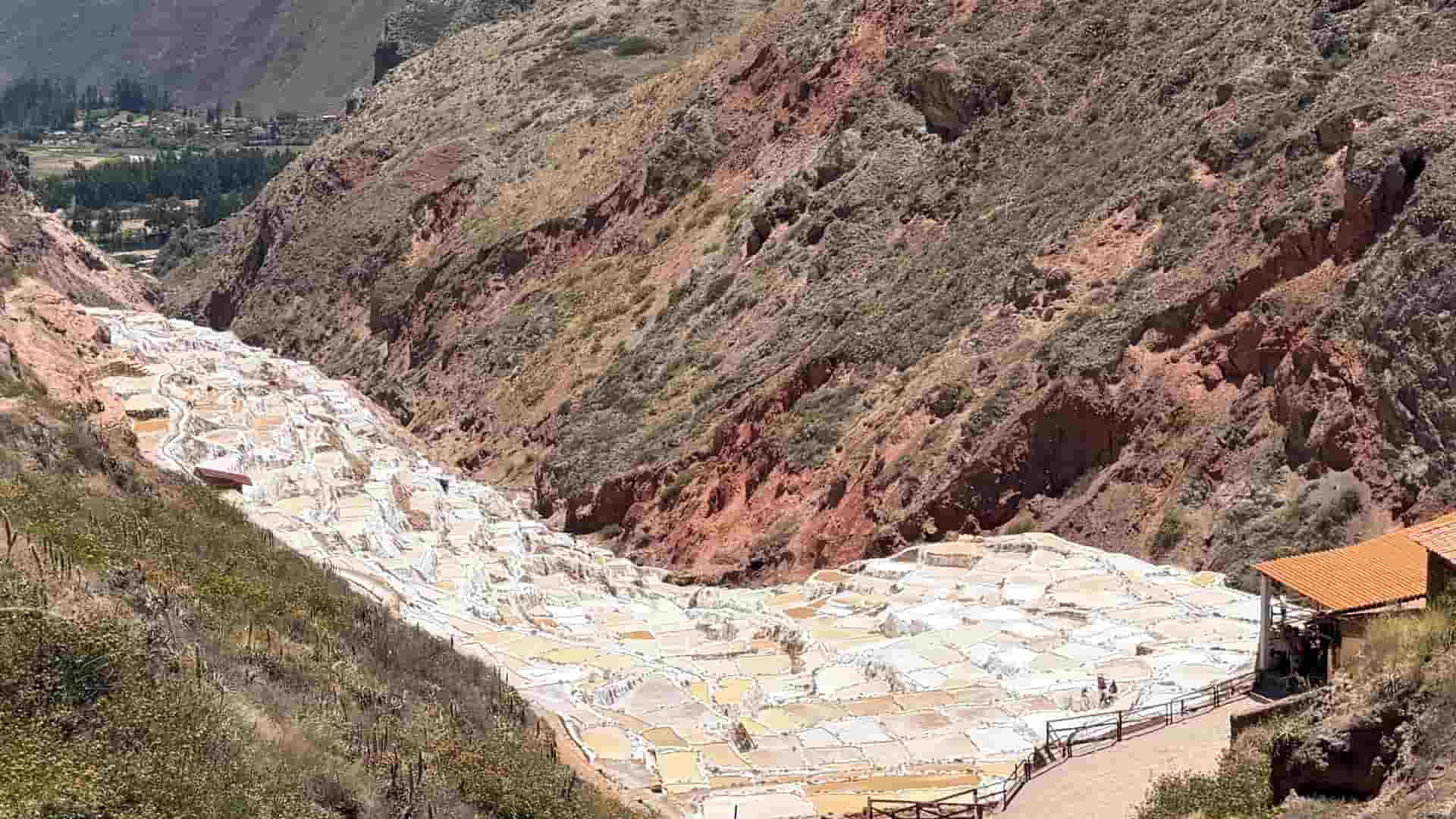
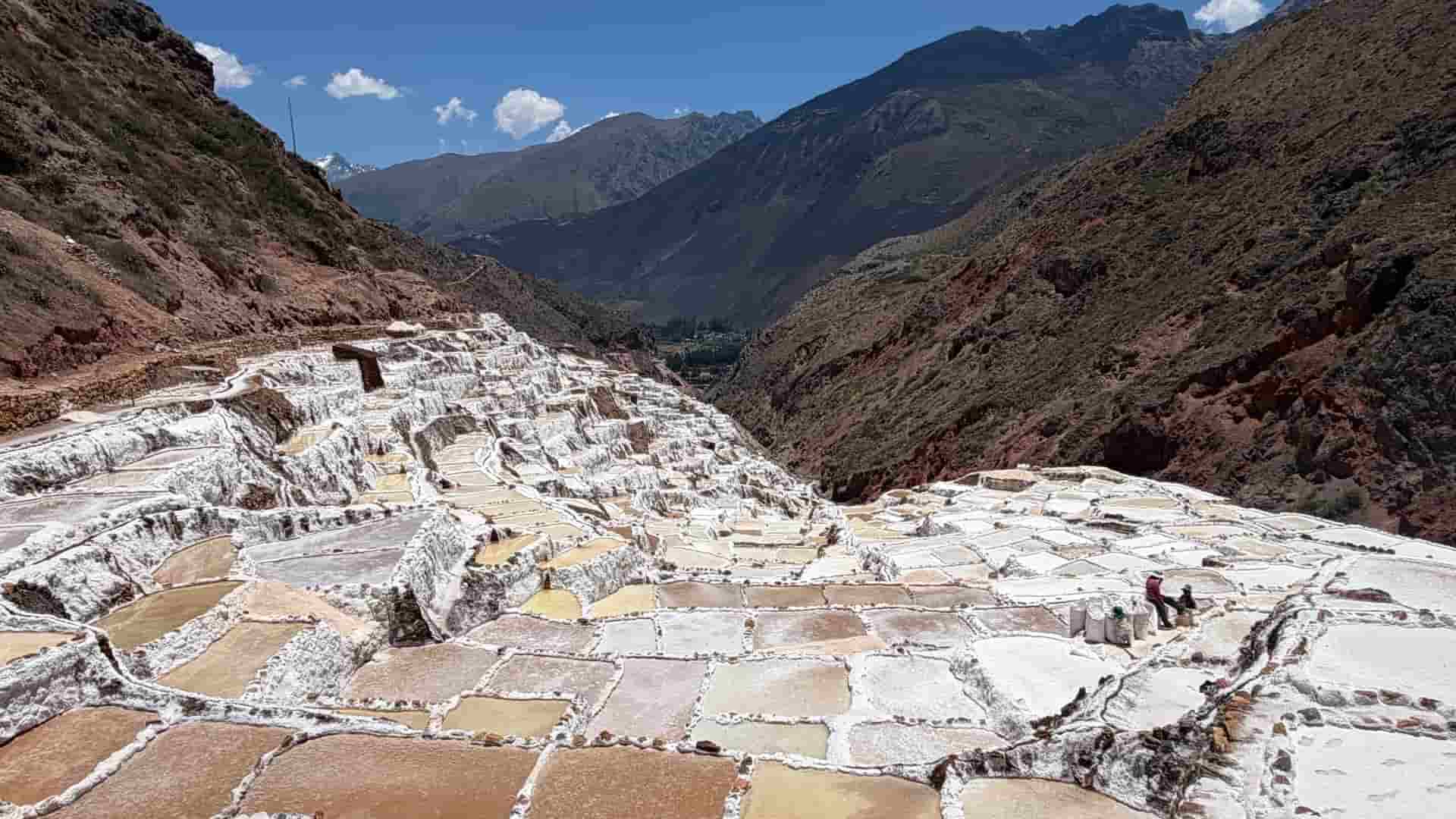
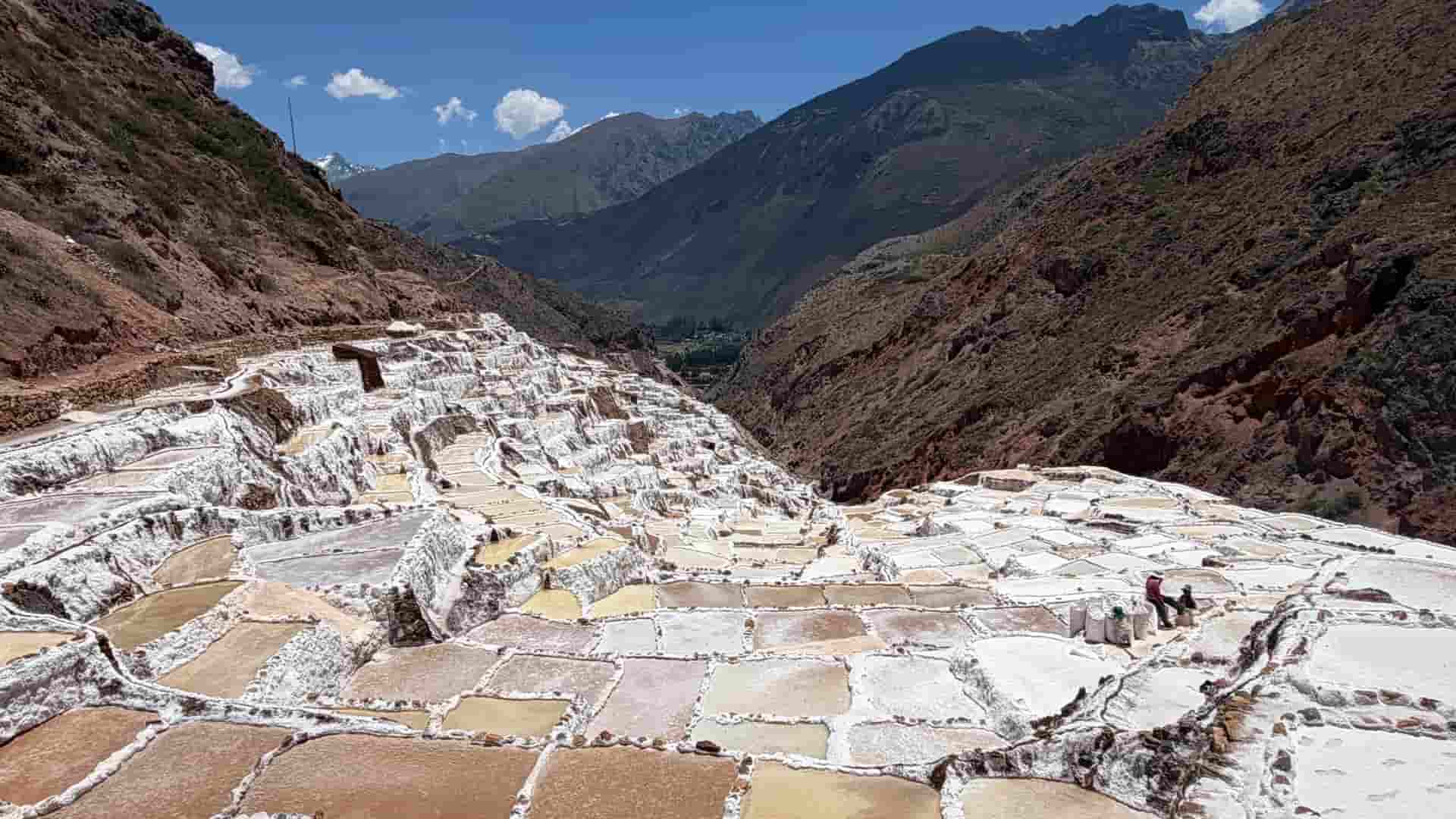
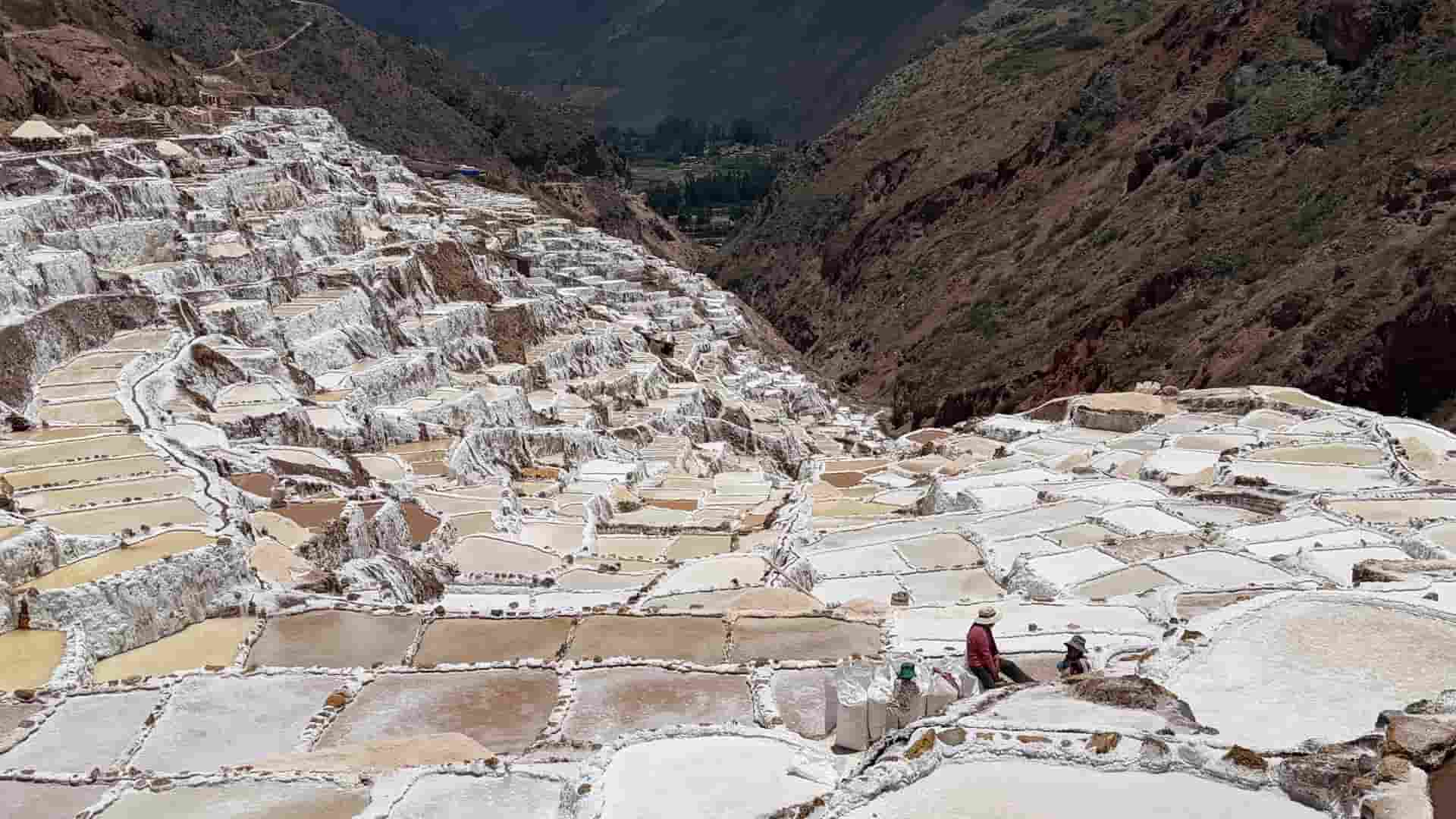
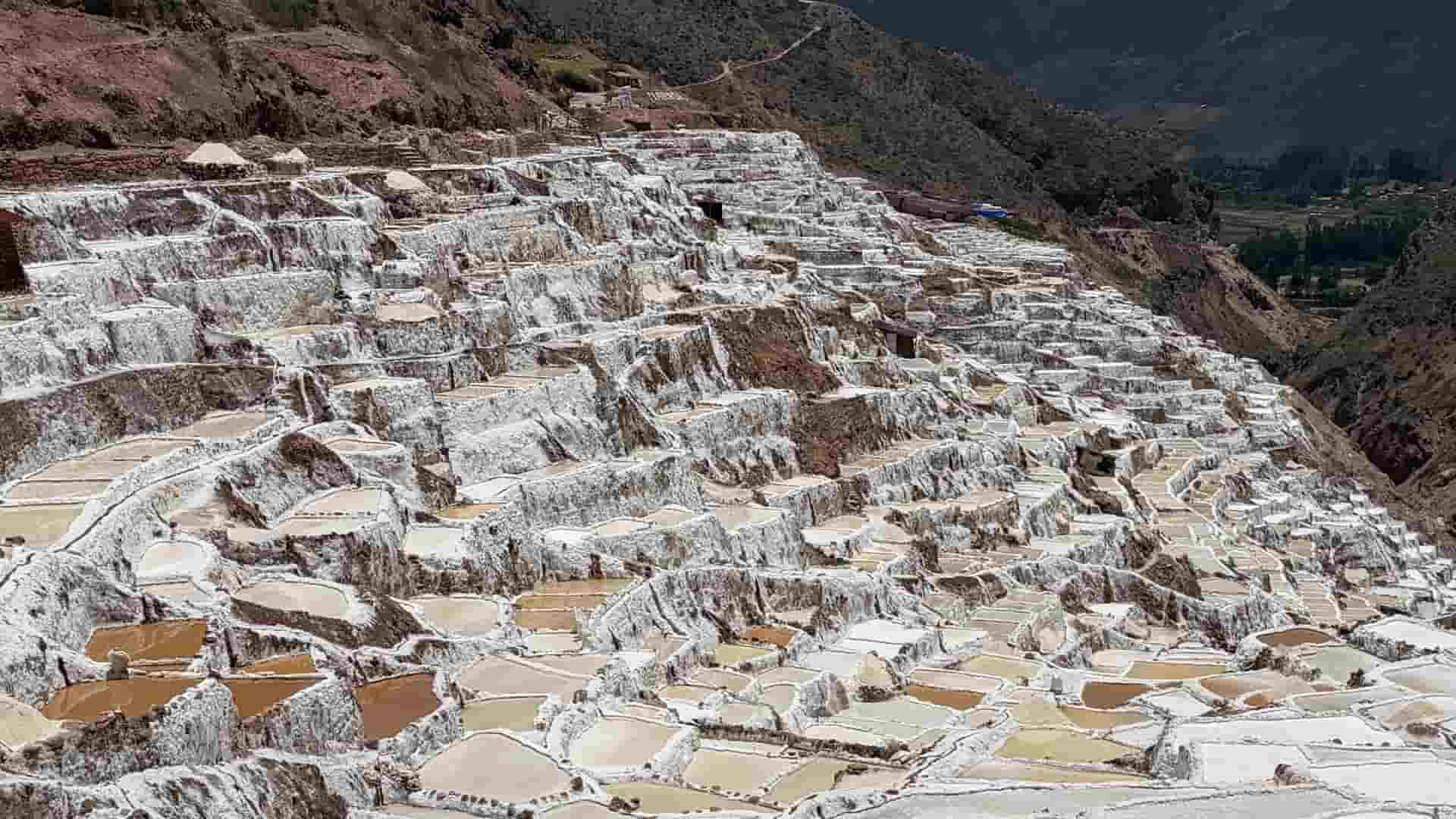
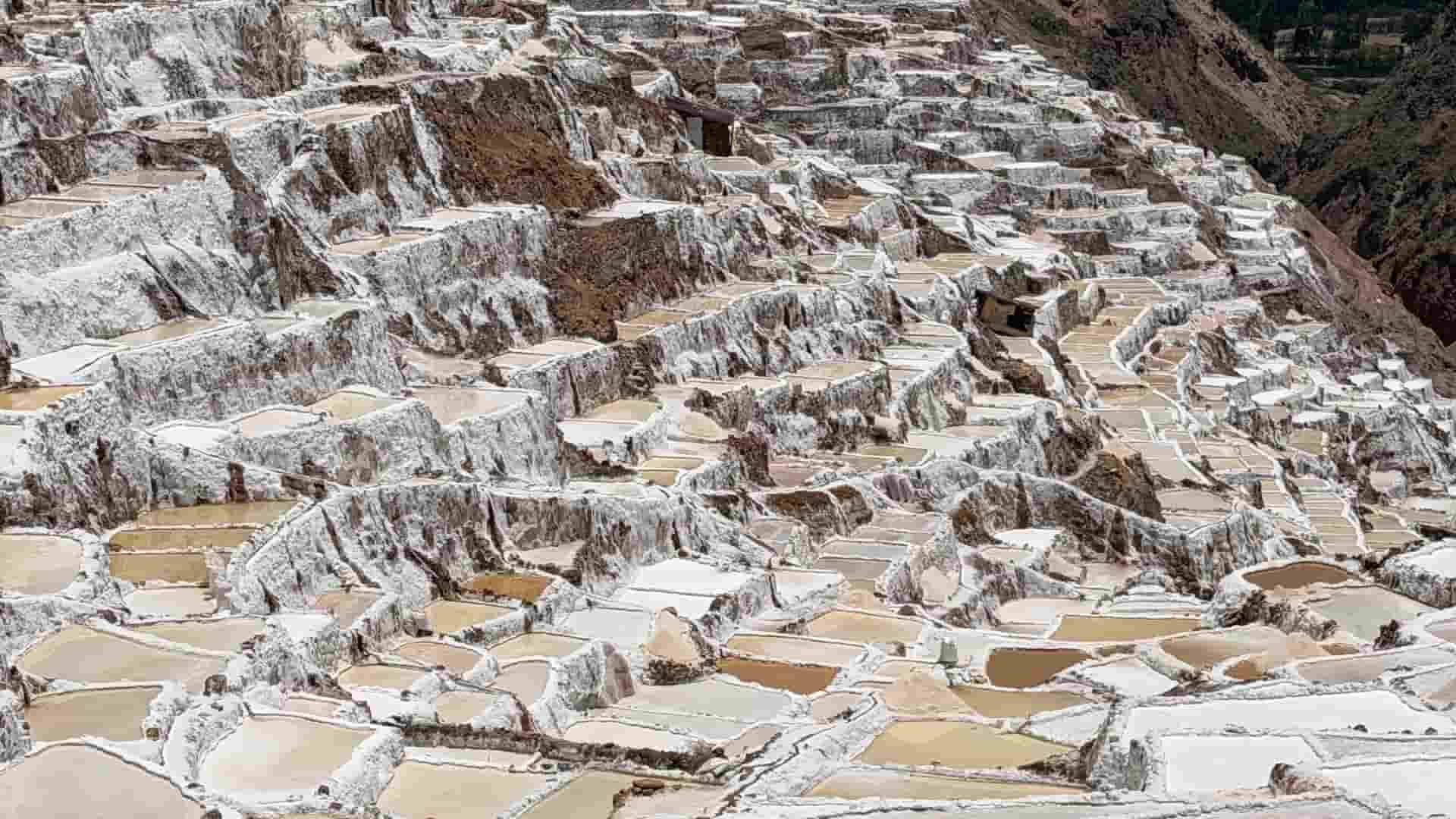
Cold winds sweep the canyon wall. Three thousand shallow earthen pans cling to the red rock of Qaqawiñay like a cascading staircase of chalk, catching the glare of the high-altitude sun as warm subterranean water creeps through narrow stone channels at thirty-four hundred meters above sea level. The air carries the dry scent of baked dust alongside the sharp, metallic tang of drying brine. Salt farmers scrape the white floors with wooden spades, working the ground as their ancestors did before empire arrived.
Fast Facts for the Modern Explorer
- Direct Definition: Salineras de Maras is a terraced complex of over three thousand hand-dug evaporation ponds fed by a hyper-saline thermal spring in Peru's Sacred Valley.
- Current Relevance: Managed exclusively by local indigenous families through the Marasal cooperative, it supplies mineral-rich pink salt to global markets while protecting the site from foot-traffic erosion.
- Practical Duration: Allocate two to three hours to observe the terraces from the upper canyon rim and walk the ancestral perimeter trails.
Salt drives the engine of empire. Around two hundred years before Christ, early Chanapata farmers first trapped the bitter spring of Qoripujio inside clay dykes, but when the Inca state swept across these ridges in 1438, engineers transformed the chaotic ditch into an intricate system of channels to preserve dried meat and tan heavy hides. Imperial officers treated every bucket of brine as strategic wealth, organizing local clans into rotating labor squads through strict customs of communal work. Spanish taxmen later seized the revenue but left the backbreaking work to native families who knew the temperament of the mountain spring.
Water obeys the stone network. Each ten-square-meter pan holds thirty centimeters of salt-saturated water, fed by small wooden notches along the main stone aqueduct until intense Andean sunlight burns off the fluid over three grueling weeks. The top layer yields delicate pink crystals, scraped gently into wicker baskets for kitchen hearths across the globe. In 2019, community leaders banned outsiders from stepping onto the fragile clay retaining walls, shielding the ancestral earth from footsteps that threatened to crumble the terraces into the gorge below.
Reflective Pause
A trickle of warm brine runs across my index finger, leaving a powdery white ring as it dries in the thin air. The mountain holds its breath, quiet save for the rhythmic clink of an iron scraper against wet clay far below. Light bounces off three thousand mirrors, blinding and sharp, turning the harsh canyon into a vessel of quiet work.
Legend grounds the saline spring. Local myth holds that the subterranean water springs directly from the bitter tears of Ayar Cachi, an ancient warrior sealed inside a mountain cavern by fearful siblings during the dawn of creation. His subterranean sorrow feeds three hundred local families today through the Marasal cooperative, where ancient reciprocal labor covenants keep both the land and the community whole. Grief turned into living nourishment. Human grit binds the canyon wall to the family line, proving that shared purpose can outlast empires and conquer severe terrain.
Close your eyes for sixty seconds. Behind dark eyelids, the blinding glare fades into the heavy hum of wind threading through dried grass, the steady trickling of subterranean brine through stone troughs, and the dull thud of heavy wooden mallets packing red clay against the mountain. You realize that this canyon is not a silent ruin preserved under glass, but a raw, working monument where water, soil, and human muscle continuously shape one another. When you open your eyes to the terraced basin stepping into the abyss, ask yourself if we have lost the patience to build things meant to feed our great-grandchildren.