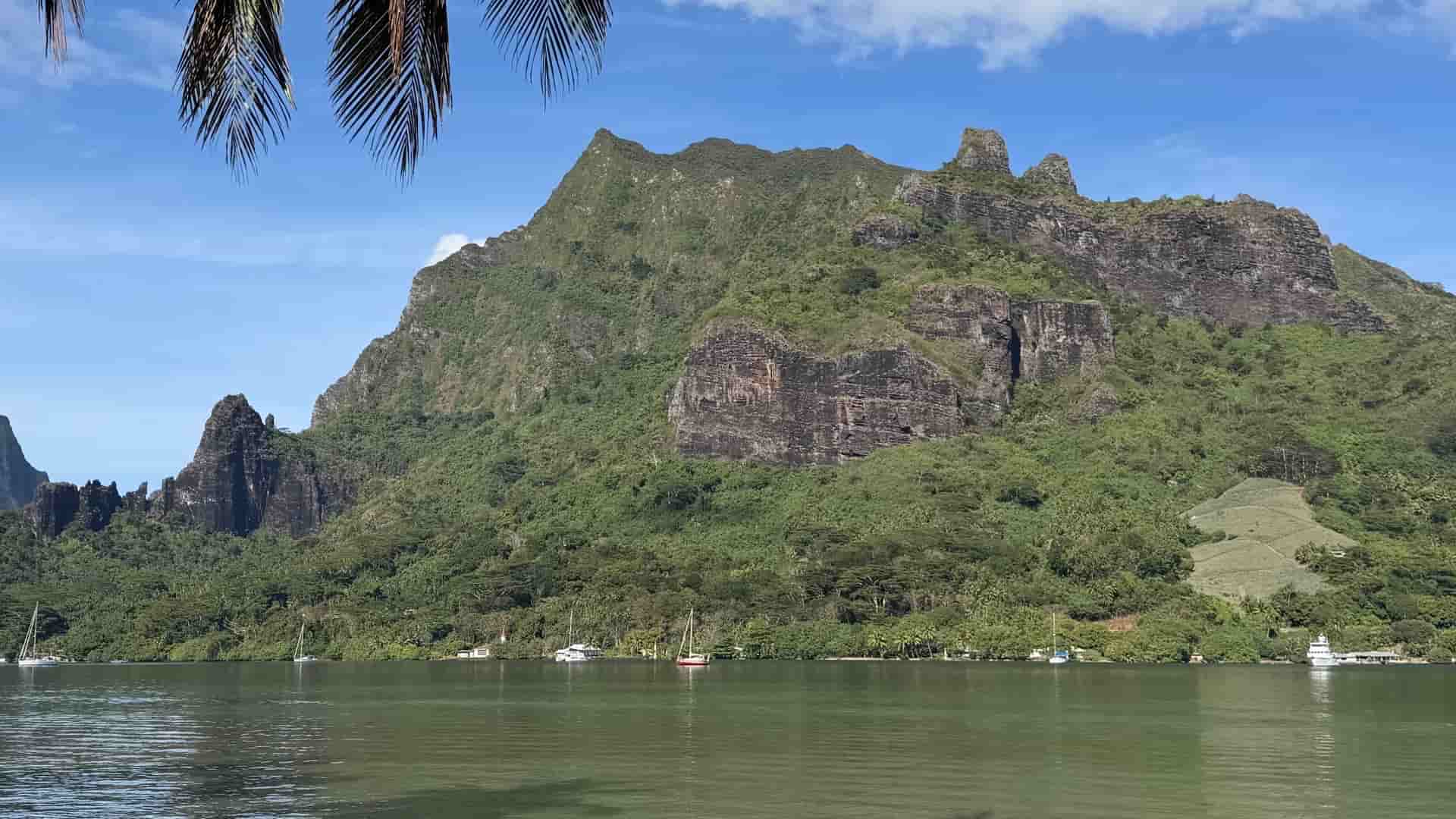
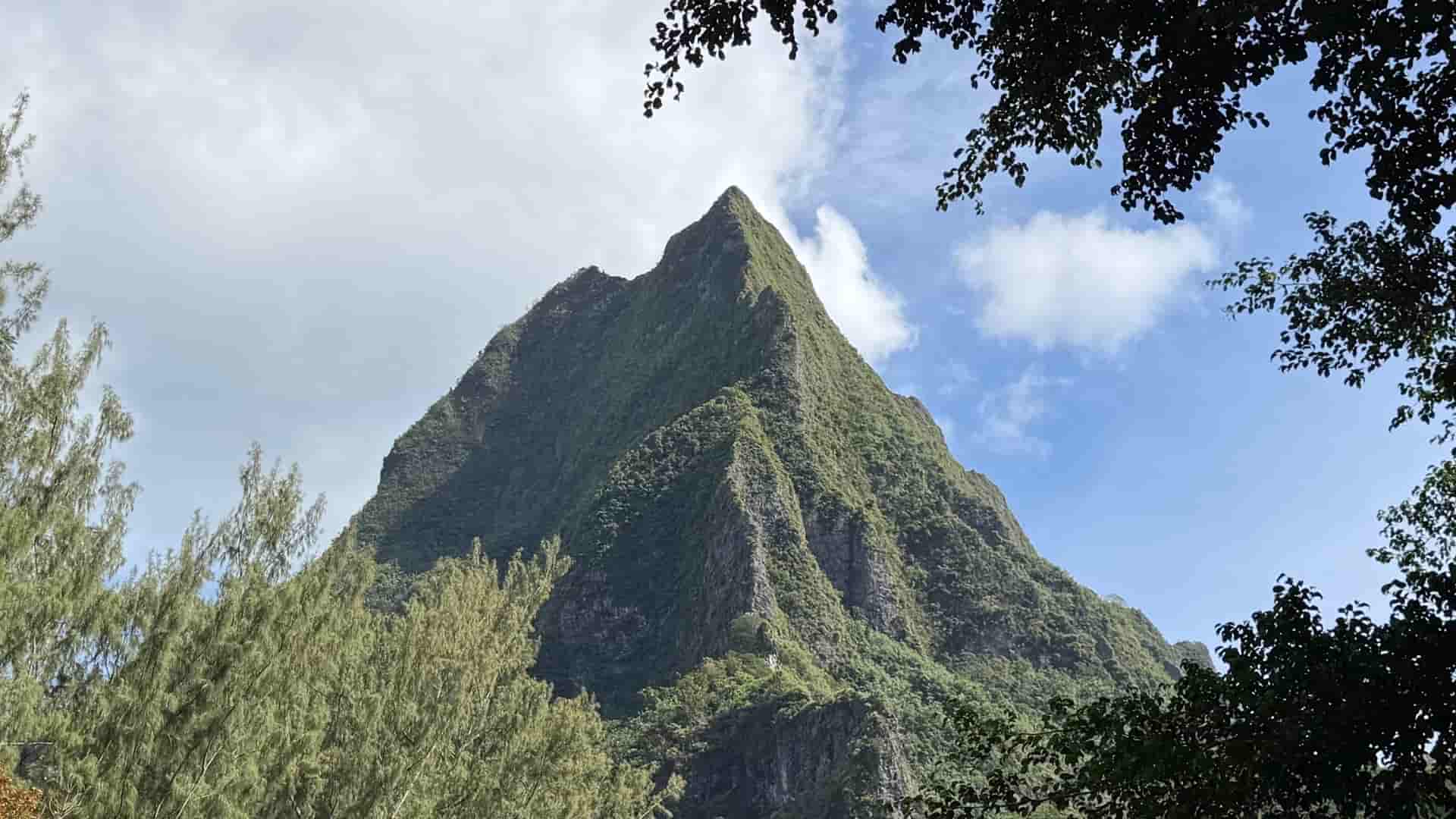
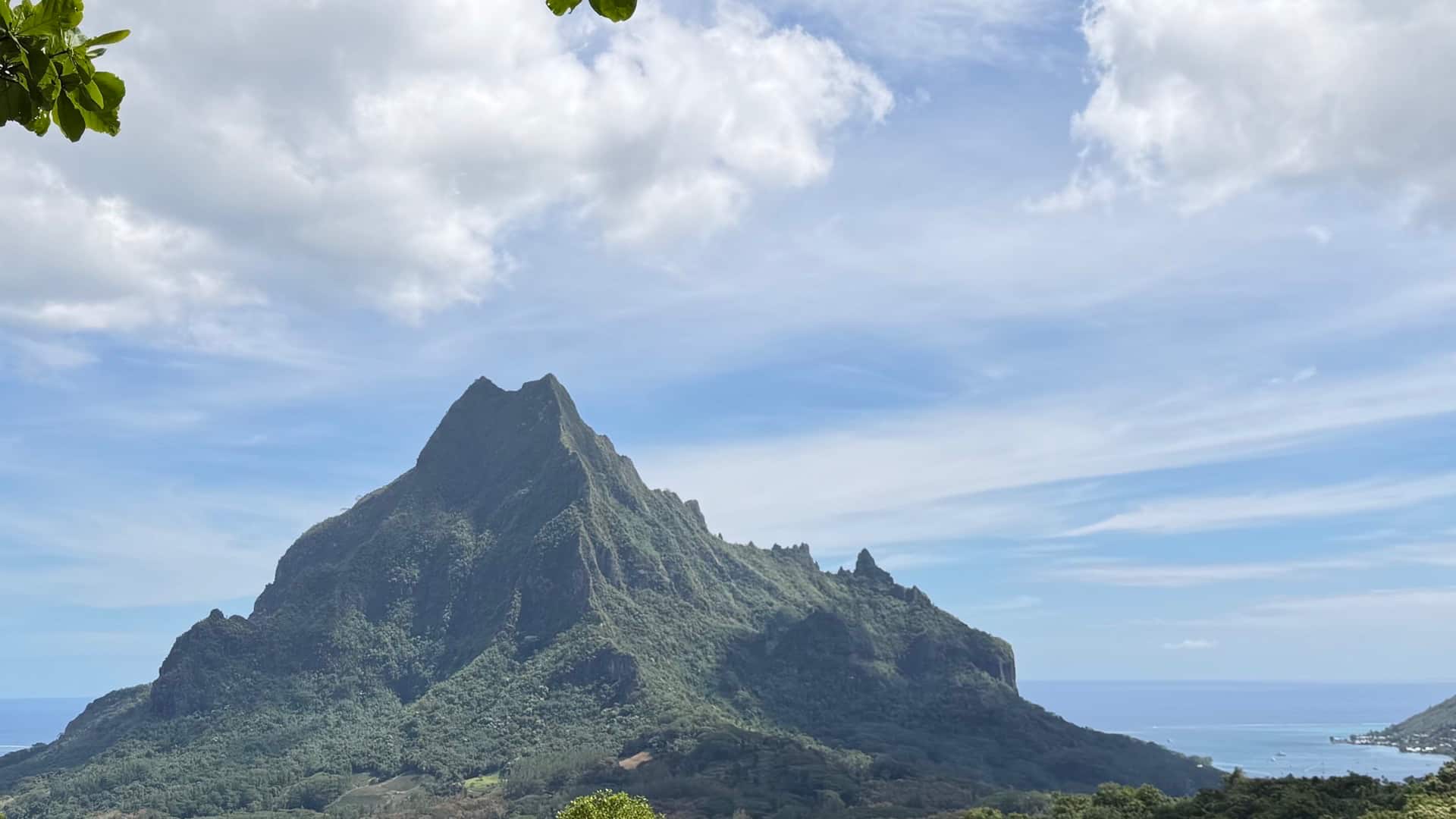
Standing on the heights of the Belvedere, you feel the cool mountain breeze carrying the distant, hollow rush of a waterfall plunging through the dense jungle. Beneath the jagged, cloud-torn peak of Mount Mouaputa, the wind whispers through the stiff leaves of the Tahitian chestnuts. A quiet green cathedral of ancient stone.
Fast Facts for the Modern Explorer
- Direct Definition: Moorea is a high volcanic island in French Polynesia's Society Archipelago, defined by its dramatic twin bays and jagged basalt peaks carved by ancient caldera collapses.
- Current Relevance: The island serves as a critical global hub for marine biology through the Gump Research Station, while its restored stone marae preserve the sacred heritage of the pre-Christian Ma'ohi civilization.
- Practical Duration: Plan for five days to fully traverse the inland rainforest trails, historical stone temples, and outer barrier reefs.
Stone anchors the human spirit. Deep in the shaded, dripping belly of the Opunohu Valley, the ancient Ma'ohi built great basalt temples, known as marae, where priests offered sacrifices to keep the cosmos in balance. These dry-stone courtyards, guarded by the massive, winding roots of the native chestnut trees, served as the political and spiritual beating heart of a highly stratified clan society. They carved tall wooden boards to draw down the gods into this damp silence. A realm of strict taboos and sacred boundaries.
The foreign sails brought change. When Captain James Cook anchored his heavy wooden ships in Opunohu Bay in October 1777, during the final years of sovereign chiefdoms, his arrival set off a wave of trade, foreign disease, and ultimate cultural upheaval. Within decades, King Pomare II embraced the Christian faith, ordering the systematic dismantling of the old stone temples to build plantation walls, coastal churches, and European roads. The sacred chants faded into the hum of the printing press. A native world rewritten on imported paper.
The land itself is ancient. Born from a collapsing shield volcano some 1.5 million years ago, this rugged mass sits just 17 kilometers northwest of Tahiti, a crown of black basalt rising from the blue deep. Today, the wild vanilla forests have given way to vast fields of sweet Queen Tahiti pineapple, turning the old sacred interior of the caldera into an agricultural engine. Yet the bones of the volcano remain unchanged by the shifting crops. A landscape forever scarred by fire.
Reflective Pause: A single yellow hibiscus petal drifts onto the dark volcanic gravel of the marae courtyard. The afternoon light filters through the canopy in pale, greenish shafts, illuminating the slow crawl of a hermit crab across a mossy basalt block. Here, the only sound is the rhythmic, heavy drip of condensation falling from the high leaves.
We seek the quiet center. If you close your eyes for sixty seconds on the edge of the salt lagoon, you do not see the famous turquoise water, but instead witness the slow, white line of foam breaking endlessly against the outer reef. This constant, low rumble is the true pulse of the island, a reminder of the fragile border between the shallow garden and the dark, cold ocean. In this stillness, the modern marine laboratories and the ancient stone altars merge into a single effort to understand the sea. A shared vigil on a warming planet.
The basalt spires still guard the dark. As the evening shadows stretch across the valleys where 18,000 residents now live, the sharp scent of crushed pineapple and wet, iron-rich earth rises once more to meet the cooling Pacific sky. Whether mapped incorrectly by early mariners or studied intensely by modern ecologists, the island remains a silent sentinel holding its ancient ash and deep mysteries. We are merely passing guests on these volcanic slopes. Waiting for the next great tide.