Fast Facts for the Modern Explorer
- The Sanctuary: A Gilded Age mansion at 1 East 70th Street housing premier Old Master paintings within their original domestic settings.
- The Revival: A meticulous 2025 restoration by Selldorf Architects opens the intimate second-floor family rooms to the public for the first time.
- The Sojourn: Plan a quiet morning of two to three hours to absorb the masterpieces without the rush of modern gallery fatigue.
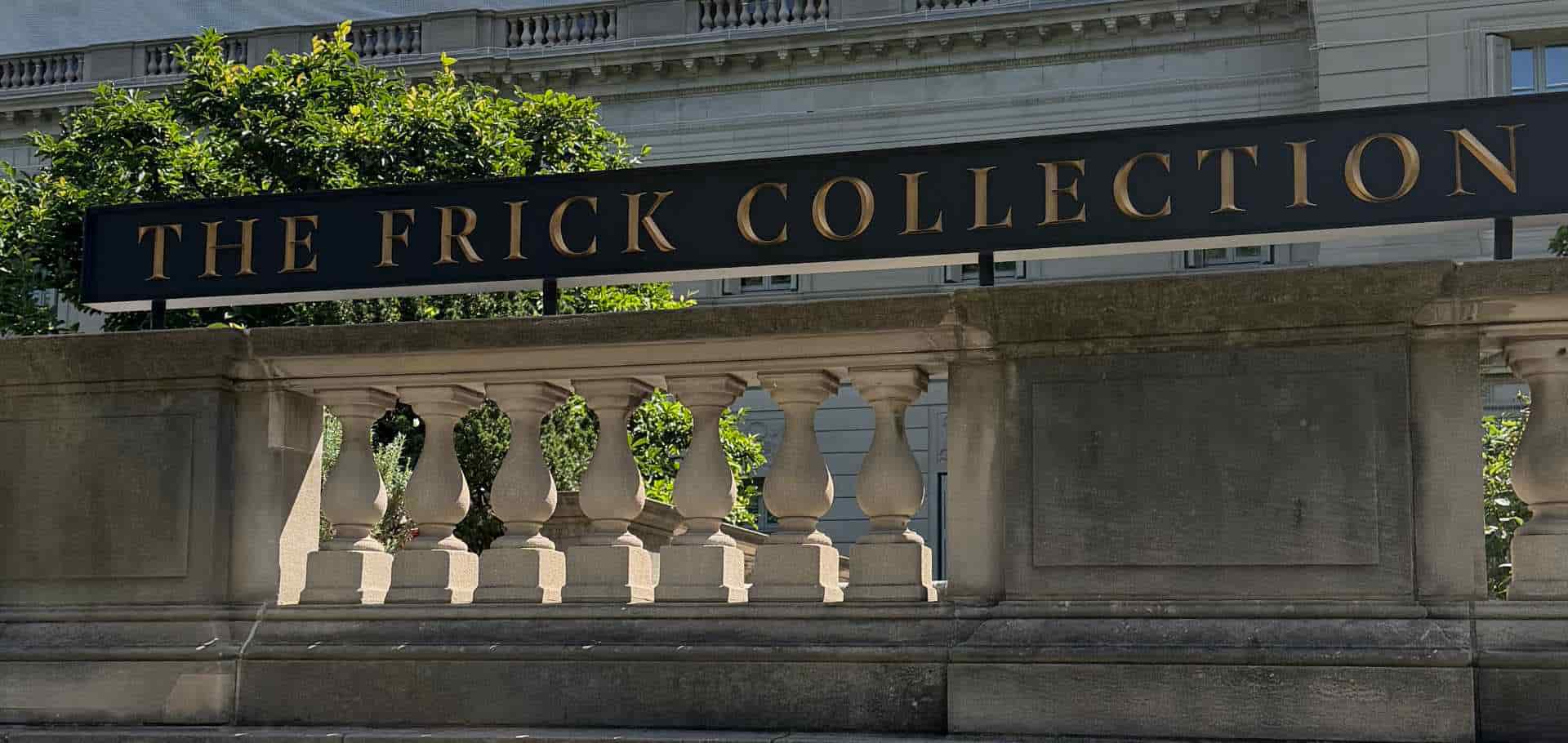
The city noise dies instantly. As you cross the threshold of this limestone home finished in the winter of 1914, the heavy bronze doors lock out the yellow cabs and the frantic roar of midtown Manhattan. We trade the hot exhaust of Fifth Avenue for a cool, shadowed hall where the air smells of rich beeswax, old books, and damp garden stone. This sudden quiet feels like a physical touch. A calm world of clean oak and quiet grace.
Gold bought this peace. Before this limestone sanctuary arose on Fifth Avenue, Henry Clay Frick built his colossal fortune in the soot-choked coal mines and steel mills of Western Pennsylvania during the height of America's Gilded Age. This delicate house grew out of the blood and sweat of the Homestead Strike in 1892, where armed guards clashed with striking workers in a bid for basic human dignity. The labor of thousands paid for the quiet galleries we tread today. A legacy forged in iron.
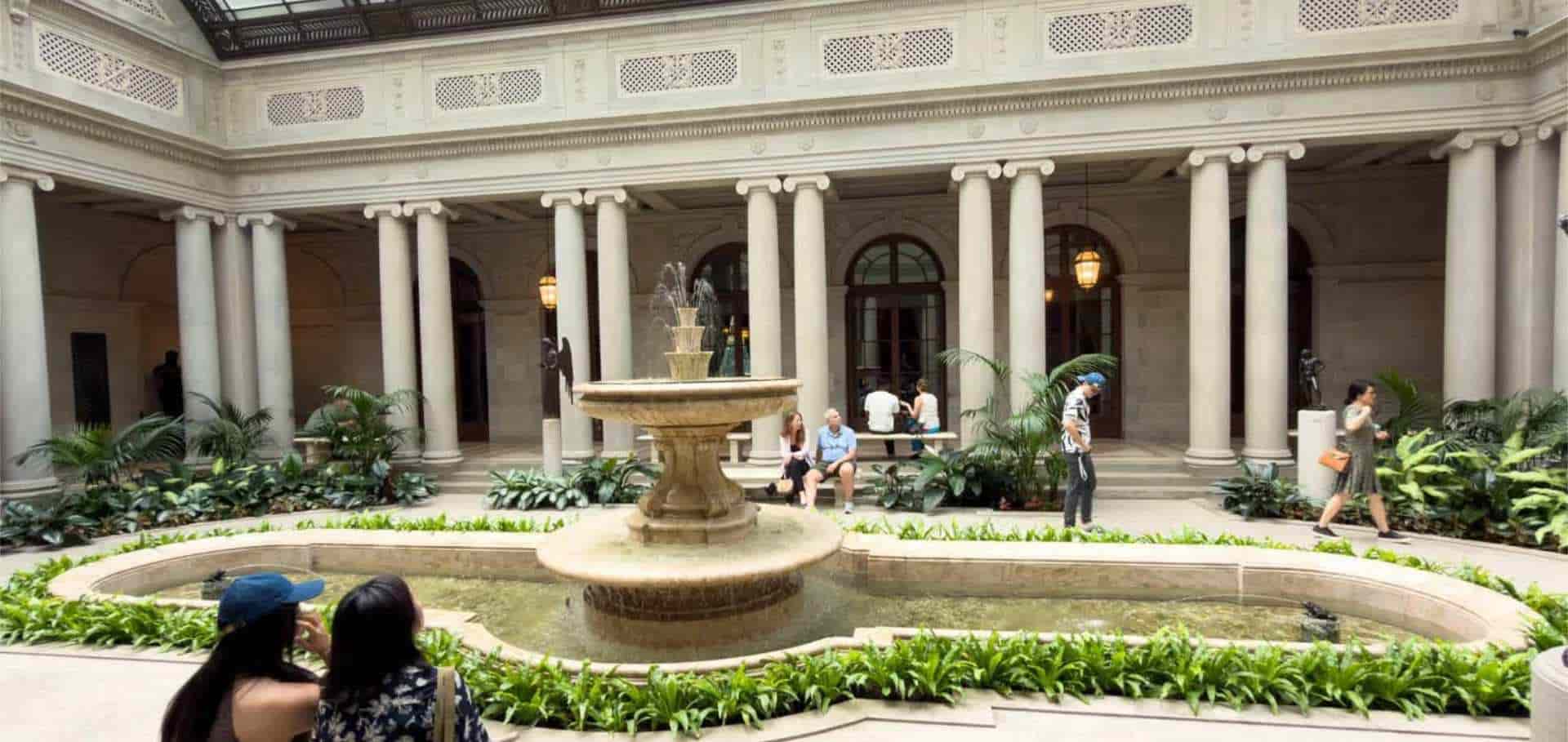
We feel this tension in the stones. After Frick’s death in the winter of 1919, his widow lived among these masterpieces until her own passing in 1931, which cleared the path for John Russell Pope to turn the private home into a public museum. Pope removed the old carriage port to build the glass-roofed Garden Court, where water now bubbles over grey marble basins and tropical plants drink the pale northern light. The house grew to hold the public. A private fort turned into a public trust.
Reflective Pause: A single drop of water falls from a fern leaf into the basin of the Garden Court, its ring widening across the dark pool. The cold grey stone of the fountain yields a wet, mineral smell that reminds me of cellar floors in autumn. Here, the hum of the city becomes nothing more than a ghost.
Mystery still hangs in the halls. For years, scholars argued over who painted the masterpiece known as The Polish Rider, with some experts claiming Rembrandt’s own pupil, Willem Drost, held the brush in mid-seventeenth-century Amsterdam. The museum leaves the canvas without a simple wall label, forcing us to look at the rider’s proud face rather than relying on a textbook name. This choice invites us to see the art with our own eyes. A silent dialogue between viewer and oil paint.
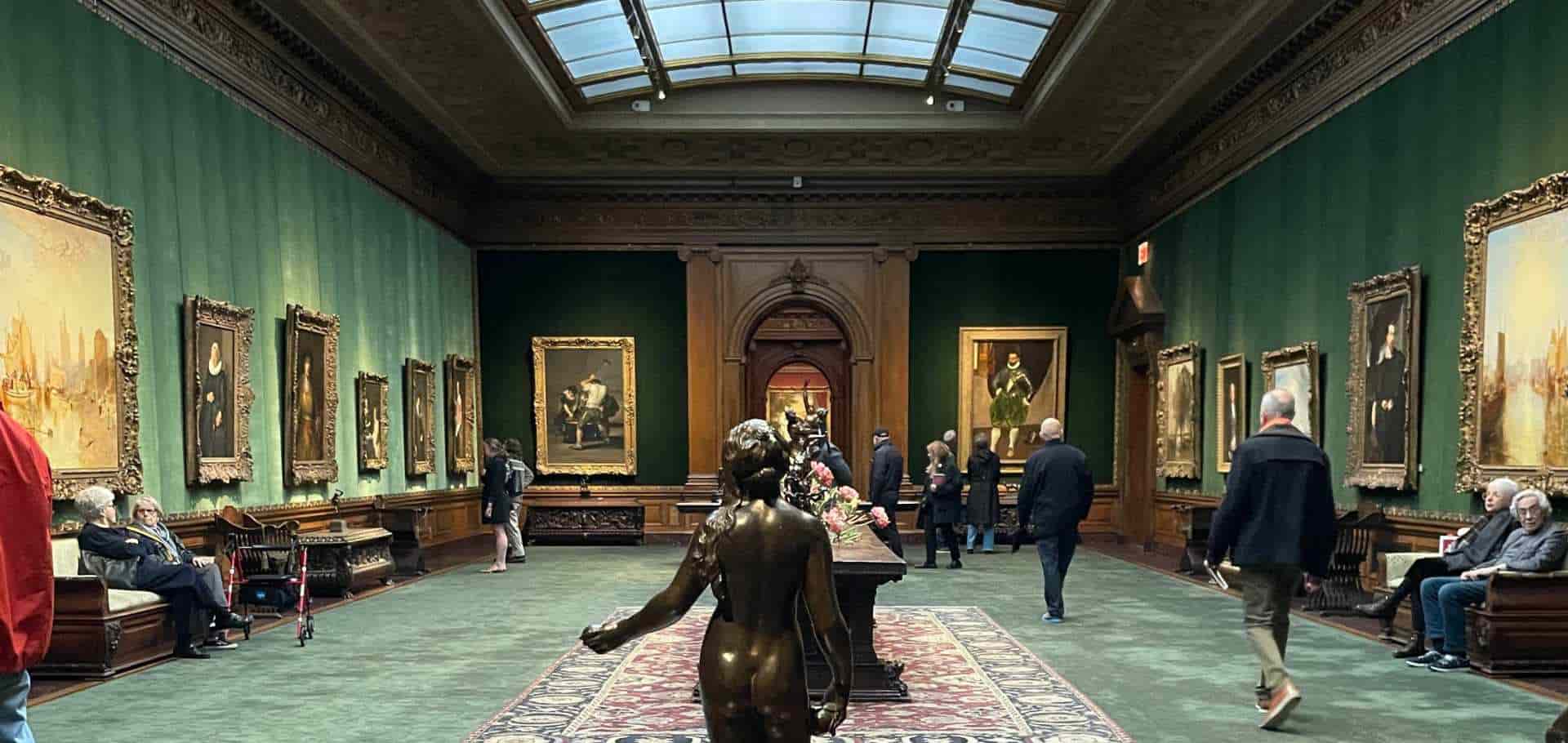
Art lives differently here. In the West Gallery, the sun streams through the high glass roof to illuminate Giovanni Bellini’s painting of Saint Francis, where the saint stands barefoot in a rocky field of detailed wildflowers. We see Rembrandt’s 1658 self-portrait hanging nearby, a massive canvas where the bankrupt artist stares out at us with heavy, tired eyes that still demand respect. These pictures do not hang on sterile white walls. They live among us like old friends in a living room.
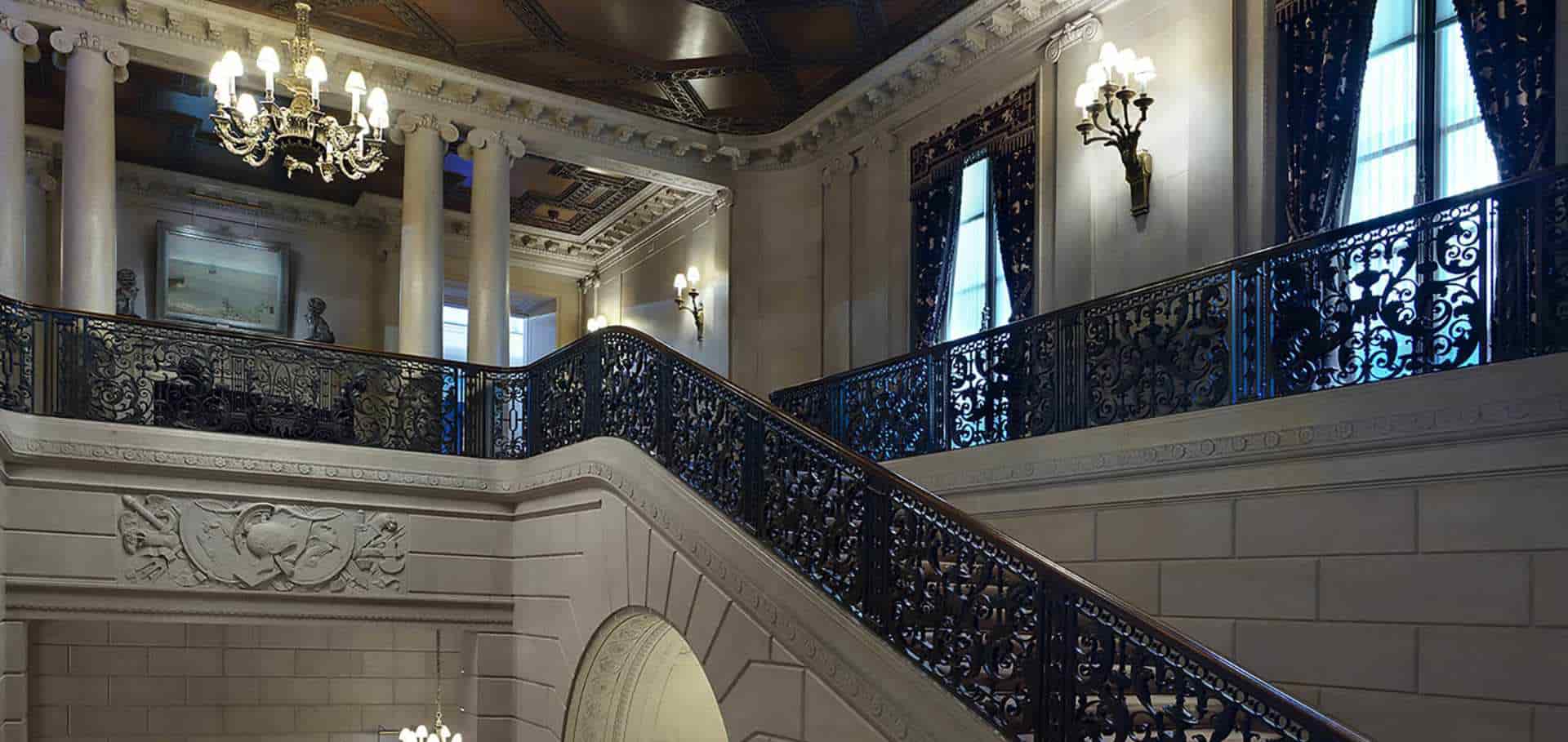
The modern age brings new paths. In the spring of 2025, Selldorf Architects finished a masterwork of design by opening the private second-floor rooms for the first time, allowing us to walk through the family’s bedrooms and breakfast nooks. If you close your eyes for sixty seconds in these newly opened rooms, you see the pale green silk wallpaper behind your eyelids, lit by the soft glow of Fifth Avenue. This is the true gift of the space. A quiet victory over the speed of modern life.
We return to the noisy street. As the heavy bronze doors open to let you back out onto Fifth Avenue, the cold wind off Central Park carries the dry smell of gasoline, asphalt, and hot street food. Rembrandt's weary gaze remains behind you in the quiet library, staring out from his dark canvas at the passing years with quiet defiance. The steel of Pittsburgh built these stone walls, but the silence inside keeps us whole. A sanctuary for the modern soul.