Fast Facts for the Modern Explorer
- Direct Definition: Raqmu, known today as Petra, is a monumental caravan metropolis carved directly into the red sandstone cliffs of southwestern Jordan by the Nabataeans.
- Current Relevance: Today, the site stands as a UNESCO World Heritage marvel, facing urgent preservation battles against rising damp, salt erosion, and the pressures of global tourism.
- Practical Duration: Explorers require at least two full days to traverse the canyon passageways, climb the high sacrificial altars, and reach the remote mountain heights.
The cold desert wind bites early. As you walk through the Siq, the high-walled sandstone gorge where sheer cliffs of ochre and yellow-banded stone rise eighty meters to squeeze the sky into a thin blue thread, the air tastes of wild sage and parched river dust. Your boots slip on the smooth, river-worn pebbles before finding purchase on the massive limestone paving blocks laid down when Roman legions marched here. A deep, silent shadow holds the canyon in suspense, waiting for the sun to strike the stone.
Light explodes without warning. Emerging from the dark, cold slit of the rock gorge, you stand blinking before Al-Khazneh, the colossal tomb carved directly into the living iron-red cliff face from the top down by master builders. This towering facade glows like molten copper in the morning glare, showing the delicate chisel marks of Nabataean craftsmen who merged Greek columns with their own bold, horned capitals. You smell the dry camel dung and the faint, sweet scent of cardamom tea boiling over open coals nearby.
Water built this desert stronghold. While early Greek invaders tried to sack this mountain retreat in 312 BCE, the Nabataeans survived by guarding their secret springs and redirecting violent winter torrents into dry cisterns. Their engineers carved gravity-fed clay aqueducts with precise four-degree slopes along the steep cliff walls to quench the thirst of twenty thousand citizens. Dusty traders arriving from weeks in the parched dunes drank cold, filtered mineral water running through clean terracotta pipes as if tasting a miracle.
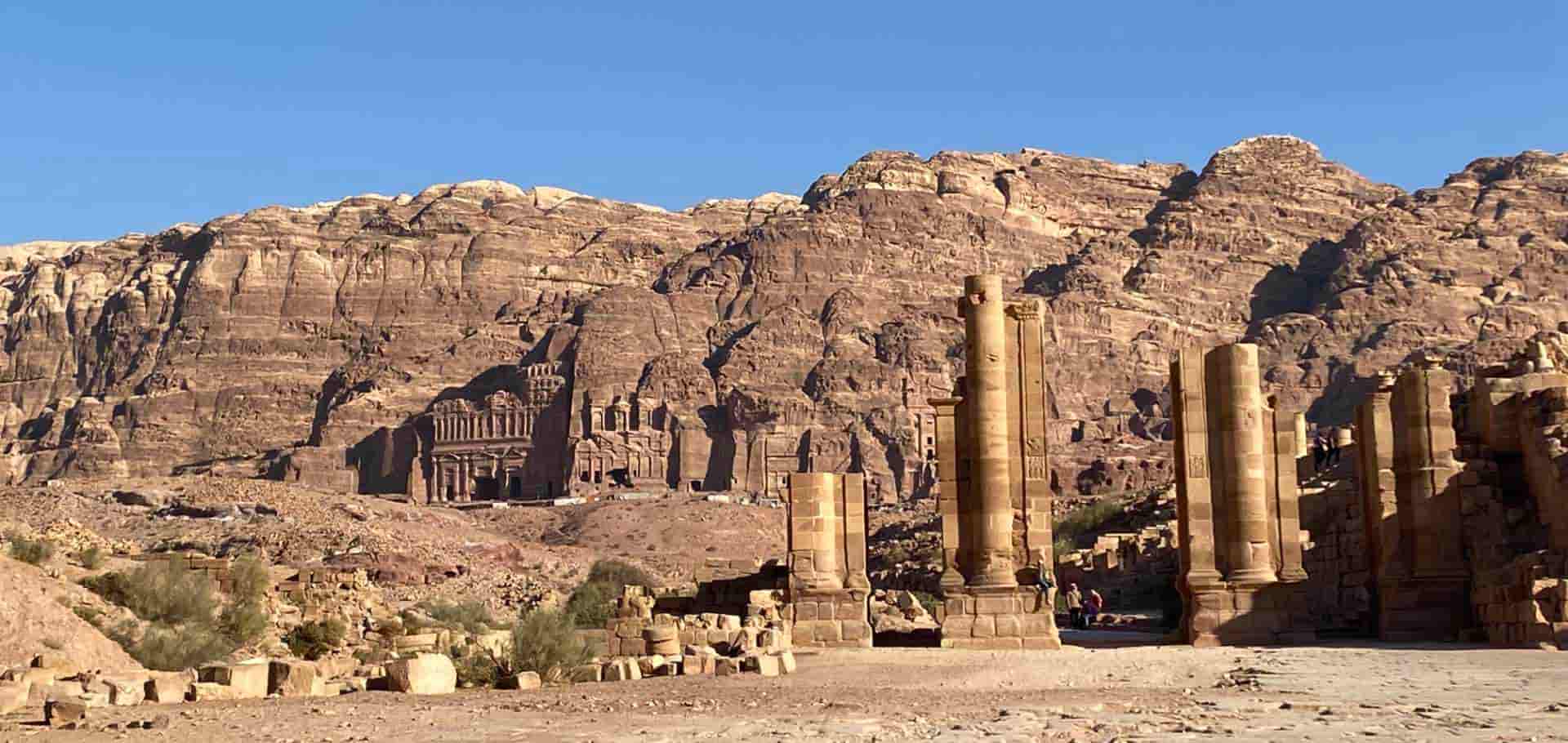
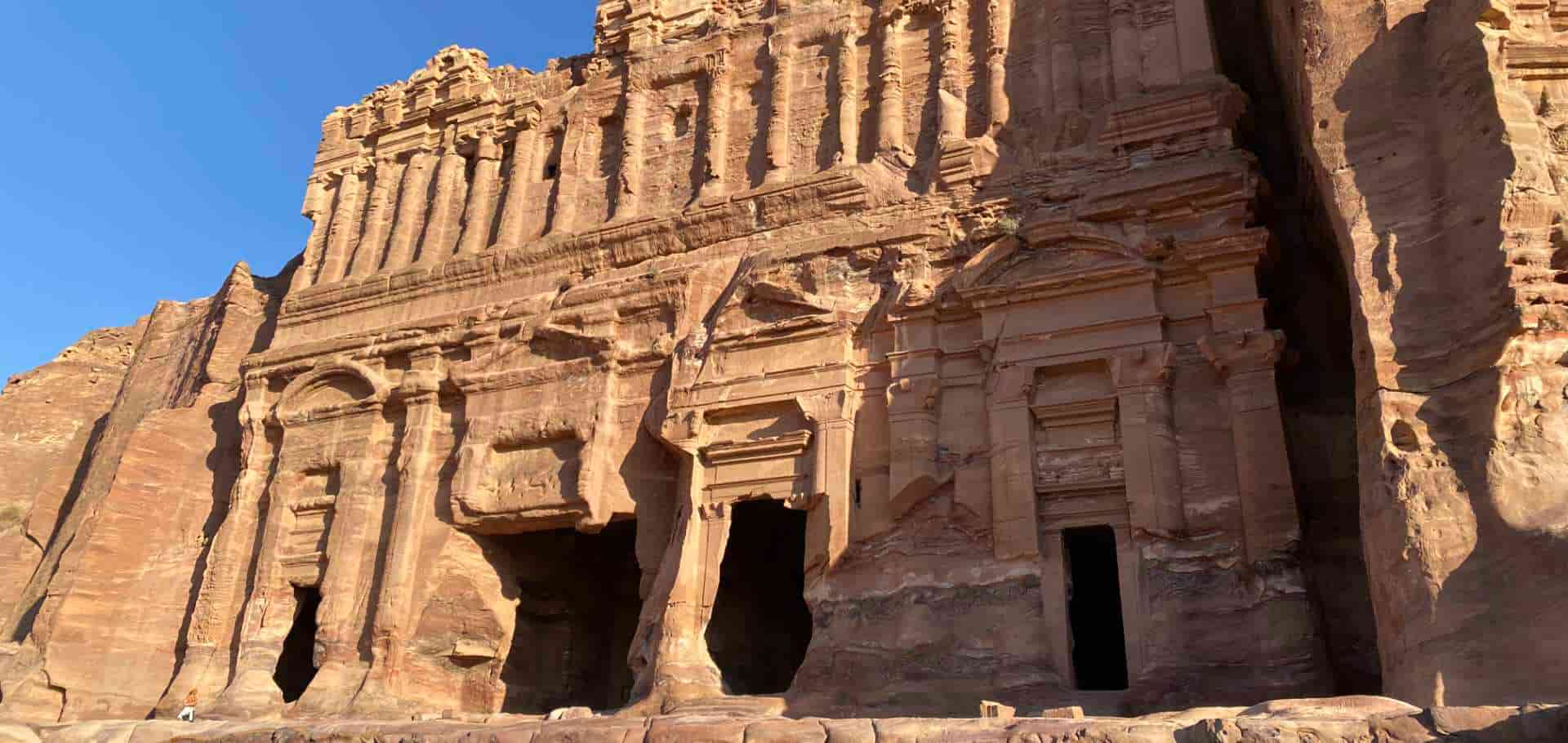
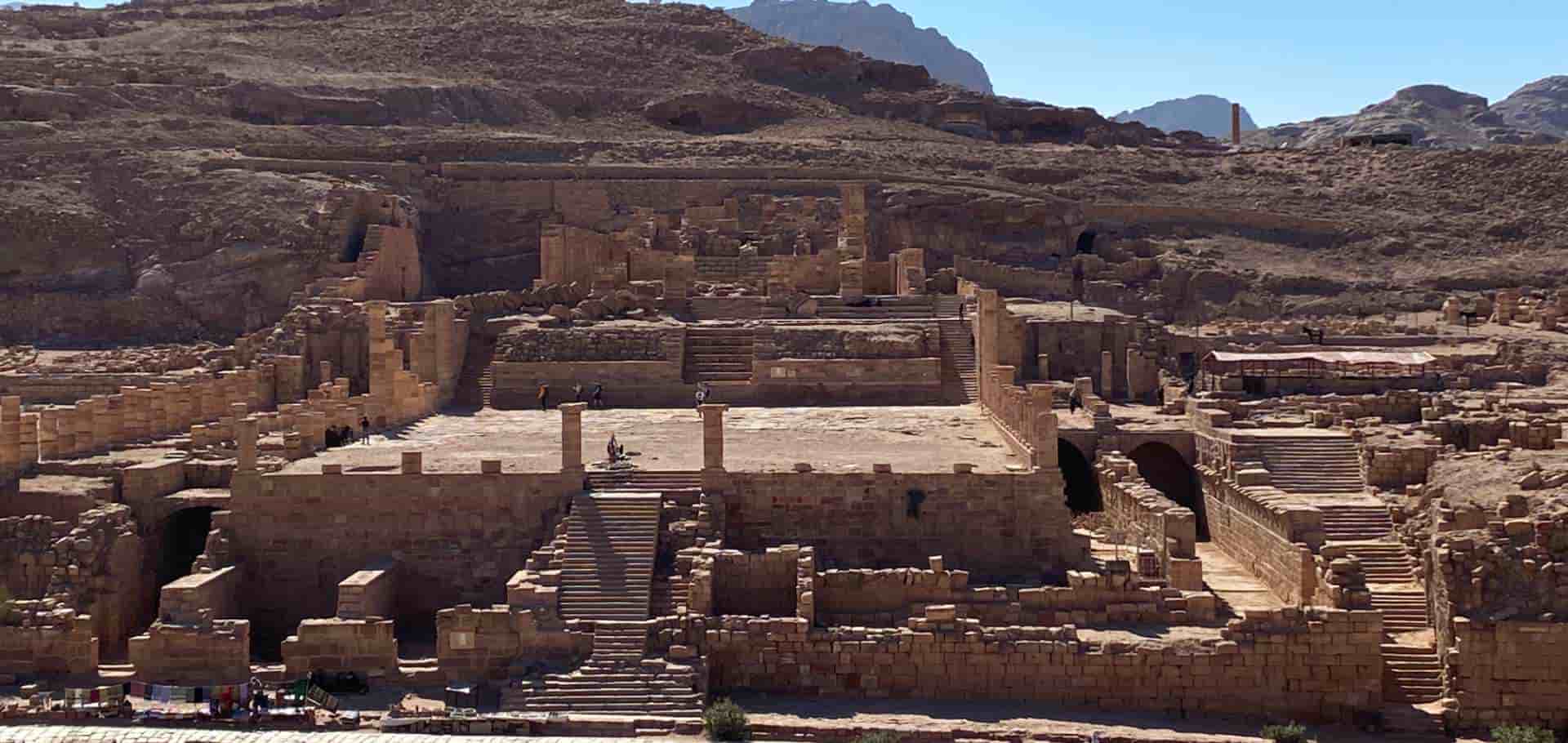
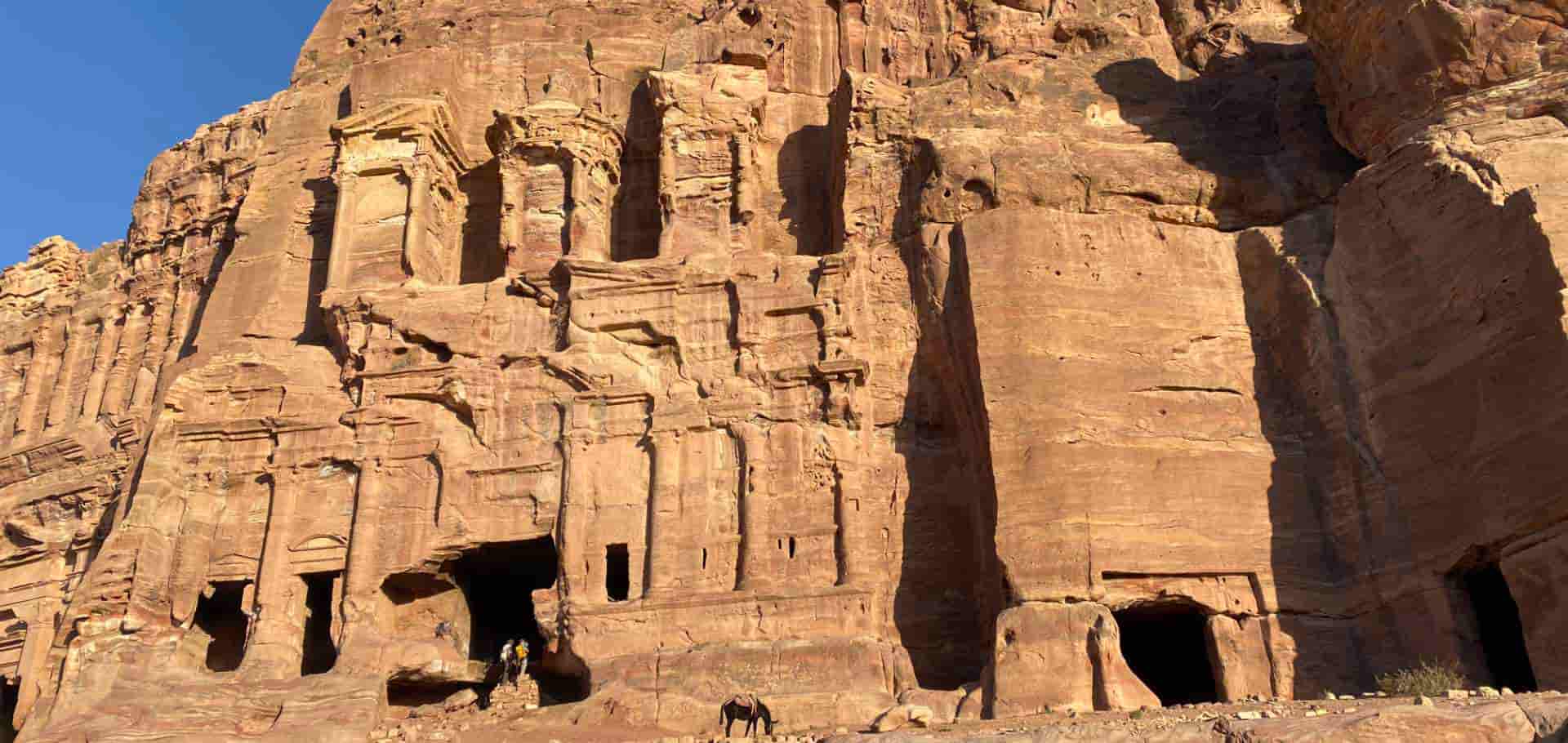
Power shifted with the wind. In 106 CE, during the aggressive height of Trajan's imperial expansion, Rome annexed the kingdom and paved a grand colonnaded street, yet the earth shattered their stone ambitions in 363 CE when a massive earthquake flattened half the city. Although the pagan temples fell, the resilient population remained, later converting the monumental Urn Tomb into a Byzantine church where Greek-speaking priests signed complex legal scrolls. The trade routes eventually shifted to the sea, leaving these high, red canyons to the Bdoul Bedouins who guarded the valleys.
Reflective Pause
My fingers trace a deep, parallel groove left by an ancient chisel in the cool sandstone. Here, where the damp shadow never lifts, the rock feels surprisingly soft, like compacted flour under a thumb. A single black beetle climbs the rough grain, its tiny shell clicking softly against the prehistoric dust.
The ruins still hold life. If you close your eyes for sixty seconds amidst the dust, you do not see dead monuments but instead the vibrant trade metropolis of Raqmu, where goats bleat on the sun-baked slopes and the sharp aroma of roasted cumin floats from rock-cut homes. We often mistake abandonment for silence, forgetting that the Bdoul families inhabited these tomb chambers for generations before their forced relocation in the nineteen-eighties. They remain the true, breathing keepers of this vast sandstone maze, carrying the ancient springs in their memory.
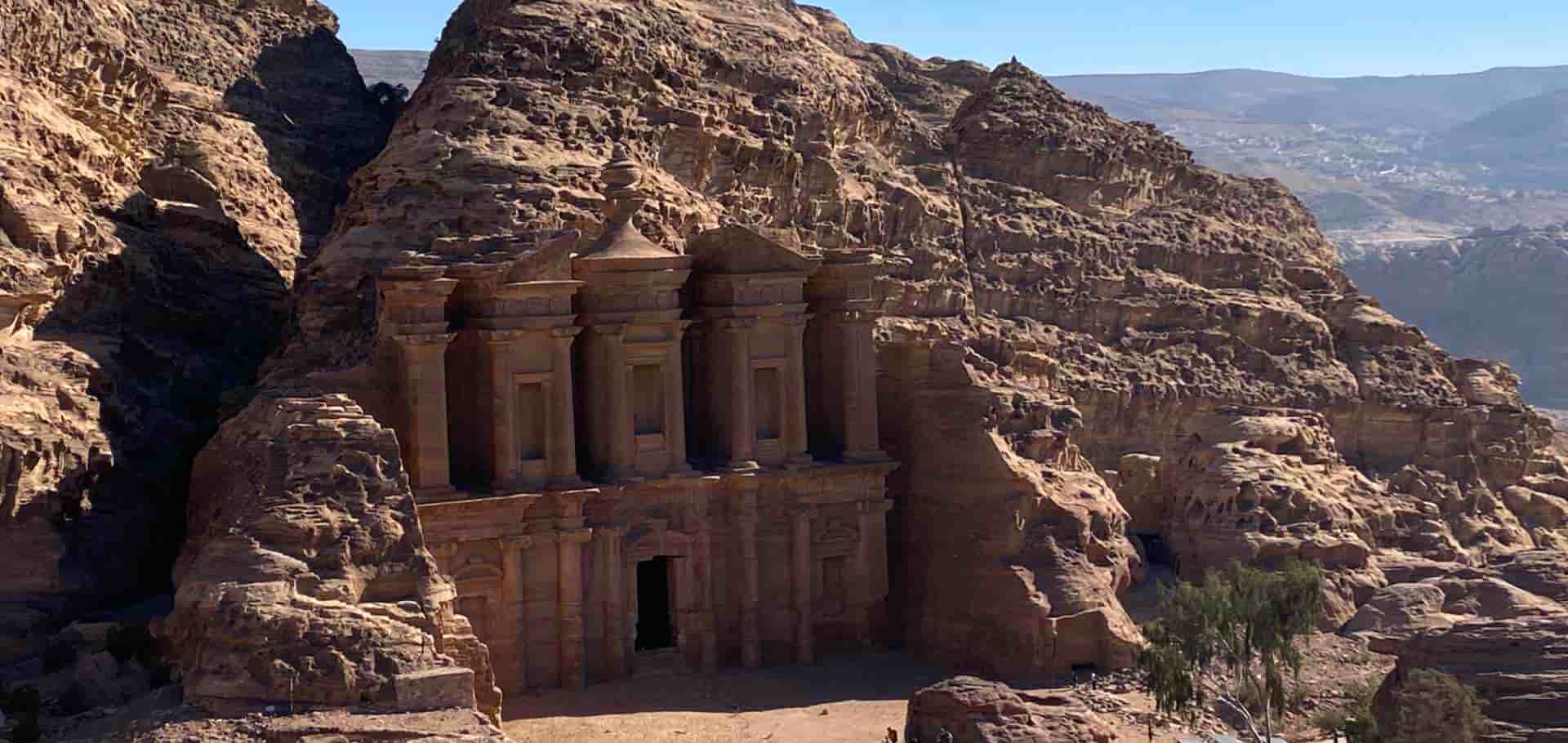
The desert always reclaims its own. As the late afternoon sun bleeds into the high rock of Ad-Deir, the massive sandstone urn glows like a guttering torch, recalling the cold spring water that once sang through dry clay pipes. We carve our loudest ambitions into the cliffs, yet true survival rests not on monumental stone, but on how we guard the quiet, fleeting streams of our world. Will our own glass towers leave behind such a haunting, beautiful ghost when the water finally stops?