Fast Facts for the Modern Explorer
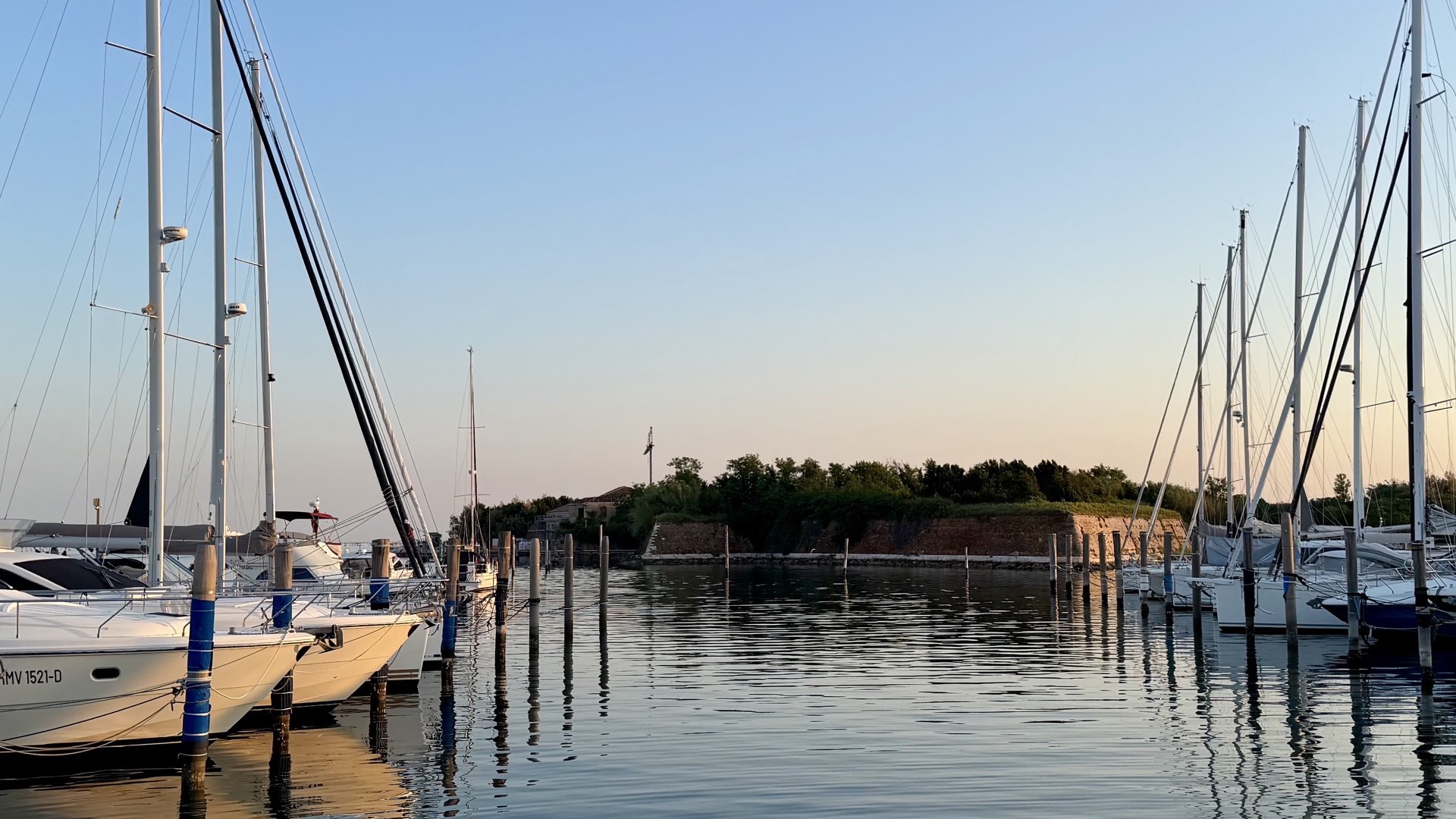
- The Route: A 60-nautical-mile maritime crossing of the Northern Adriatic, connecting the lagoon canals of Chioggia, Italy, to the limestone peninsula of Rovinj, Croatia.
- Current Relevance: A vital ecological corridor monitored by the international AdriaMed project, preserving both traditional wooden shipwright heritage and fragile marine life.
- Duration: Six to eight hours by modern sailing yacht under typical summer winds.
Act I: The Salt on the Wind
The salt bites.
We slip past the rust-streaked trawlers of Chioggia, where the mud-choked lagoon mouth opens wide to swallow our boat into the cold gray swell of the Adriatic Sea. The engine hums, vibrating through the soles of our deck shoes as the low Italian coastline sinks into the mist behind us. Eastward lies Croatia, hidden beyond sixty miles of open water. On this empty reach, the water changes from lagoon soup to a deep, ink-like blue. A cold, clean wind.
This is the old path of the stone barges. For hundreds of years, heavy wooden hulls groaned under the weight of white limestone hauled from the quarries of Istria to build the palaces of Venice. Now, we follow their wake into the vast stillness of the sea.
Act II: The Empire of Limestone
History here writes its name in stone.
In 1283, as the rising Serenissima Republic crushed her maritime rivals to take full control of the gulf, the small port of Rovinj signed away its independence for Venetian protection. The trade was simple: Istrian quarries yielded the dense, water-resistant stone that still keeps Venice above the mud, while Chioggia provided salt to preserve Istria’s catches. Heavily laden merchant ships, known as trabaccoli, ran this gauntlet under the constant threat of pirate raids and the sudden, murderous whip of the Bora wind. A hard, silent bargain.
The sea runs shallow here.
The northern reach of the Adriatic averages fewer than 50 meters in depth, a thin skin of water where the Po River dumps its alpine silt. Because of this shallowness, a sudden gale whips the water into short, steep waves that can break a ship's back in minutes. Mariners sought safety in devotion, climbing the steep alleys of Rovinj to pray at the tomb of Saint Euphemia, whose massive marble coffin miraculously washed ashore on these rocky banks in the year 800, just as Charlemagne forged his western empire. Today, her 60-meter bell tower, raised in 1736 as the Republic's artistic twilight cast long shadows across the water, still serves as our guide, its copper statue spinning with the wind. A beacon for the lost.
Reflective Pause
My fingers trace the sun-cracked grain of the wooden chess board, worn smooth by decades of salt and sweat. The low drone of the engine fades as the wind catches the canvas, turning our world into a quiet theater of creaking ropes. A single, amber shaft of light cuts across the deck, illuminating the fine white dust of Istrian stone still clinging to the crevices of the wood.
Act III: The Silent Autopilot
The machine steers.
While our ancestors fought the heavy wooden tiller with bleeding palms, our modern sailing yacht follows a digital line, slicing the glassy sea without human effort. We sit on the warm teak deck, chewing on sharp sheep's milk cheese and dry bread, looking out at a horizon so flat it disappears into the sky. The physical strain of the voyage dissolves, leaving behind a quiet, floating melancholy that only the open sea can bring. A comfortable exile.
Close your eyes for sixty seconds on this quiet sea, and you do not see darkness; you see the phantom outline of a painted eye on a wooden bow, cutting through the thick mist. It is the gaze of the ancient trabaccolo, watching for rocks that we now map with silicon and satellite. Our technology has conquered the distance, but it has also silenced the ghosts who once sang polyphonic songs to keep the terror of the dark water at bay. A silent trade.
The Gathering Dusk
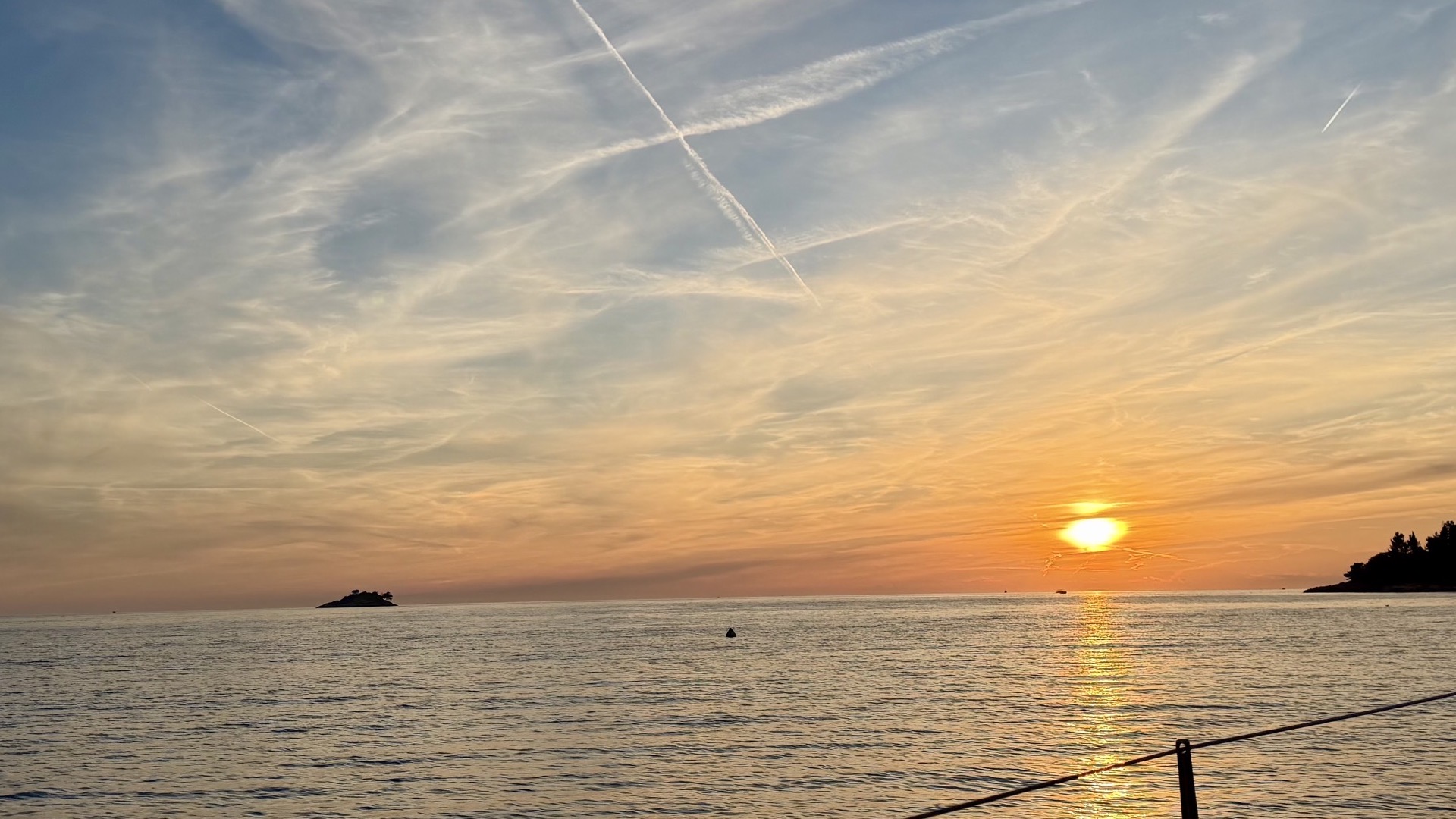
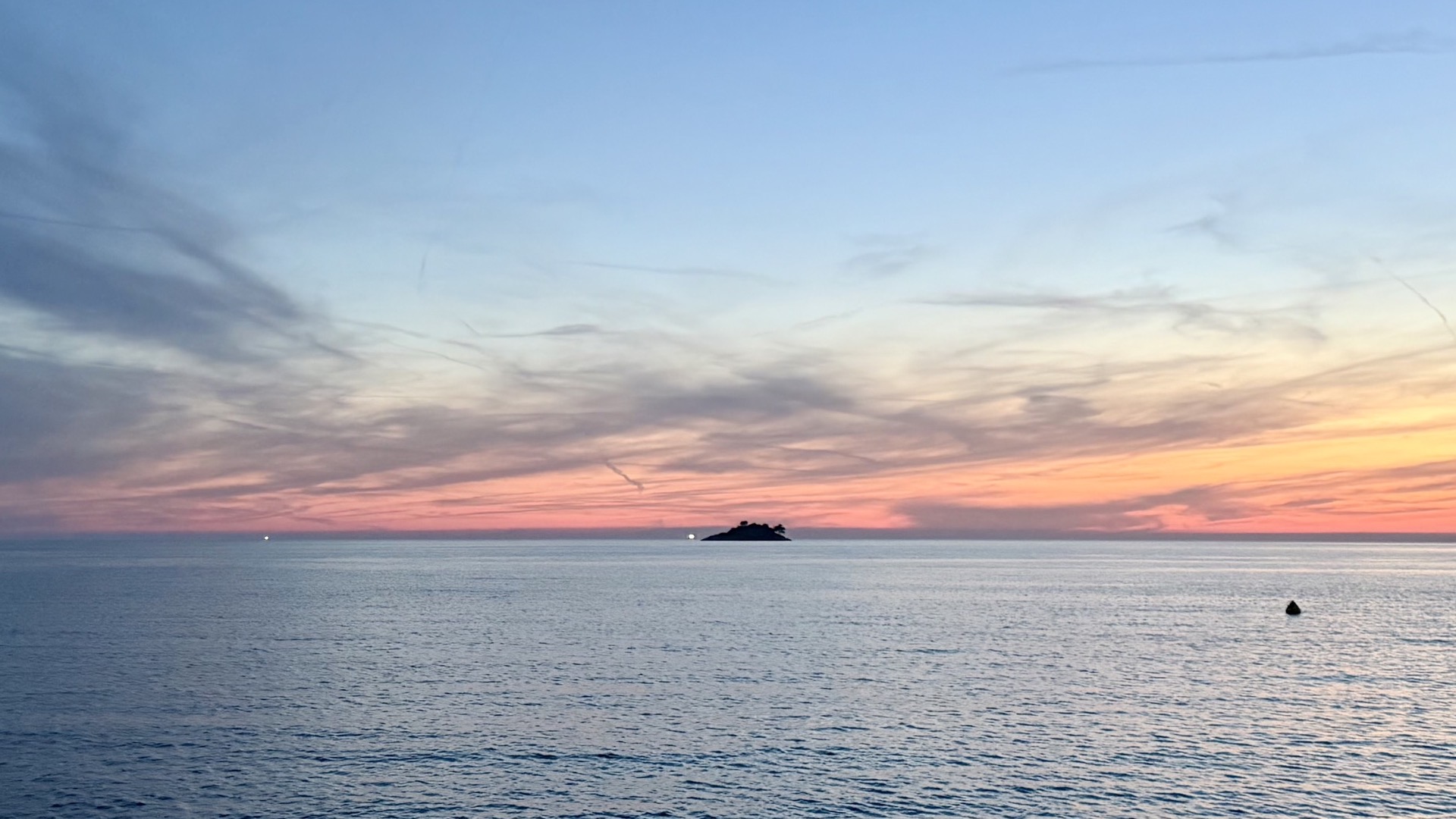
The red sun dips.
As the light dies over our stern, casting the long shadow of Saint Euphemia’s spire across the quiet harbor of Rovinj, the sea turns the color of bruised plums. We step onto the stone quay, our shoes scraping the cold limestone that built the Rialto Bridge. The modern world recedes, but the water remembers. Will our digital tracks vanish like the wake of a ship, or will we find a way to carve our own lives into something as lasting as Istrian stone? The cold memory of water.