Fast Facts for the Modern Explorer
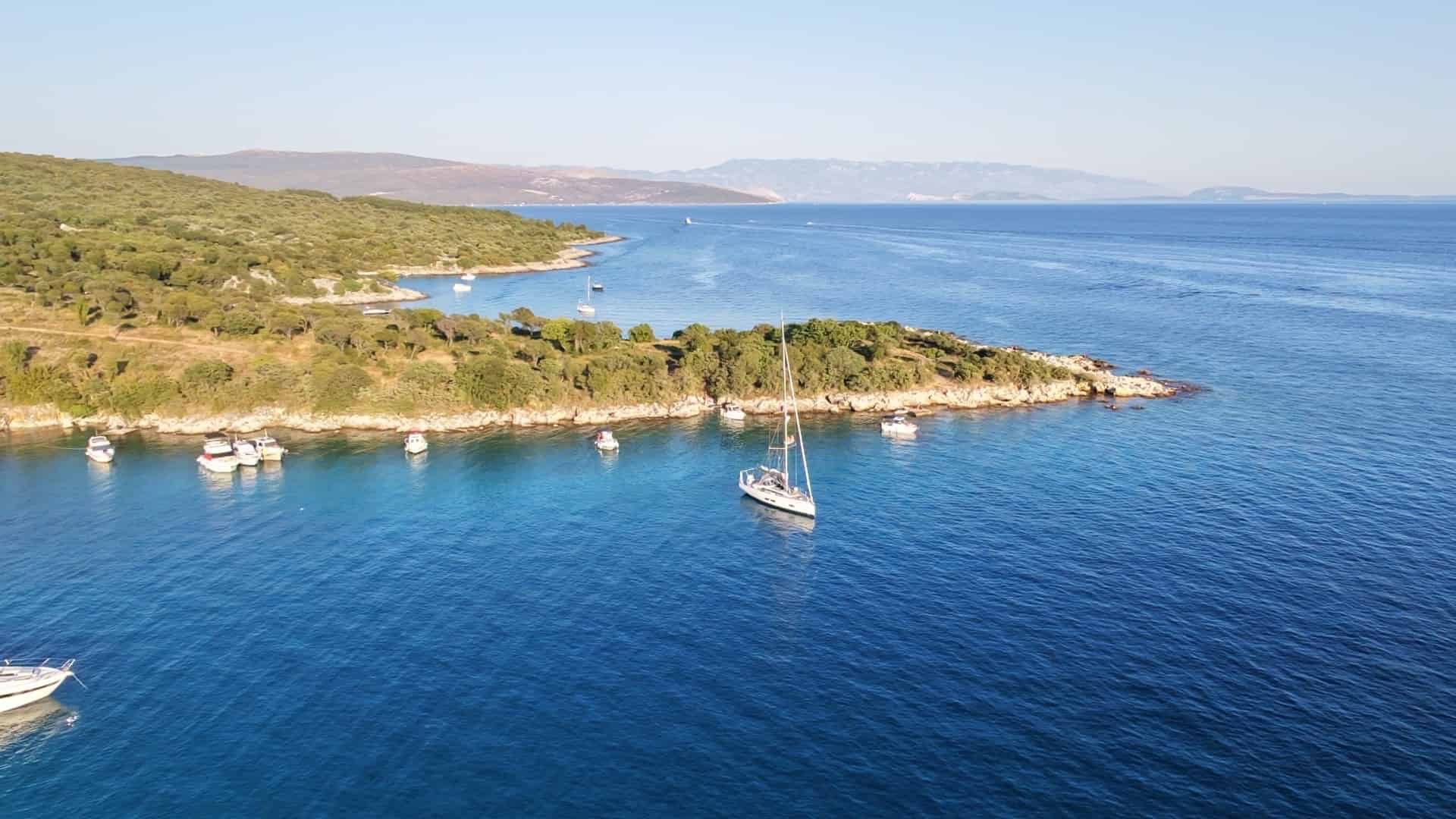
- Direct Definition: Uvala Sveti Juraj is a deep-water natural harbor on the southern tip of Krk Island, offering immediate shelter from the violent katabatic Bora winds blasting through the Senj Gate.
- Current Relevance: These waters serve as a protected sanctuary under the European Union's Natura 2000 network, safeguarding critical seagrass meadows and regional bottlenose dolphin populations from intensive maritime traffic.
- Practical Duration: A thorough exploration of the medieval chapel ruins, the surrounding drystone networks, and the coastal channels requires a dedicated three-day sailing itinerary.
Act I: The Fury of the Gate
The channel water turns black. As our sailing vessel clears the southern headlands of Krk at coordinate 44.93° N, a sudden eighteen-knot blast of cold air rushes down from the Velebit range, whistling through the taut wire rigging while the hull slices through the dark chop at eight knots. This freezing katabatic wind instantly turns our warm afternoon into a wild vortex of white spray. We feel the dry salt crusting on our sun-burned skin as we fight the wheel. A raw test of wood and nerve.
Act II: The Ghost Fleet of Curicta
History lives in this wind. Long before modern sailors tracked these gales, the ancient Liburnian tribes used the treacherous currents of the Kvarneric Channel to trap Roman merchant vessels, turning this narrow mountain gap into a deadly tax collector. In 49 BCE, during the bloody collapse of the Roman Republic, Caesar’s heavy supply rafts shattered against these cliffs under the assault of Pompeian warships. Divers still find the corroded iron swords of those drowned soldiers in the deep silt. A cold graveyard of empires.
Stone towers guard the heights. In 1118 CE, as brutal feudal lords carved up the fractured Adriatic coast, the noble House of Frankopan built massive stone fortresses on these cliffs to watch the sea, tax the rich merchant fleets running from Venice, and command the strategic gateway. These dry limestone battlements still remind us of an era when the freezing mountain wind decided the fate of kings and common thieves alike. A brutal, forgotten trade war waged forever in the cold spray.
Act III: The Stone Shield of Saint George
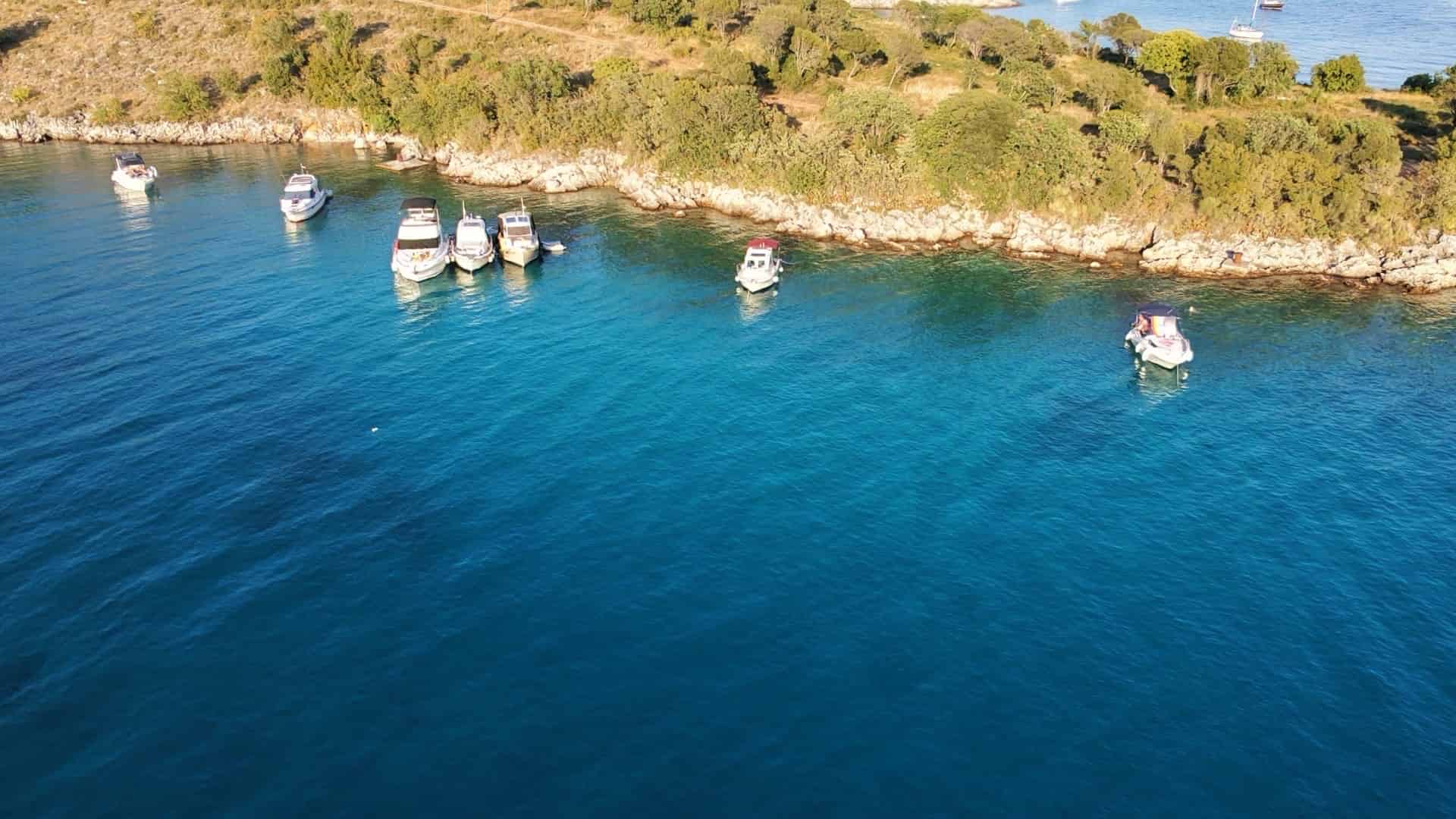
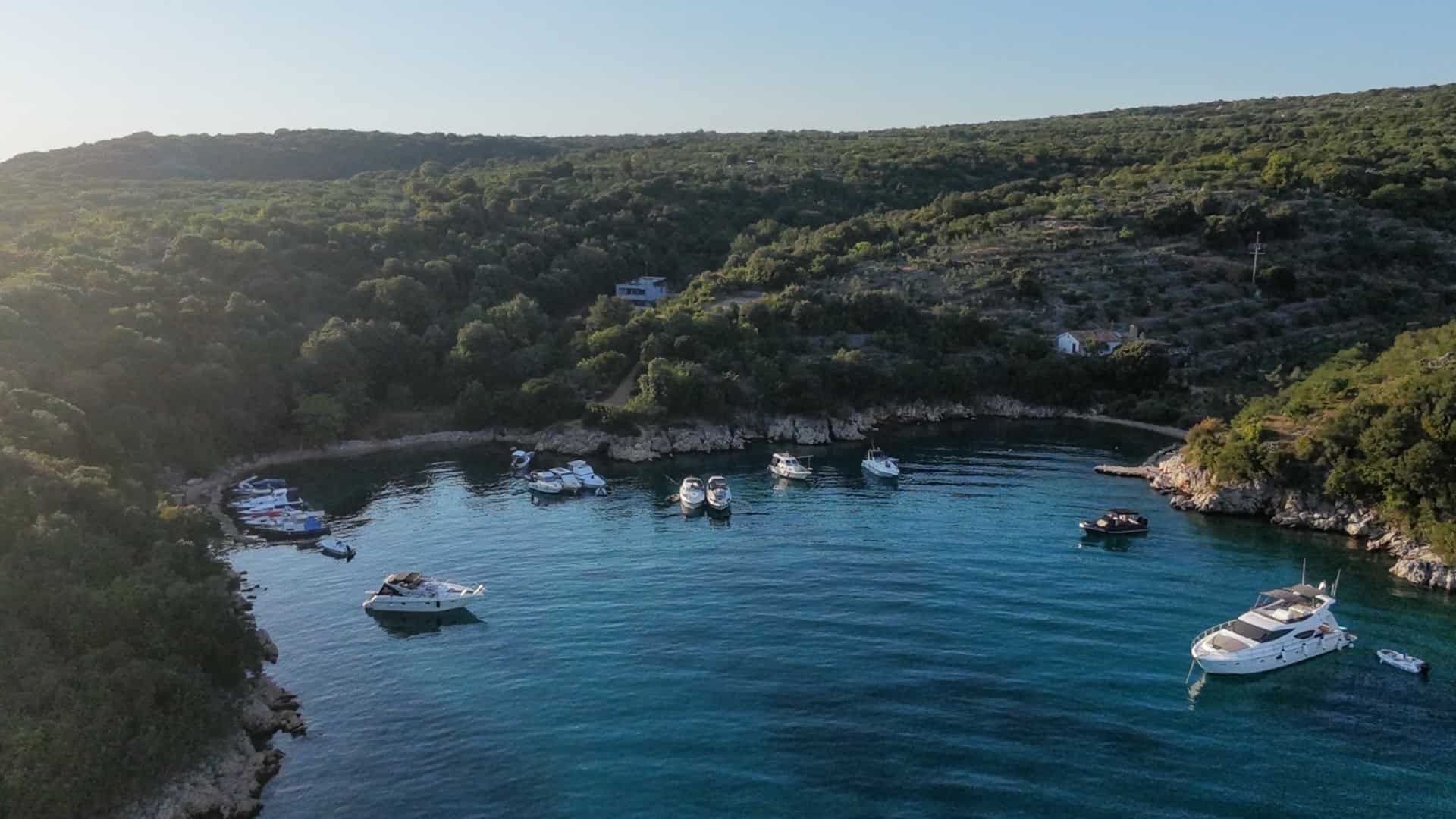
The howling wind suddenly dies. As we turn our wooden wheel and slip behind the protective hook of Sveti Juraj, the roaring channel chop gives way to gentle, rhythmic ripples that lap softly against our salt-stained hull. The air changes instantly, losing its sharp salt bite and filling our lungs with the warm, heavy scent of sun-baked pine needles and wild coastal sage growing from the cracks of the white stone. This quiet cove has saved sailors for thousands of years. A sudden, healing silence.
White stone walls web the hills. These drystone structures, raised without a single scoop of mortar by generations of tough sheep farmers, run for miles across the barren karst hills to protect the thin, precious topsoil from the biting teeth of the mountain gales. In 2018 CE, amid the global scramble to rescue dying ancestral crafts, UNESCO finally recognized this dry stone art as an irreplaceable cultural treasure of humanity. It is a monument built entirely of human patience and raw stone. A shield against the wind.
Reflective Pause: The sun catches the white salt crusting on the bronze deck cleats, turning them into glittering jewels. I run my finger over the rough, warm limestone of the chapel wall, feeling the deep grooves carved by centuries of invisible gales. Somewhere up the ridge, the dry chime of a lone sheep bell drifts through the hot pine air.
Epilogue: The Salt on the Tongue
The tongue still tastes the salt. If you close your eyes for sixty seconds in this shelter, you do not hear the roaring gale anymore, but instead see the bright, burning orange glare of the dying sun dancing behind your eyelids while the hull rocks gently on the dark water. This quiet cove is not merely a physical escape from the storm, but a timeless reminder that our wildest crossings always demand a place of deep, silent surrender. Will you brave the gate to find it?