Fast Facts for the Modern Explorer
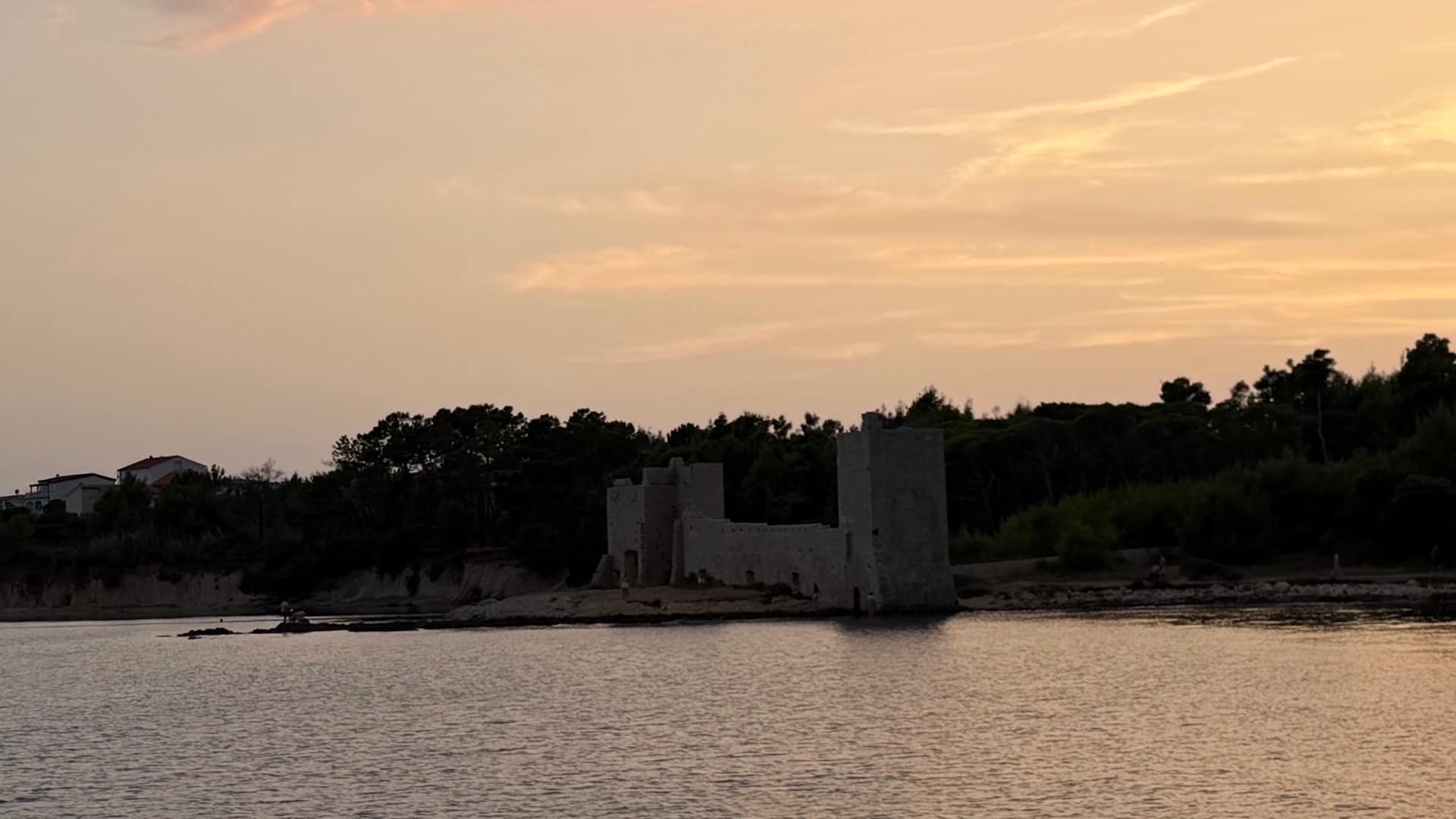
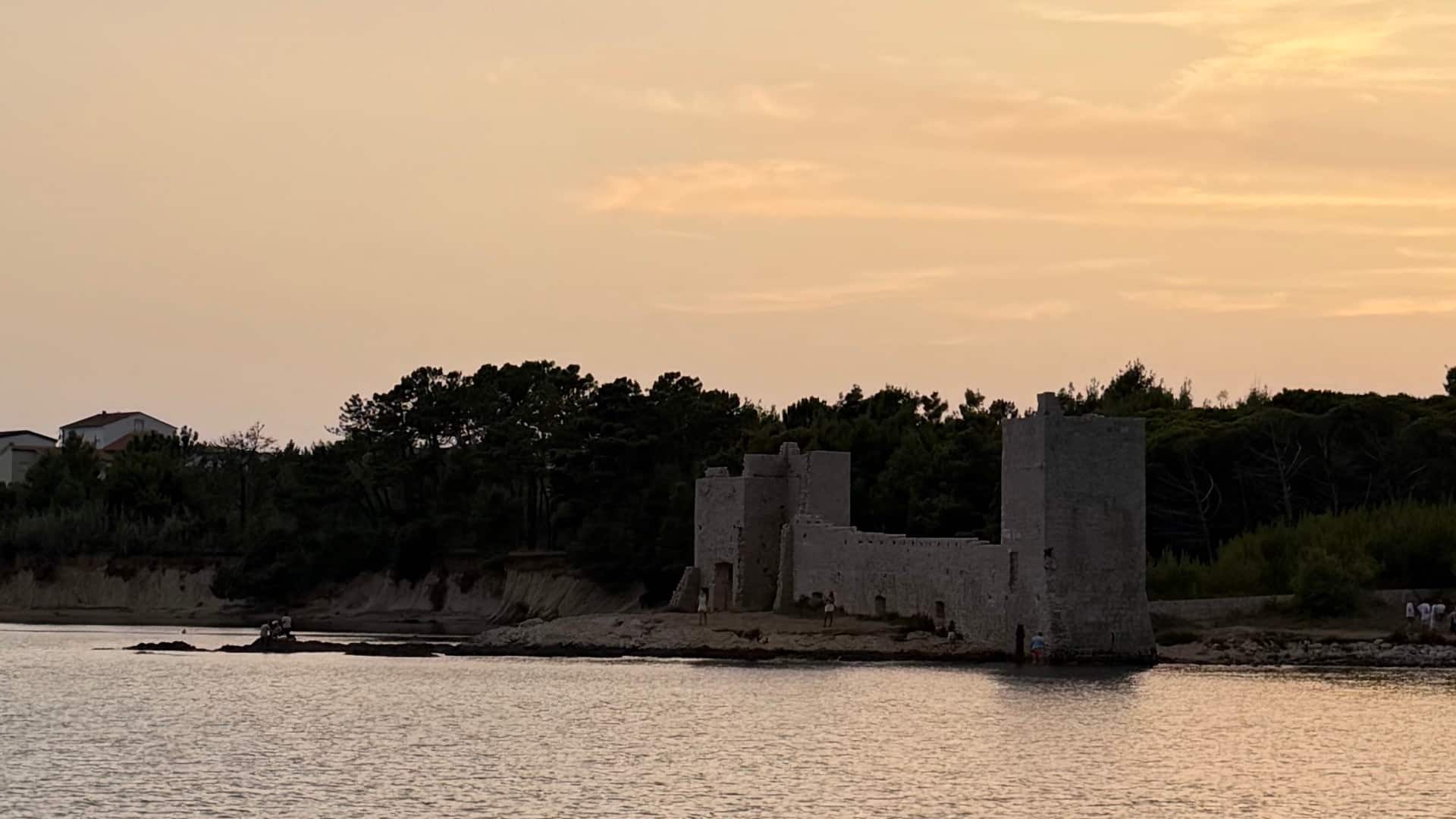
- Direct Definition: Kaštelina Castle is a late-sixteenth-century Venetian coastal outpost on the southern shore of Vir Island, built between 1598 and 1602 to guard the Adriatic shipping lanes against Ottoman raids and Uskok pirates.
- Current Relevance: Following a meticulous preservation campaign in 2001, the ruins now stand as a monument to the shifting borders of the Mediterranean, accessible by foot or shallow-draft sailboat.
- Practical Duration: Spend two hours exploring the intertidal stone ruins, ideally at dusk when the wind drops and the sea turns to glass.
The Glass Sea
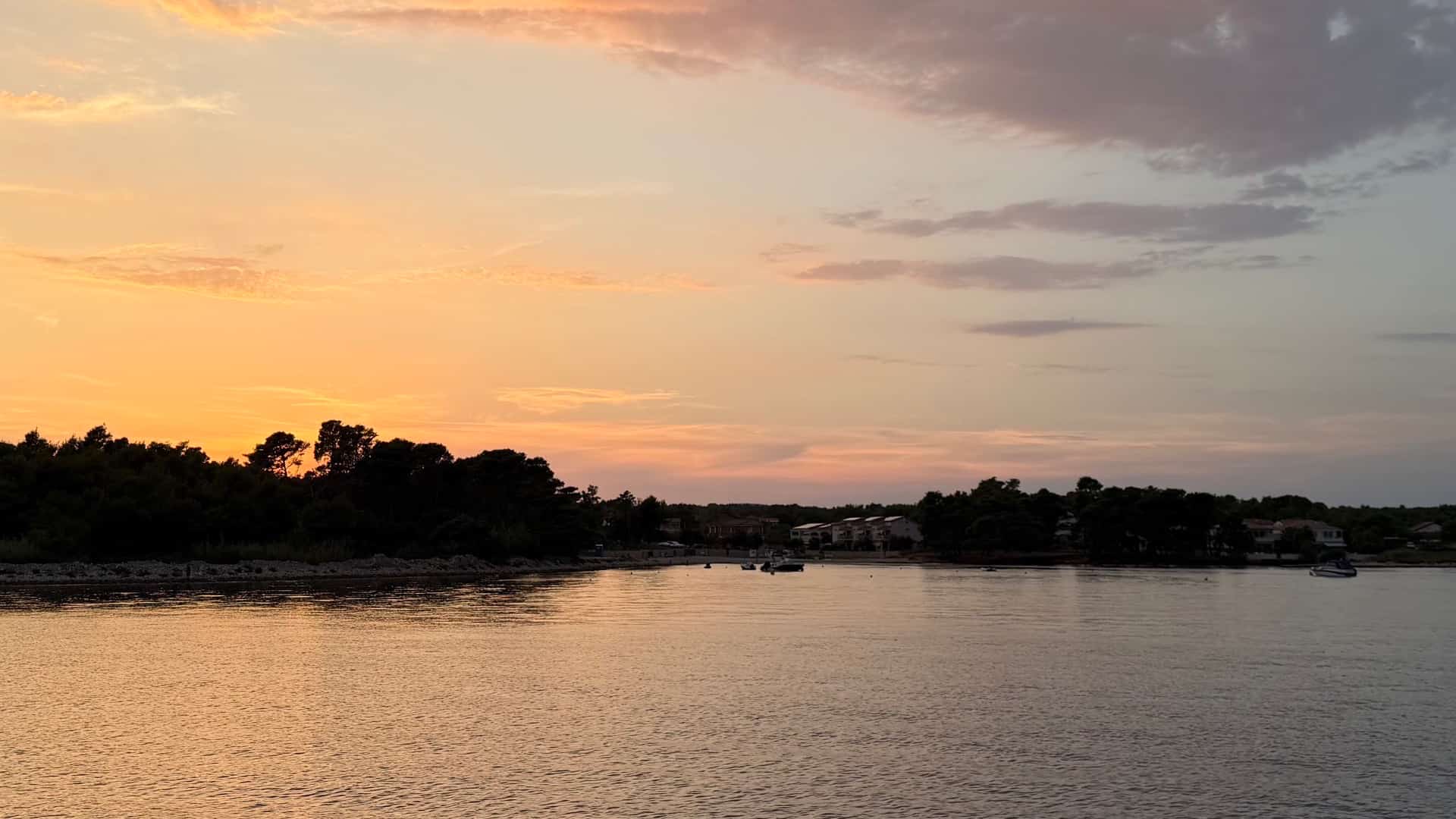
The sea turns to oil. As the thermal land breezes drop to nothing, the dark Adriatic water mirrors the night sky so perfectly that our yacht floats in empty space. Below deck, the sharp, clean smell of sliced cucumbers and briny tuna still hangs in the small galley, while outside, the dry salt crust on our shoulders tightens in the cooling air. We slip over the transom into the dark water, feeling the chill rise from the sandy seabed. A brief splash breaks the silence.
The Borderlands of the Lion
These stones remember fear. Venetian masters built this fortress between 1598 and 1602, a time when Ottoman horsemen raided the nearby fields of Nin and Christian pirates from Senj hunted Venetian trade galleys. Alvise Priuli, the Governor General of Dalmatia, ordered these thick limestone walls raised directly on the intertidal bedrock to secure the shallow channel. The builders mixed lime and sand with seawater, creating a stubborn mortar that still resists the hungry bite of the winter tides. Inside, the winged Lion of Saint Mark still glares from the weathered gate.
The fort became a sanctuary. During the bloody years of the Candian War from 1645 to 1669, peasant families fled here with their sheep, grain, and looms, turning the open courtyard into a crowded, desperate village of refugees. But empires decay like stone, and when the last Venetian doge surrendered to Napoleon’s bayonets in 1797, the garrison walked away forever. Local farmers dismantled the interior barracks, carrying away the square blocks to build sheep pens and dry-stone boundary walls across the island. The sea claimed the rest.
The Whispering Tide
We swim closer to the masonry. If you close your eyes for sixty seconds here, you do not see the modern holiday rentals on the far shore; you see only the steady, rhythmic pulse of bioluminescence flashing in the black water as your hands sweep through the tide. This outpost survived because its builders understood the sea, adapting their high medieval battlements into low, sloping walls designed to deflect both iron cannonballs and crashing waves. Today, the ruins remind us that every great power eventually dissolves into the landscape. We are merely temporary visitors.
Reflective Pause
My fingers trace the rough, salt-bitten limestone of the lower seawall, feeling the cool green slime of algae that grows in the tidal crack. A single drop of water falls from my chin, landing with a sharp, hollow metallic ping against the dark surface of the sea. In the distance, the faint, low-frequency hum of our boat's anchor chain tells me the tide is finally turning.
We climb back aboard. As we dry ourselves in the dark, the salt hardens on our skin once more, a tight, itchy armor that mirrors the crust on the ruins ashore. The ancient stones of Kaštelina will keep their vigil long after our anchor breaks ground tomorrow and we slide back into the deep Adriatic. If a mighty empire like Venice cannot hold these shores, what trace of ourselves do we hope to leave behind? The black water offers no answers.