Fast Facts for the Modern Explorer
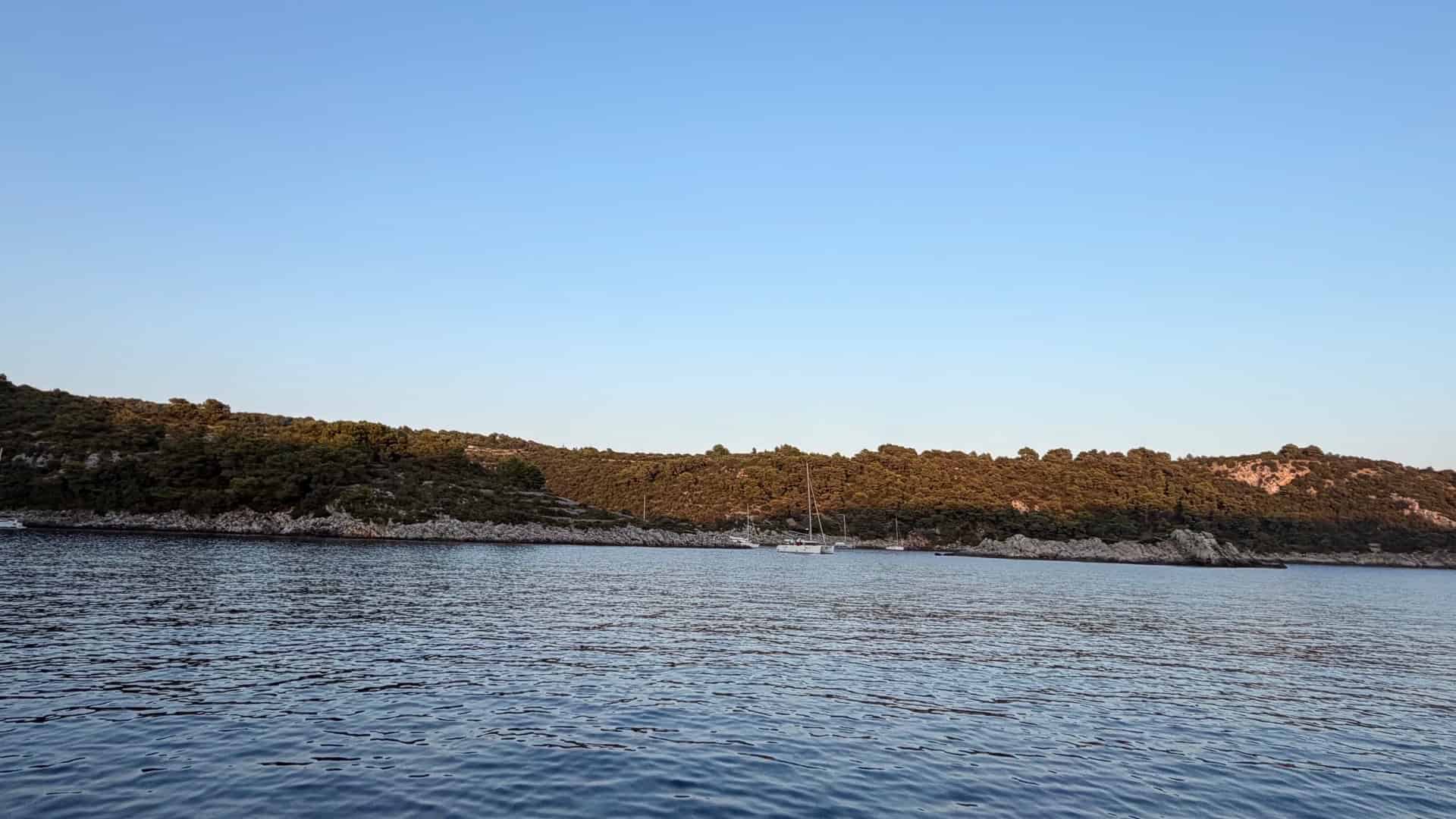
- Direct Definition: Uvala Tatinja is a steep, water-carved karst fjord cutting into the southern cliffs of Croatia’s Šolta Island at coordinates 43.3486° N, 16.2974° E.
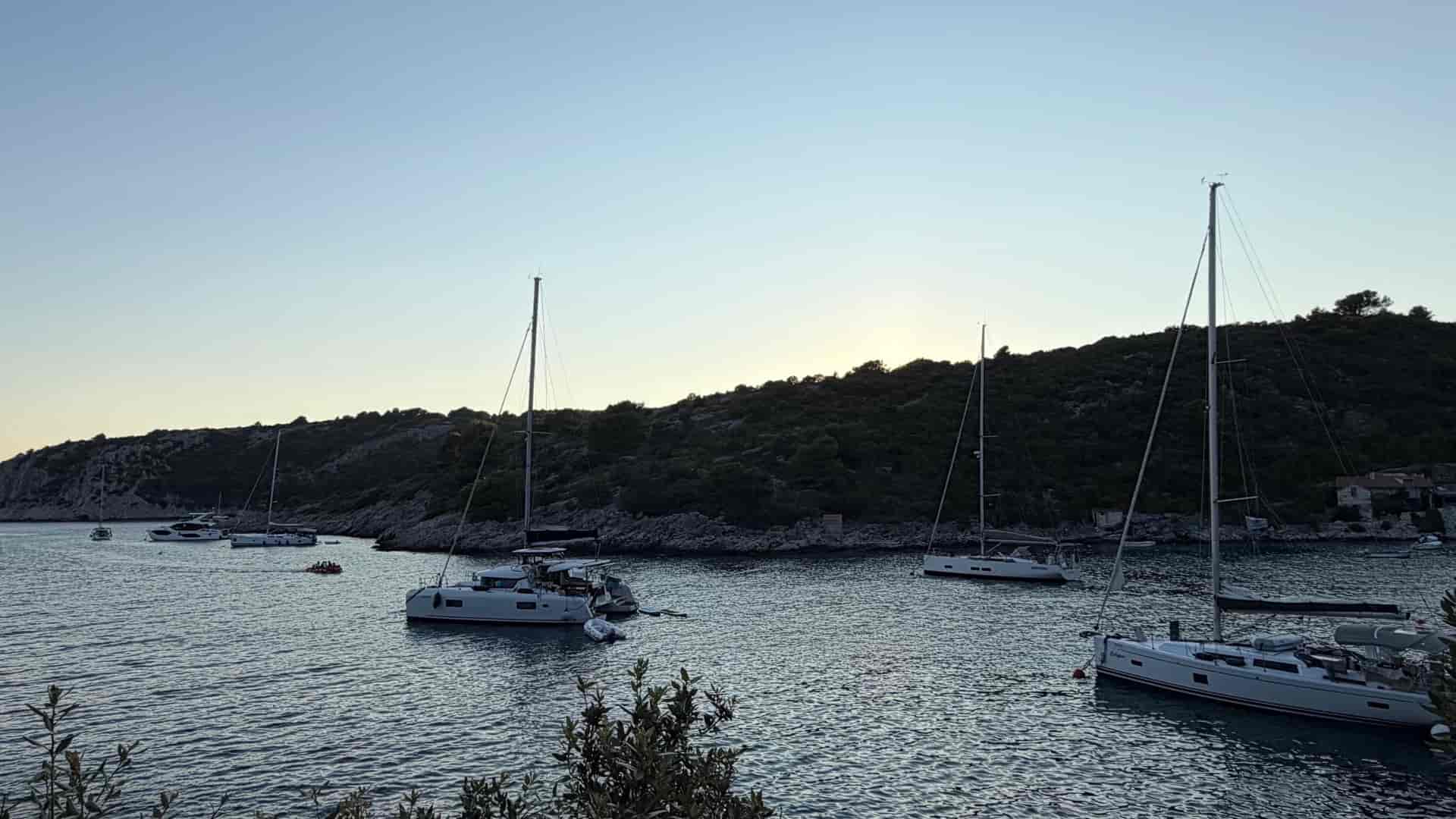
- Current Relevance: The inlet serves as a pioneering sanctuary for ecological yachting, where low-impact mooring buoy networks preserve fragile Posidonia oceanica seagrass meadows from anchor damage.
- Practical Duration: An overnight stay of fourteen to eighteen hours allows sailors to experience the transition from harsh afternoon glare to the profound, silent darkness of the Adriatic night.
The rock wall looms overhead. You steer the bow within fifteen meters of the vertical cliff, watching the depth finder plunge into darkness while your crew secures a thick line directly to a rusty iron ring hammered into the limestone. Without the scrape of an anchor on the seabed, the boat rests in a cradled stillness, hemmed in by dry-stone terraces that smell of baked pine needles and wild rosemary. A private amphitheater of stone, carved by centuries of salt and wind.
History runs deep in this karst. During the Greek maritime expansion of the fourth century BCE, sailors knew this island as Olynthia, the land of the wild fig, using its steep southern cliffs to hide their wooden merchant ships from pirates sailing the open Adriatic. By the year 305 of the common era, when Emperor Diocletian built his massive retirement palace on the mainland, the island supplied salted fish from these coves to feed his imperial court. A fortress of food and stone.
Hard lives shaped these shores. From the fourteenth to the eighteenth centuries, while the Venetian Republic ruled these waters, local sharecroppers and lime-burners chopped the pine forests to fuel crude stone kilns, transforming the island’s bones into mortar for Italian villas. These men knew the bay not as a playground, but as a hard sanctuary where they could pull their wooden boats to escape the sudden fury of a southern gale. Survival etched forever in the dry-stone walls.
Reflective Pause
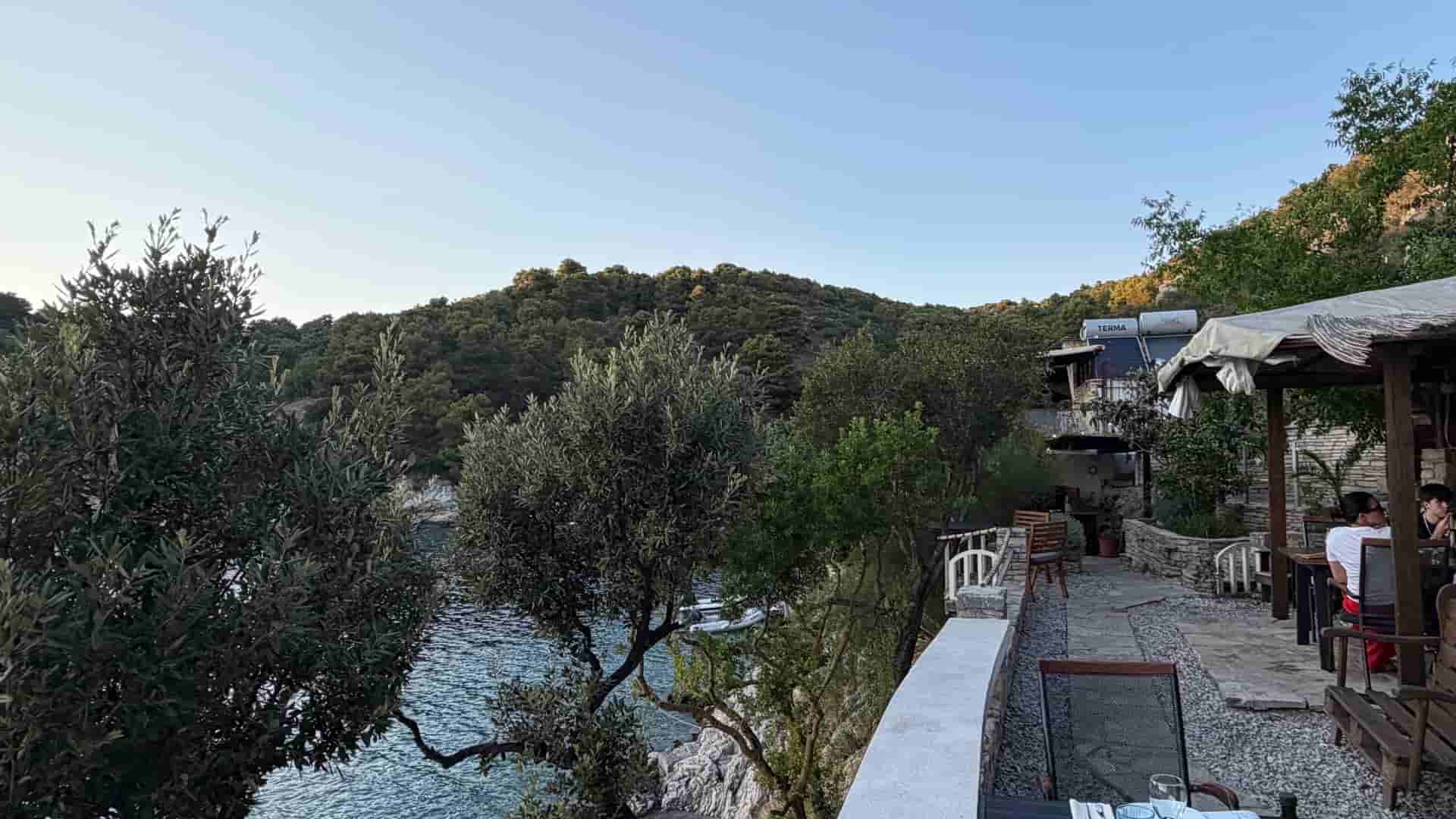
Under the low wooden table of the shaded terrace, a small green lizard halts on the hot limestone to watch the slow shadow of a passing cloud. The low, lazy hum of a single wild bee vibrates deep inside the dry bell of a purple sage flower growing from a steep crack in the stone. A single thick drop of gold olive oil clings to the rim of a hand-thrown ceramic plate, catching the fierce, white glare of the high noon sun.
Taste connects us to the past. At the edge of the cliff, the modern keepers of the bay grill fresh sea bass over seasoned olive wood, letting the fat drip onto white-hot embers to release a fragrant smoke that has drifted through these canyons for thousands of years. To eat a sun-dried fig here is to taste the same dark sugars that sustained Roman sailors waiting out the winter storms. Simple food, heavy with the weight of time.
The violet water turns to black. As the sun sinks behind the high karst walls, the deep abyss beneath the keel swallows the light, leaving only the reflection of the stars dancing on the glassy surface of the cove. If you close your eyes for sixty seconds, you hear nothing but the soft, rhythmic lap of the water against the hull and the dry rattle of cicadas in the pine boughs. A silence that demands your surrender, asking what else you can afford to leave behind.