Fast Facts for the Modern Explorer
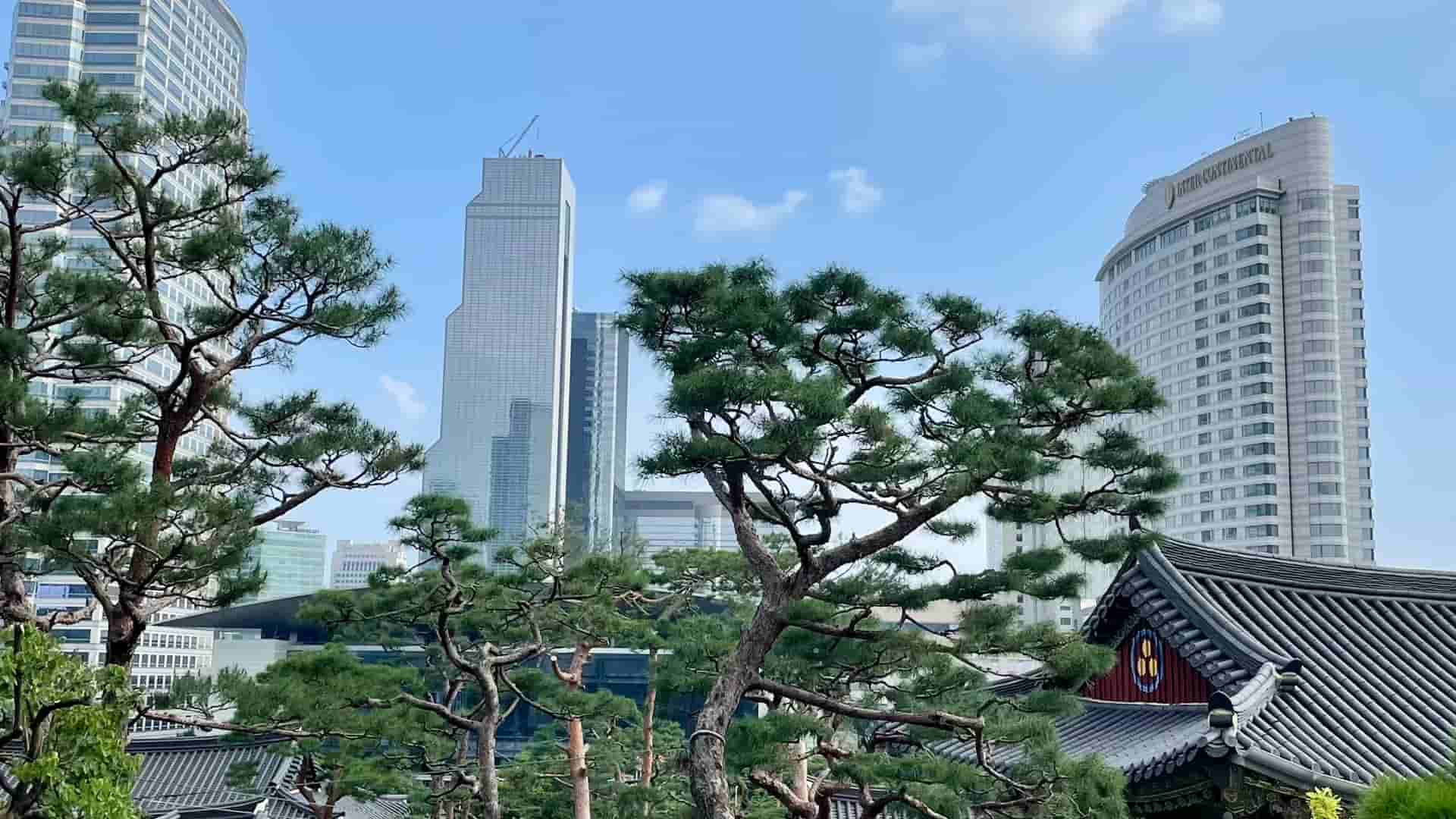
- The Sanctuary: Bongeunsa, an active Seon Buddhist temple standing in direct contrast to Seoul's high-tech commercial core.
- Current Relevance: It operates as a vital urban breathing space where weary professionals escape digital noise through daily tea rituals and meditation.
- Practical Duration: Spend two hours to walk the grounds, hear the drums, and sit within the weathered wooden halls.
Act I: The Scene
Step past the one-pillar gate.
The roar of six-lane traffic dies as you tread the gravel path, replaced by the hollow wooden click of a temple drum beating like a slow, resting heart. You breathe the thick resin of burning sandalwood mixed with the cold dampness of mountain pine. A sudden, cool hush.
The great giant of the future stands twenty-eight meters tall, carved from local granite during the mid-nineties when Seoul rushed headlong into the modern age. This Maitreya Buddha gazes over a sea of glass towers in Samseong-dong. Pink and white paper lanterns swing from low wooden eaves, casting soft, dappled shadows across the stone courtyard where barefoot believers press their foreheads to the cold ground.
Act II: The Conflict and the Queens
This ground has long mirrored the country's turbulent soul. In the late Silla Kingdom of 794 CE, when Buddhist kings ruled with golden crowns, the state monk Yeon-hoe founded this sanctuary as a quiet house of sight. Seven centuries later, in 1498 CE, during the cold rise of Confucian statecraft that stripped Buddhist monks of their rank and banned them from entering the capital gates, Queen Jeonghyeon rebuilt the halls to honor her dead husband. When the state tried to starve the faith out of the city, royal women kept the embers hot.
In 1551 CE, Queen Munjeong defied her own court ministers to make these wooden halls the seat of a great Zen revival. Under her protection, the temple trained the warrior monks who fought off foreign invasions during the devastating Imjin War of the late sixteenth century. Today, the ancient mountain paths are gone, buried under the concrete boom of the nineteen-seventies when cabbage patches gave way to banks.
Reflective Pause
A single pine needle rests on the wet granite shoulder of a stone lantern. It catches the gray northern light, glowing like a sliver of green glass before the wind sweeps it into the dark soil. The city hums in the distance, but here, the tiny scrap of green holds its ground.
Act III: The Twin Sanctuaries
We seek the same shelters our ancestors did, though our altars change. Across the road, tucked into a narrow alley, a cat café serves sweet milk lattes while sleek felines doze on warm straw mats. Here, young workers escape the sharp, biting pressure of corporate life. Sipping bitter lotus tea in a wooden hall or stroking a warm cat in a neon-lit room springs from the same human need.
These places are not mere escapes; they are small kingdoms of quiet. They remind us that the mind must rest, whether under the gaze of a granite god or the steady purr of a sleeping animal. If you close your eyes for sixty seconds amidst the smoke of the altar, you do not see the office towers or the sleek cars; instead, you see the slow, rhythmic rise and fall of a single paper lantern catching the mountain wind.
As you walk back toward the subway, the sandalwood smoke on your coat meets the cold blast of unleaded fuel once more. The stone giant remains, watching the commuters rush into the dark earth. We build our towers high, but the quiet ground beneath them still remembers how to breathe.