Fast Facts for the Modern Explorer
What: Incheon Waterfront, the historic open port of Jemulpo turned modern marine gateway.
Why: It is the crucible where South Korea shed its isolation to build a global trade empire.
Time: Allow four hours to walk the old concessions and taste the history.
Act I: The Split Hill
The cold granite splits history.
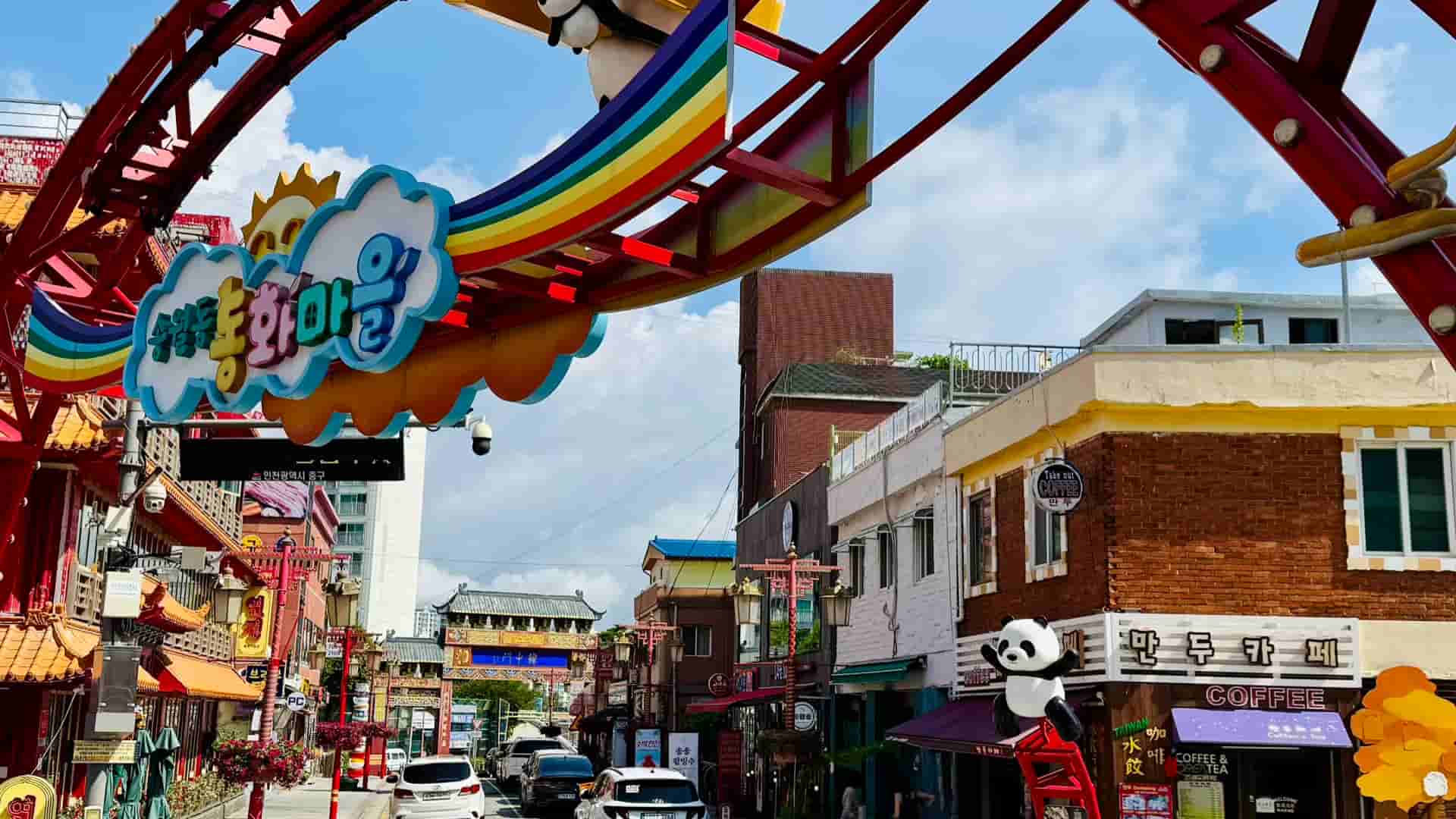
To your left, the heavy tiled eaves of Qing-era brick slope toward the water, while on your right, the clean, sparse timber frames of Meiji Japan line the steep, rising hill. We stand on a seam where two empires once stared each other down across a narrow strip of stone. A silent, architectural war. These steps do not merely climb the hill of Jung-gu; they mark the exact boundary where foreign powers carved up the sleeping fishing village of Jemulpo.
Walk higher and the red bricks of the Jemulpo Club loom through the pine trees. Built in 1901 when foreign merchants ruled the trade winds, this Russian-designed lodge hosted elite card games and whiskey nights while the local docks groaned under imperial demands. Below, the old shipping warehouses of the 1930s no longer hold raw cotton or coal. Young artists now paint inside their hollowed-out timber shells, transforming sweat-stained storehouses into bright galleries.
Reflective Pause
A gull screeches over the red-brick gables, its cry thin and sharp against the rumble of container trucks. Sunlight catches the salt crusting on a rusted iron bollard, leftover from a harbor that no longer meets the water. I run my thumb over the rough, cold metal, feeling the bite of old tides.
Act II: The Great Pull of the Sea
Power has always shifted with the water here.
Before the treaty of 1883 forced Korea to throw open its gates, Jemulpo was a quiet stretch of clay-pebbled shores and vast mudflats. The sea here plays a violent game, pulling back twice a day to lay bare miles of slick, gray earth. To build a modern port, engineers in the early twentieth century poured millions of tons of stone to trap a brutal nine-meter tide. They built heavy dock walls, turning wild wetlands into flat, grey concrete to feed the hungry cargo ships of the colonial machine.
But the water kept changing. A year after the port opened, in 1884, Chinese dockworkers from Shandong settled on these steep slopes, bringing the rich smell of fried wheat paste. They caramelized the sauce, threw in sweet onions, and fed the hungry dockers who hauled the weight of nations on their backs. This black-bean noodle, called jajangmyeon, became the true taste of survival on these salty docks.
Act III: The Vanishing Coast
Today, the original shore has run away.
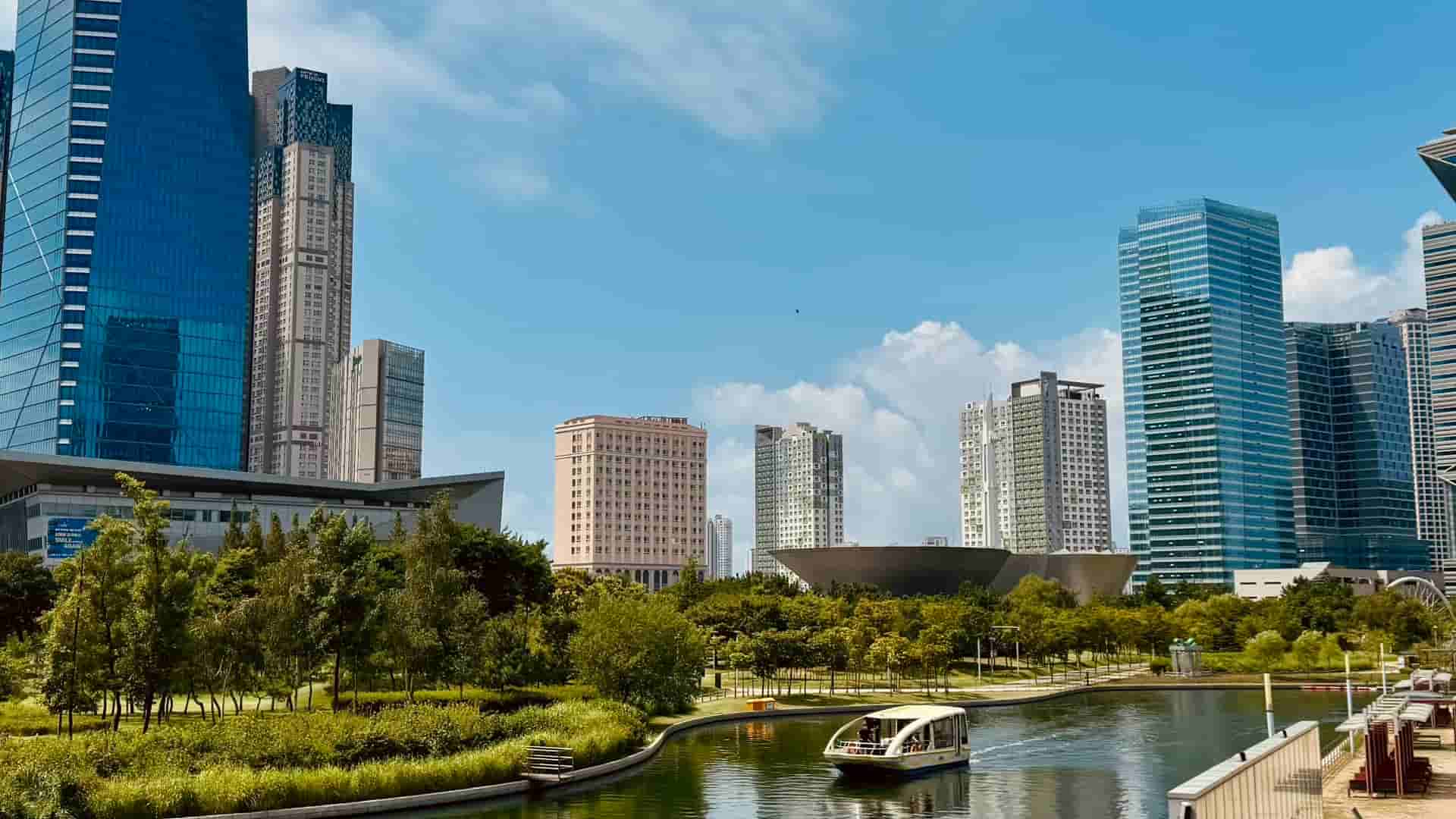
If you close your eyes for sixty seconds at the old harbor wall, you see only the gray mudflats of the Yellow Sea, wet and vast, just before the concrete poured over them. Now, those mudflats lie buried under the glass towers of Songdo, a smart city built on sand pumped from the sea floor. The historical shoreline of 1883 sits blocks inland, stranded by decades of land reclamation that pushed the ocean miles away. Ecologists warn that the migratory birds have lost their ancient rest stops, yet the city continues to rise, glittering and brave, on the water’s edge.
We are left with a coast that refuses to stay still. The scent of sweet, dark bean paste still drifts down the stone steps of Chinatown, mixing with the sharp tang of the Yellow Sea. It is a place where every step lands on reclaimed ground, and every brick whispers of the day the world came rushing in.