Fast Facts for the Modern Explorer
The Core: Gyeongbokgung Palace and Bukchon Hanok Village anchor the historic heart of northern Seoul, acting as the physical axis of Joseon statecraft.
Current Relevance: These living neighborhoods balance the quiet life of local residents with a democratic reclamation of royal spaces through traditional dress.
Practical Duration: Spend four hours walking the stone courtyards and climbing the steep clay-tiled alleys of the northern village.
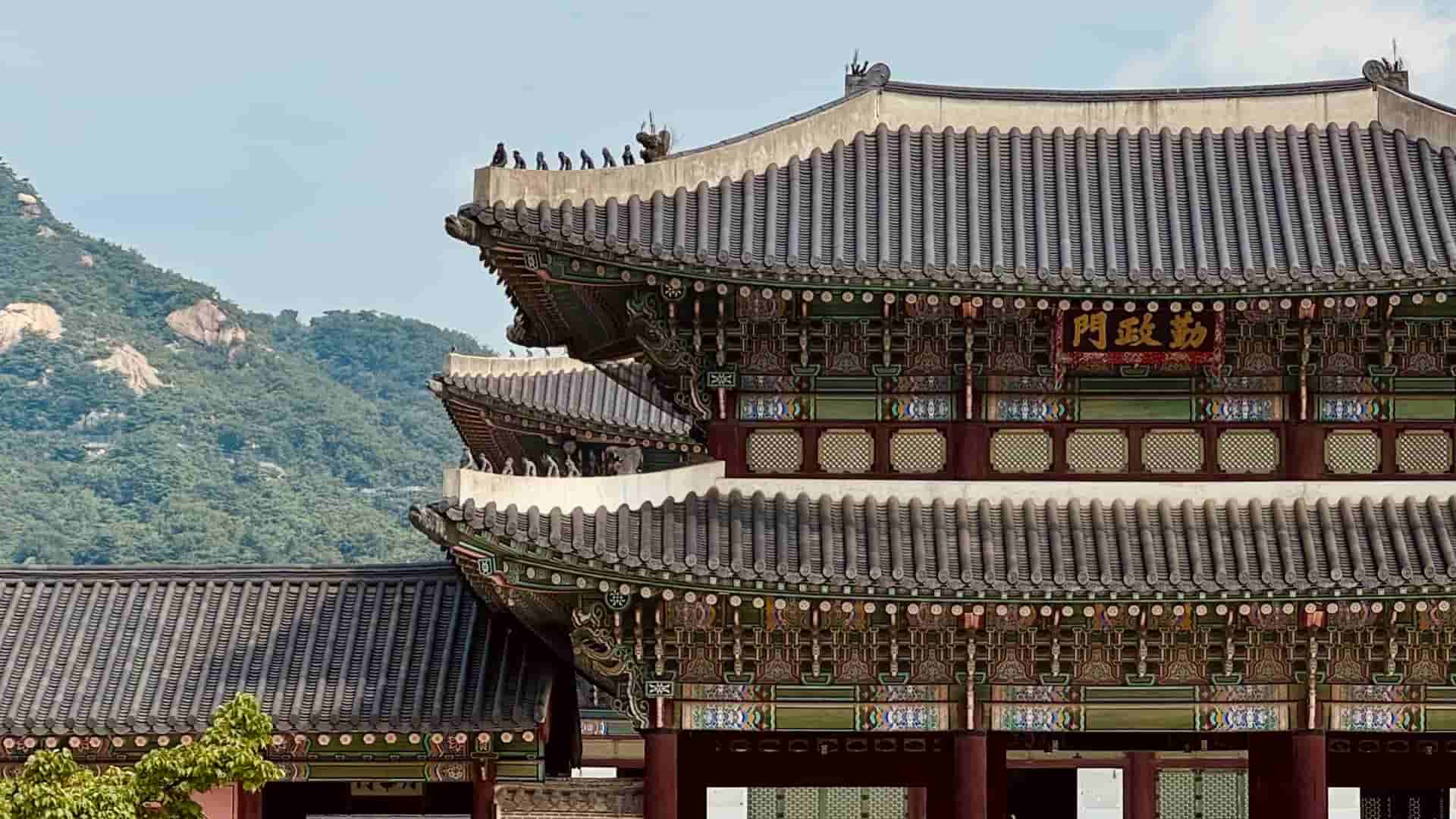
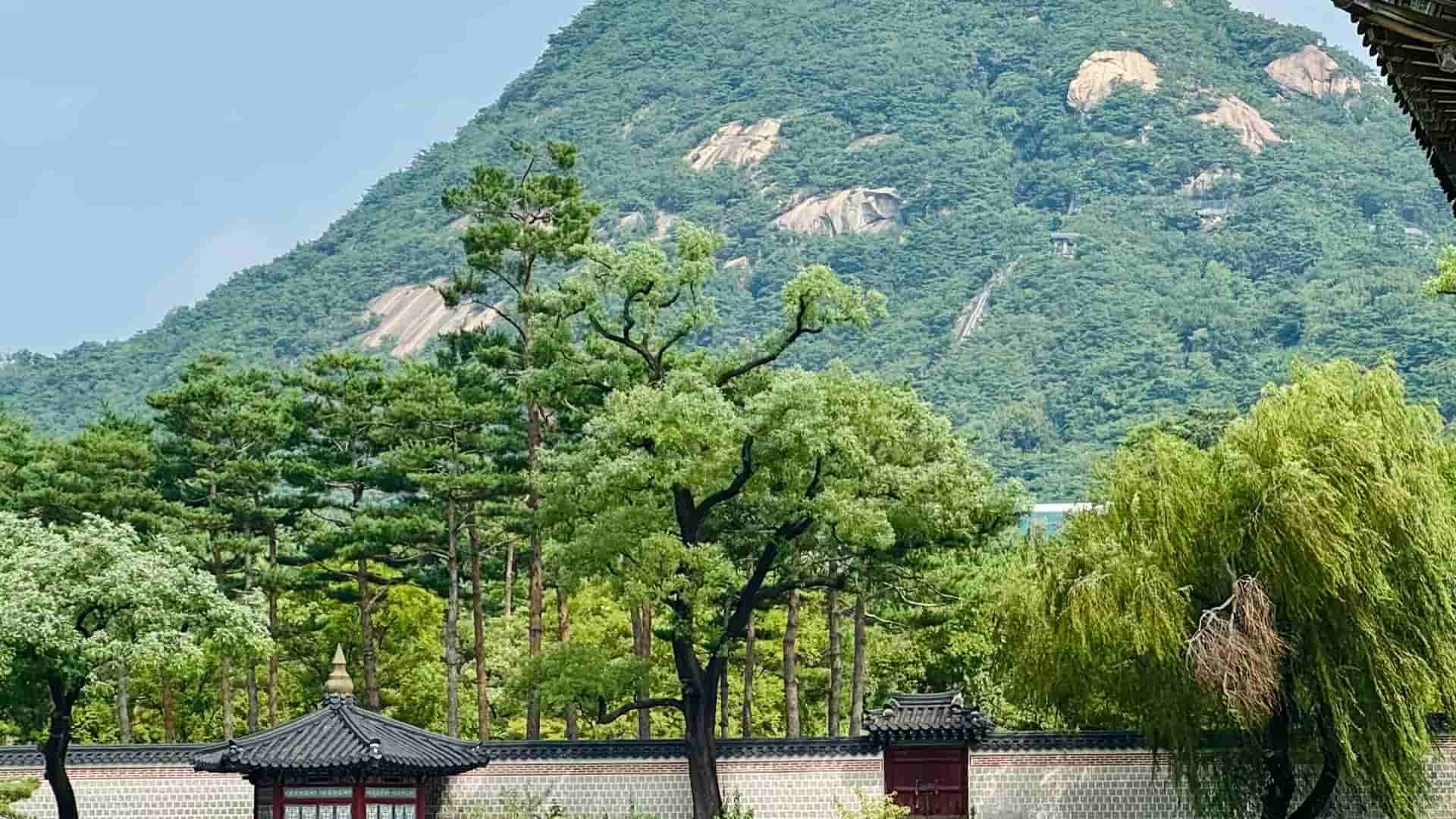
Red pillars scrape the sky. Under the jagged tooth of Bugaksan mountain, these painted timbers stand as a physical shield against the raw winds howling down from the northern steppes. We walk through courts where scholars once debated the morals of kings. Stone beneath our boots.
Green and red mineral paints, known as dancheong, coat the pine beams to ward off rot and wood-boring beetles. The air smells of dry wood and ozone from the oncoming storm. Below the palace walls, the city of Seoul roars with the mechanical hum of ten million lives, yet here the world slows to the strike of a single iron shoe on wet granite.
Just up the hill, the dark clay roofs of Bukchon Hanok Village curve like the wings of resting swallows. Here, the aristocratic yangban class built their homes to catch the southern sun. Today, steam rises from tiny chimneys, carrying the scent of boiling ginger and toasted sesame into the narrow alleys.
This landscape did not grow by chance; it rose from a strict blueprint of cosmic order. When King Taejo founded the Joseon Dynasty in 1395, he aligned his throne with the earth's natural veins of power, placing the palace between the guardian mountains of northern Seoul. This design reflected the moral duties of a king who ruled not as a god, but as an servant of heaven's will.
Yet, fire repeatedly shattered this royal peace. In 1592, during the chaotic onset of the Imjin War, the entire palace burned to the ground. Historians still argue whether invading forces set the spark, or if angry local slaves burned the halls to destroy the official registries of their bondage. For over two centuries, the palace lay in blackened ruins, abandoned as an unlucky waste.
The ruins slept until 1867, when the Prince Regent Heungseon Daewongun forced a massive reconstruction project that nearly broke the state. He taxed the peasantry and printed cheap money to restore the crown's fading glory. That glory lasted only until the colonial occupation of 1910, when foreign rulers systematically tore down ninety percent of the palace buildings to erect a gray stone administrative building directly in front of the main throne hall.
Reflective Pause
The cold grain of the dry pine pillar catches the edge of my thumb. In this corner, the green mineral paint has flaked away, leaving bare gray wood that smells of old rain. A single black beetle crawls into the split seam.
In the 1930s, as rural families flooded the capital in search of work, developers bought up the vast estates of Bukchon. They partitioned the grand gardens to build dense, mass-produced traditional houses with shared walls. These urban homes preserved the clever sub-floor heating flues, called ondol, which channeled hearth-smoke under stone floors to keep families warm during bitter winters.
Today, a quiet war of space plays out in the alleys of Bukchon. Local residents hang banners asking for silence as crowds of travelers press against their wooden gates. It is a reminder that heritage is not a dead stage set but a living, breathing shelter for ordinary lives.
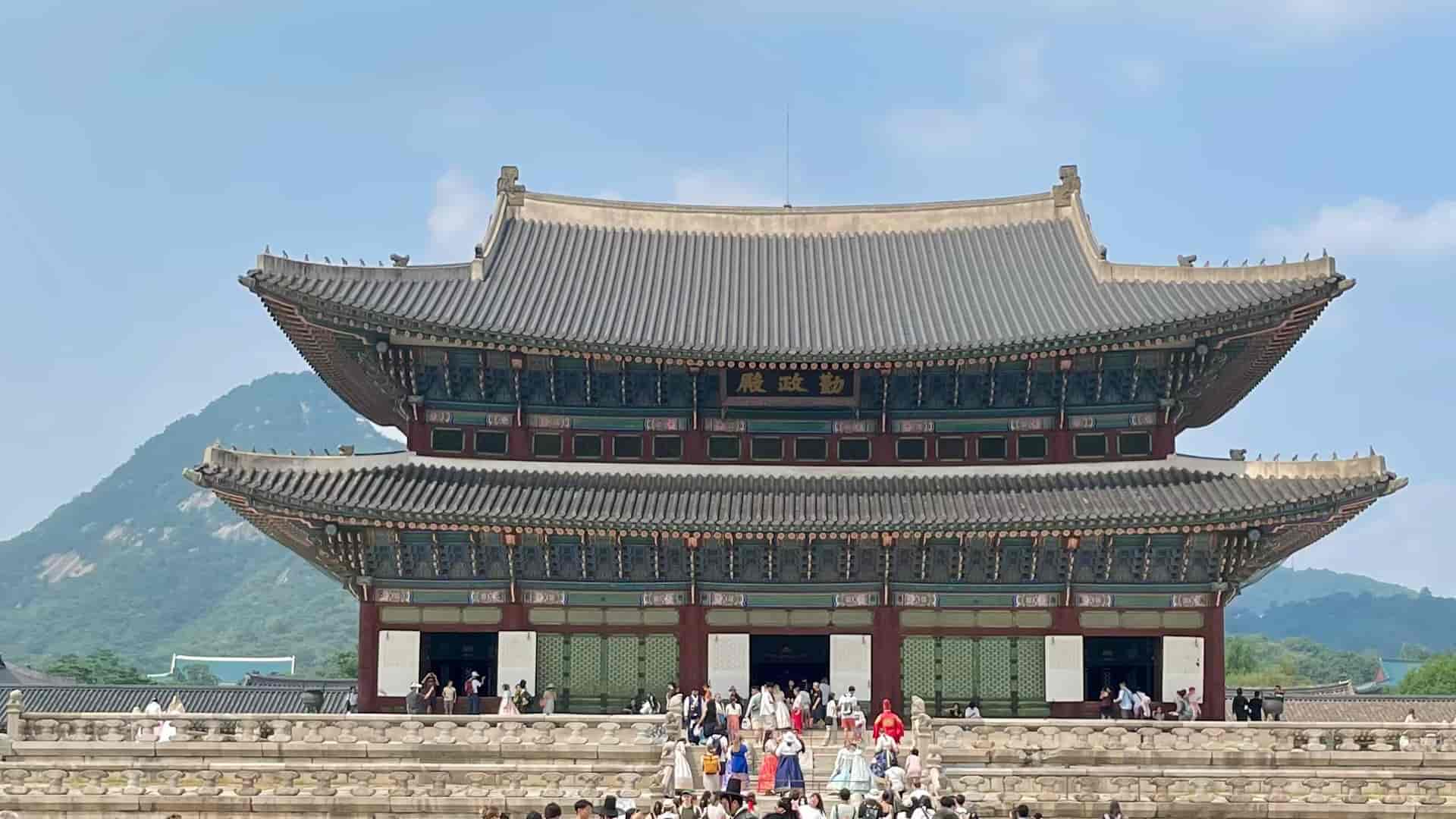
At the palace gates, the state offers free entry to anyone wearing traditional clothing. Thousands of young people move through the stone yards in bright, rented silks, their laughter bouncing off the ancient granite. This policy transforms what was once a forbidden fortress of absolute kings into a giant, democratic playground.
If you close your eyes for sixty seconds on the steps of the main throne hall, you see the red warmth of charcoal fires burning deep below the floor stones. You feel the weight of a dynasty that refused to die, surviving fire, colonial axes, and the concrete rush of modern times. The past does not sleep here; it throbs beneath the modern asphalt.
We leave the palace gates as the streetlights flicker to life, casting long shadows across Sejong-daero. The wind carries a faint trace of pine smoke from the northern slopes, mixing with the rich aroma of espresso from a glass-fronted cafe. Under the cold granite peaks, the stars begin to show, matching the grid of the ancient kingdom. How will we build our own sanctuaries when the wooden rafters of our past finally turn to dust?