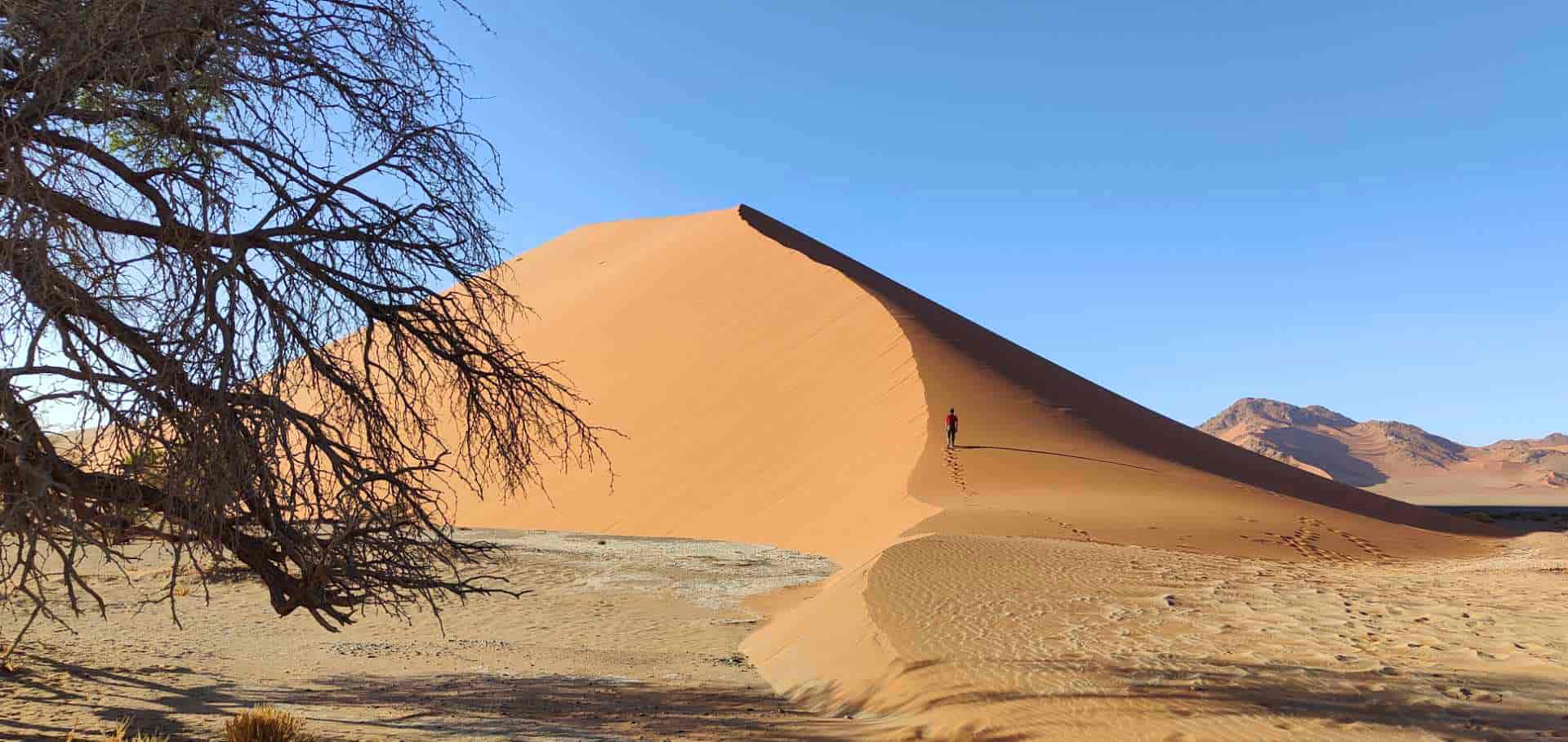
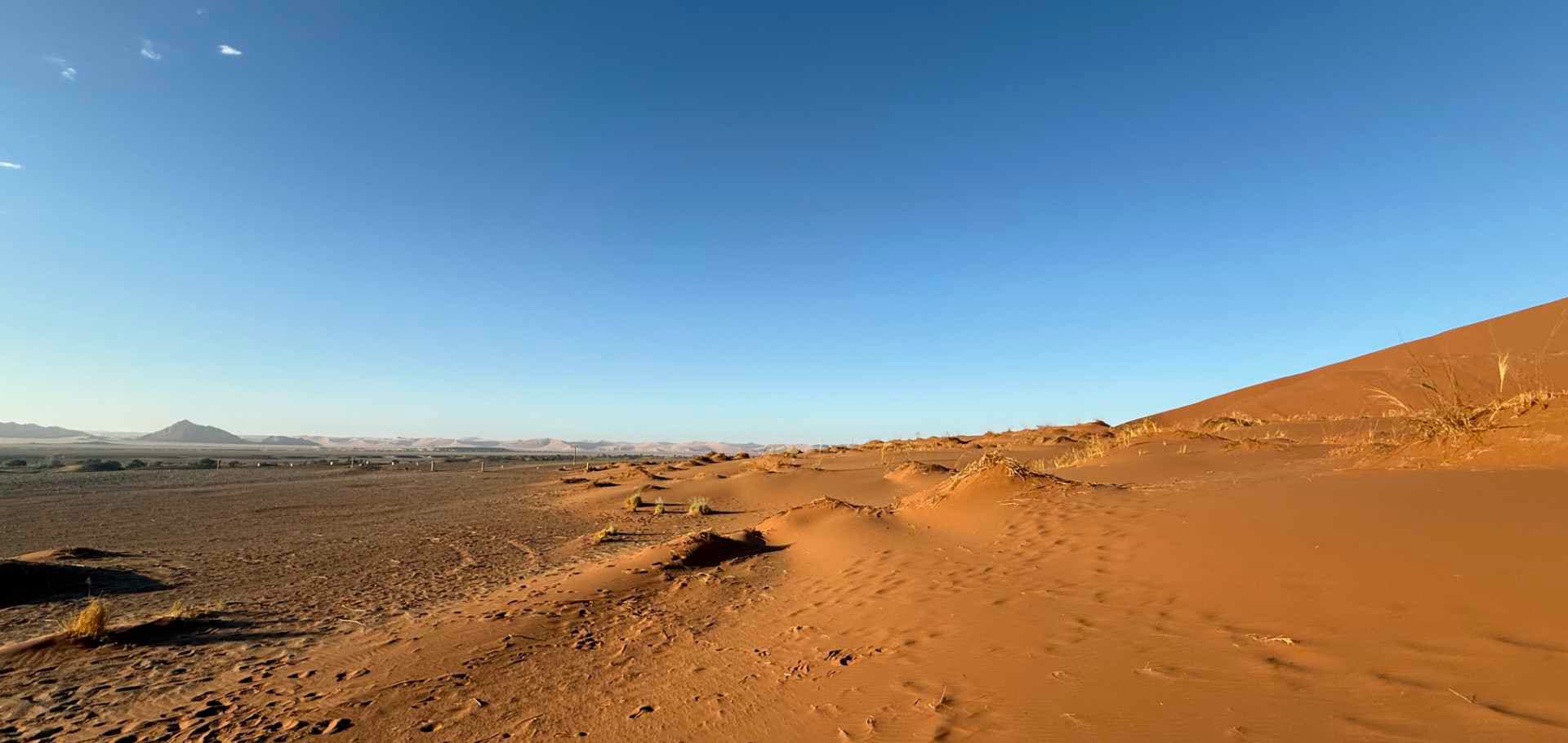
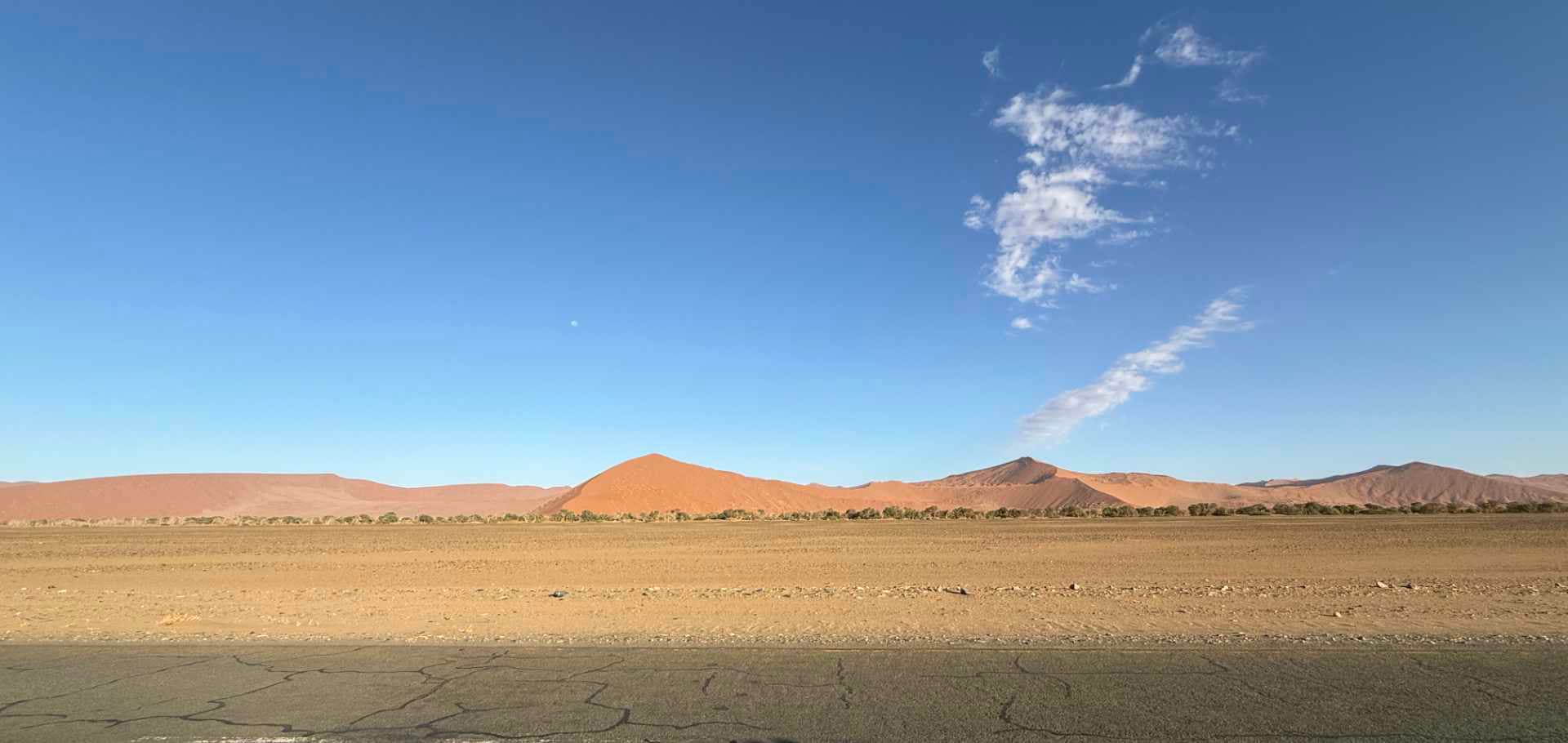
The relentless wind carries a dry, metallic tang of ozone and salt, whispering of high South African peaks ground to dust and carried to the ocean before blowing inland. You struggle upward, sinking ankle-deep into the soft, shifting pulse of this colossal dune. Red earth clings to your damp skin as the desert awakes.
Fast Facts for the Modern Explorer
- Direct Definition: Dune 45 is a 170-meter-tall star-like transverse sand dune composed of iron-rich quartz grains, located in Namibia’s Namib-Naukluft National Park.
- Current Relevance: As a protected UNESCO World Heritage site since 2013, the dune serves as a vital ecological sanctuary and a key site for studying active geomorphic processes and hyper-arid biomes.
- Practical Duration: A complete exploration, including the challenging crest climb at dawn and observing the ancient camel thorn trees at its base, requires approximately two to three hours.
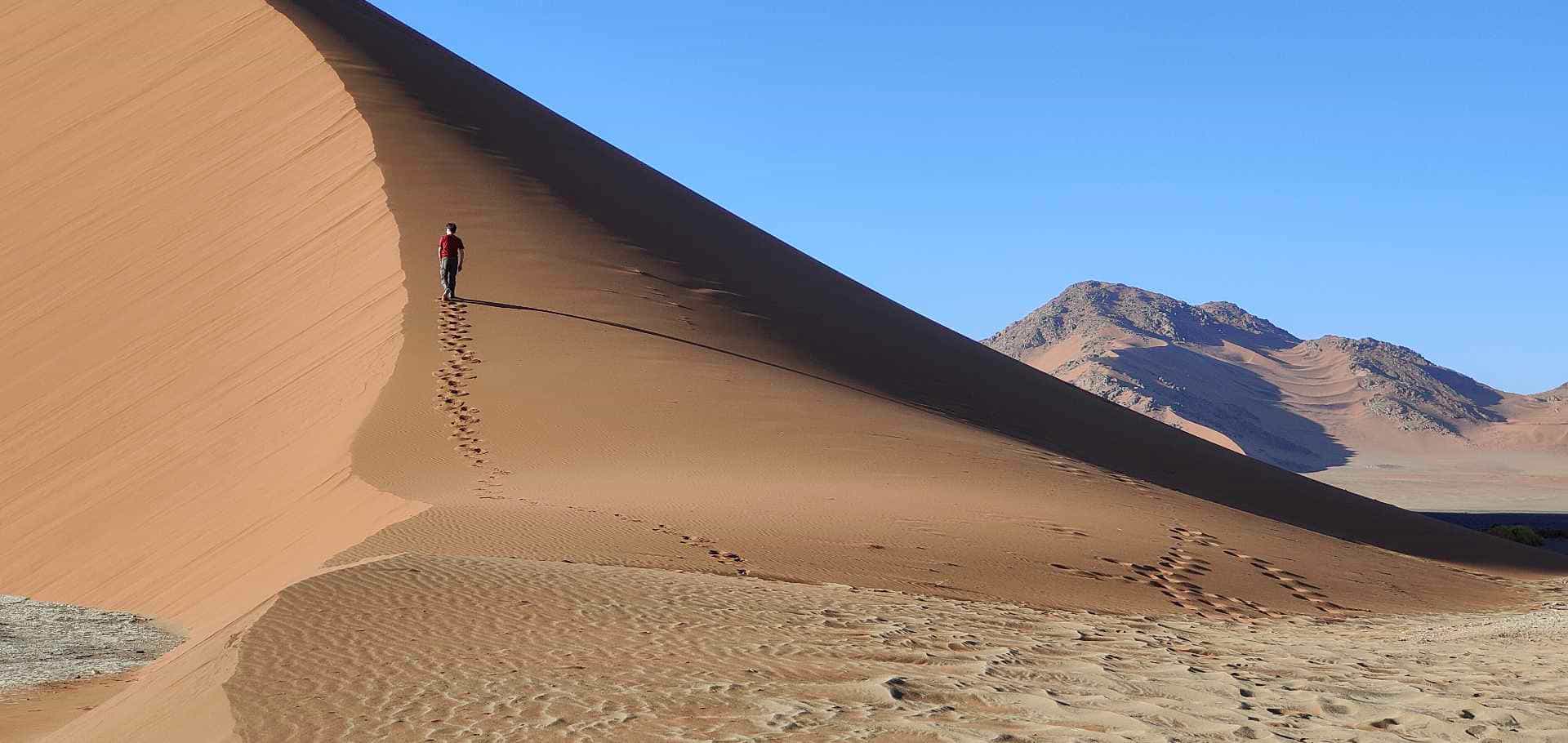
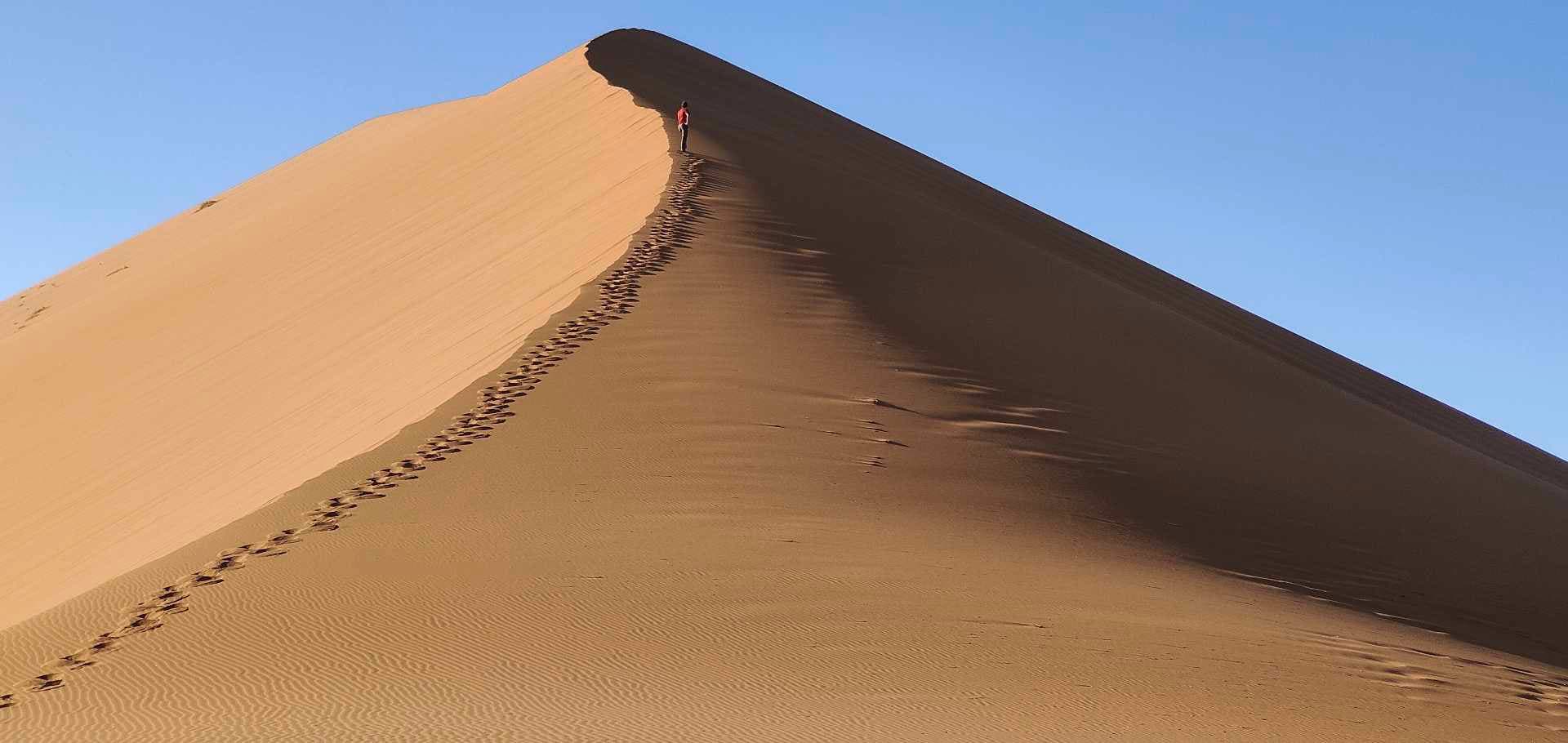
The spine of the dune demands absolute focus. As your feet sink into the cold, shifting grains, the steep slipface drops away at a treacherous angle of thirty-two degrees, plunging into a silent abyss of purple shadow that the morning sun has not yet touched. The sand beneath your fingers feels surprisingly heavy, heavy with the weight of iron oxide that coats every individual quartz grain like a microscopic layer of rust. Each step upward is a negotiation with gravity.
The wind brings cold salt. At the flat base of this giant mound, the skeletal black limbs of camel thorn trees stand like frozen sentinels against the orange wastes, their dry wood preserved for three hundred years by the intense, moisture-starved air of the coastal desert. A solitary ostrich struts along the far gravel plains, its movements precise and unhurried in the vast geometric emptiness of the basin. This is a landscape reduced to its barest, most muscular bones.
This sand has traveled a vast distance. Born in the high, storm-swept Drakensberg Mountains millions of years ago, these tiny quartz grains washed down the Orange River into the Atlantic Ocean before the icy Benguela Current swept them northward to be tossed back onto the coast by the wind. This continental pipeline has operated since the Late Miocene epoch, roughly five to eight million years ago, when early ancestors of humanity first explored the African grasslands. An ancient, endless cycle of erosion and flight.
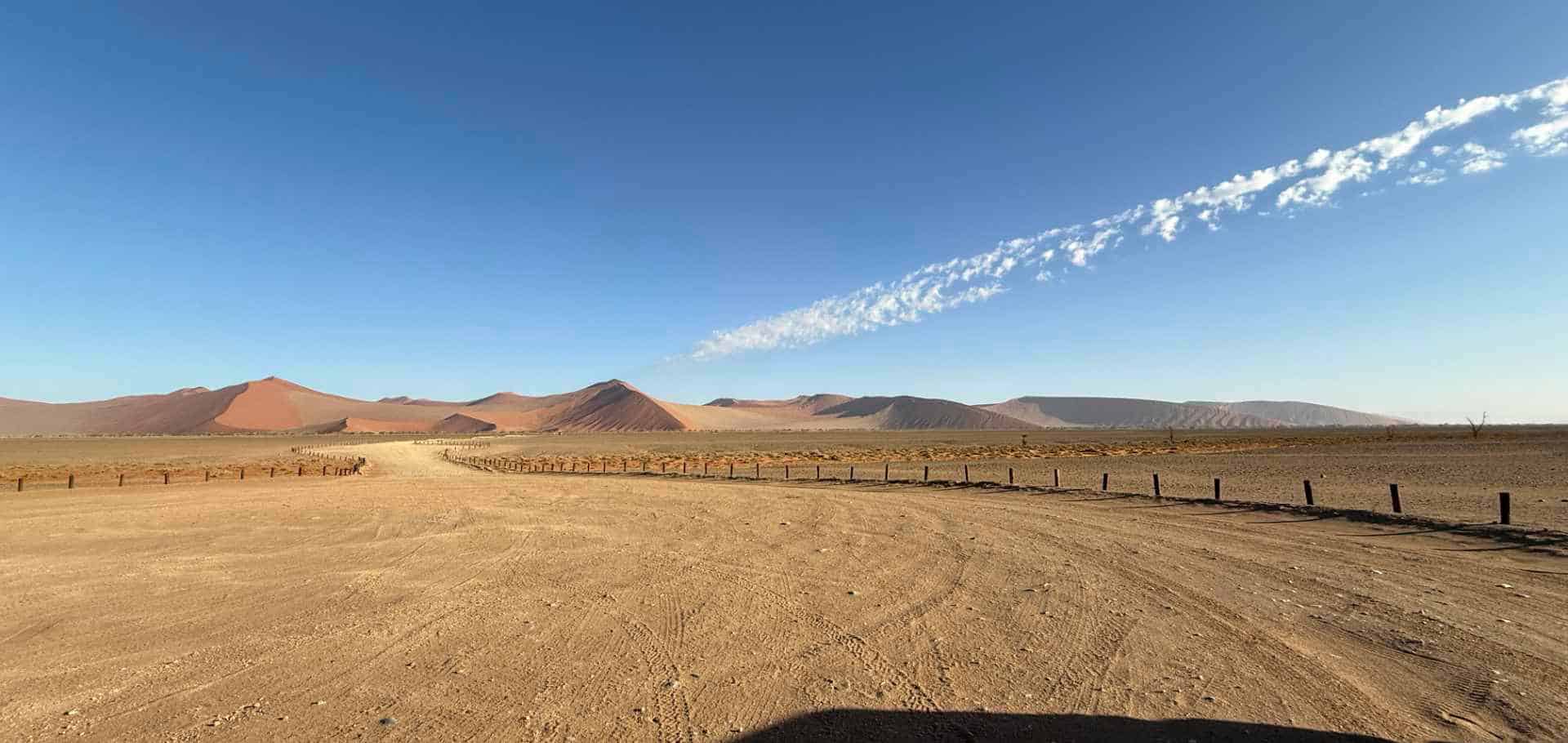
We name this monument for a road. Dune 45 derives its modern, practical title from its location exactly forty-five kilometers along the paved valley corridor from the Sesriem Gate, a modern blacktop highway that penetrates a wilderness first partitioned under German colonial rule in 1907. Geologists still debate whether these giant structures migrate freely across the gravel plains or remain anchored by deep, fossilized sand cores from the Pleistocene epoch. The dune holds its ground against the coastal gale.
Reflective Pause
I slide my flat palm along the windward ridge and feel the surprisingly cold, sharp corners of individual quartz grains scratching my skin with dry friction. The loose sand makes a thin, metallic, whispering hiss as it cascades down the slipface, a fragile sound almost swallowed by the relentless roar of the desert wind. Under the hard morning sun, each tiny, rust-coated crystal of hematite gleams like a microscopic spark of fire against the vast, empty canvas of the blue sky.
The silence here is heavy. When you close your eyes for sixty seconds at the summit, the world of sight vanishes, leaving only the blood-red afterimage of the sun burned onto your eyelids while the cold Atlantic wind howls against your ears. This profound isolation strip-mines the human ego, forcing you to confront the reality of your brief, fragile existence on a planet that does not know your name. You are a mere ghost in an eternal kingdom of dust.
The wind is the great restorer. By late afternoon, the rising gale will sweep across the ridge to erase every single footprint left by the morning's climbers, smoothing the sharp crest back into a perfect, razor-thin line that divides the burning crimson of the west from the violet shadows of the east. The dune heals itself daily, returning to its pristine state long after we have packed our bags and returned to our noisy cities. We are left to wonder if our own modern scars will ever heal so cleanly.