Fast Facts for the Modern Explorer
- Direct Definition: Deadvlei is a high-altitude, dried-up clay pan located in Namibia's Namib-Naukluft National Park, famous for its mummified, 900-year-old camel thorn trees.
- Current Relevance: As a key feature of the UNESCO-listed Namib Sand Sea, this fragile ecosystem faces rising preservation challenges from modern global tourism and foot traffic.
- Practical Duration: Travelers should allocate three to four hours to hike the sand dunes and explore the basin during the cooler morning hours.
The Scene
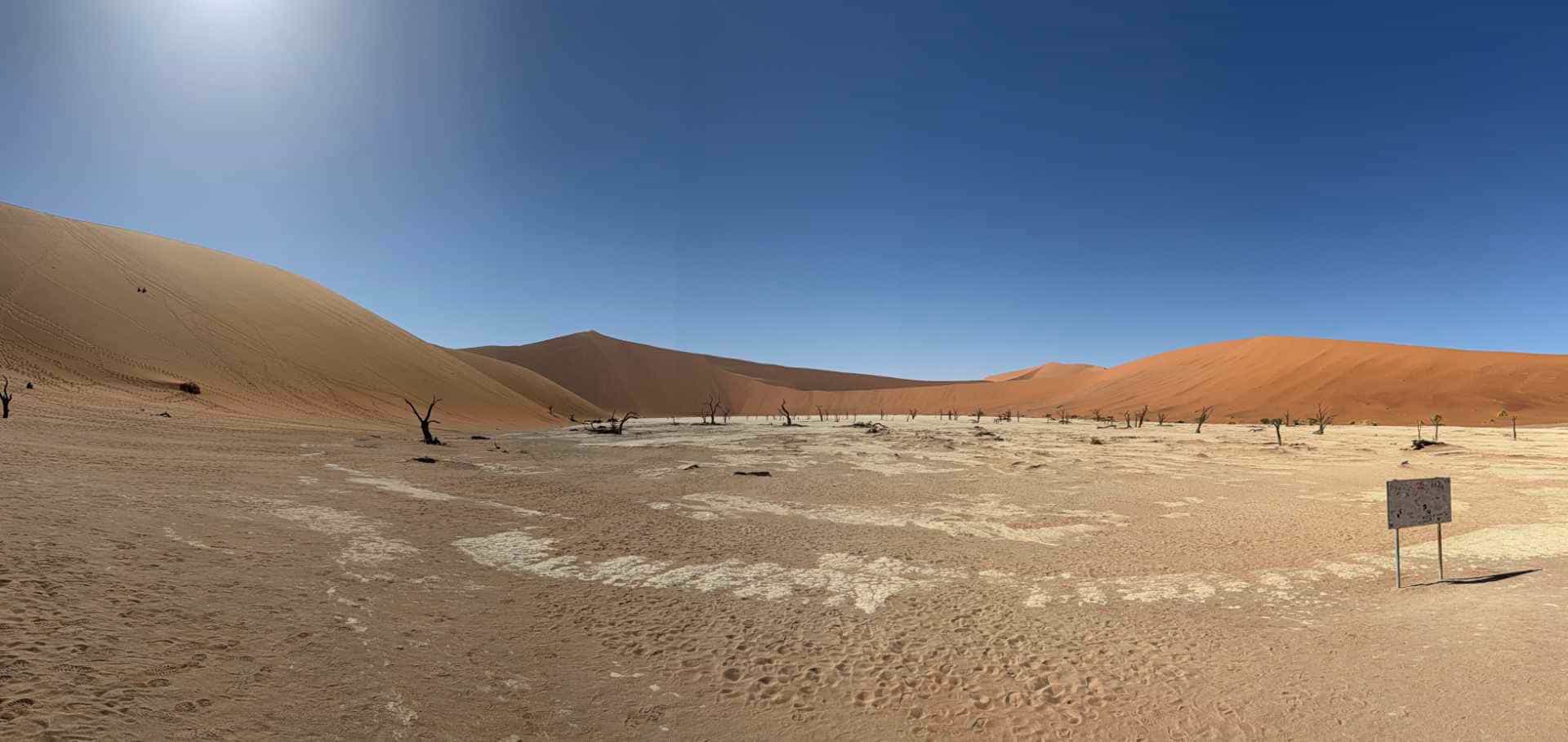
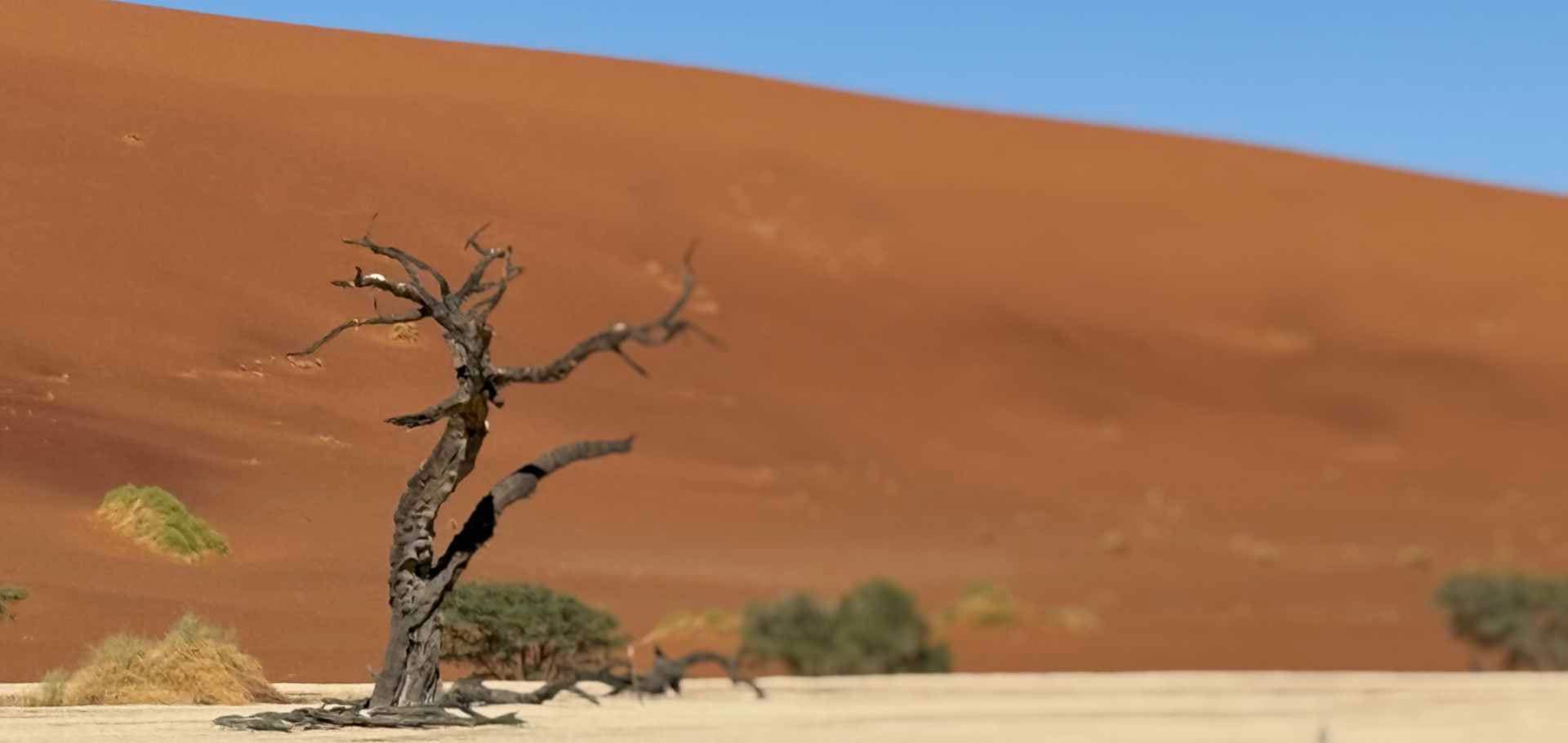
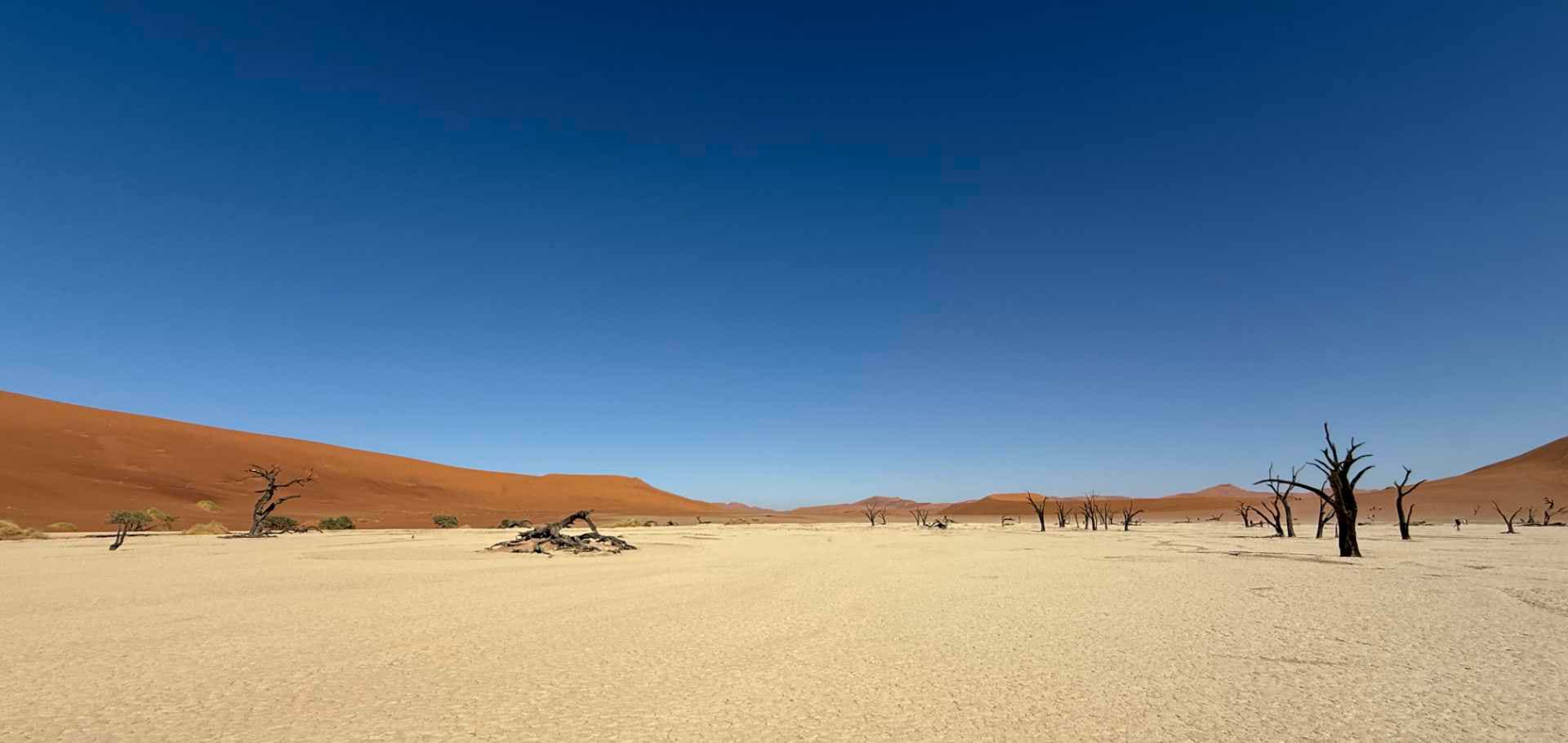
The dry wind tastes of bitter copper. As the low morning sun climbs over the massive, rust-colored ridge of the Big Daddy sand dune, a sharp shadow slices the bone-white calcrete floor of the basin in two, casting long black shapes from trees that died when Norman kings first ruled England. We feel the sharp chill of the desert night swiftly yield to a thick, heavy heat that smells of parched clay and ancient, sun-baked wood. A silent arena of light and shadow.
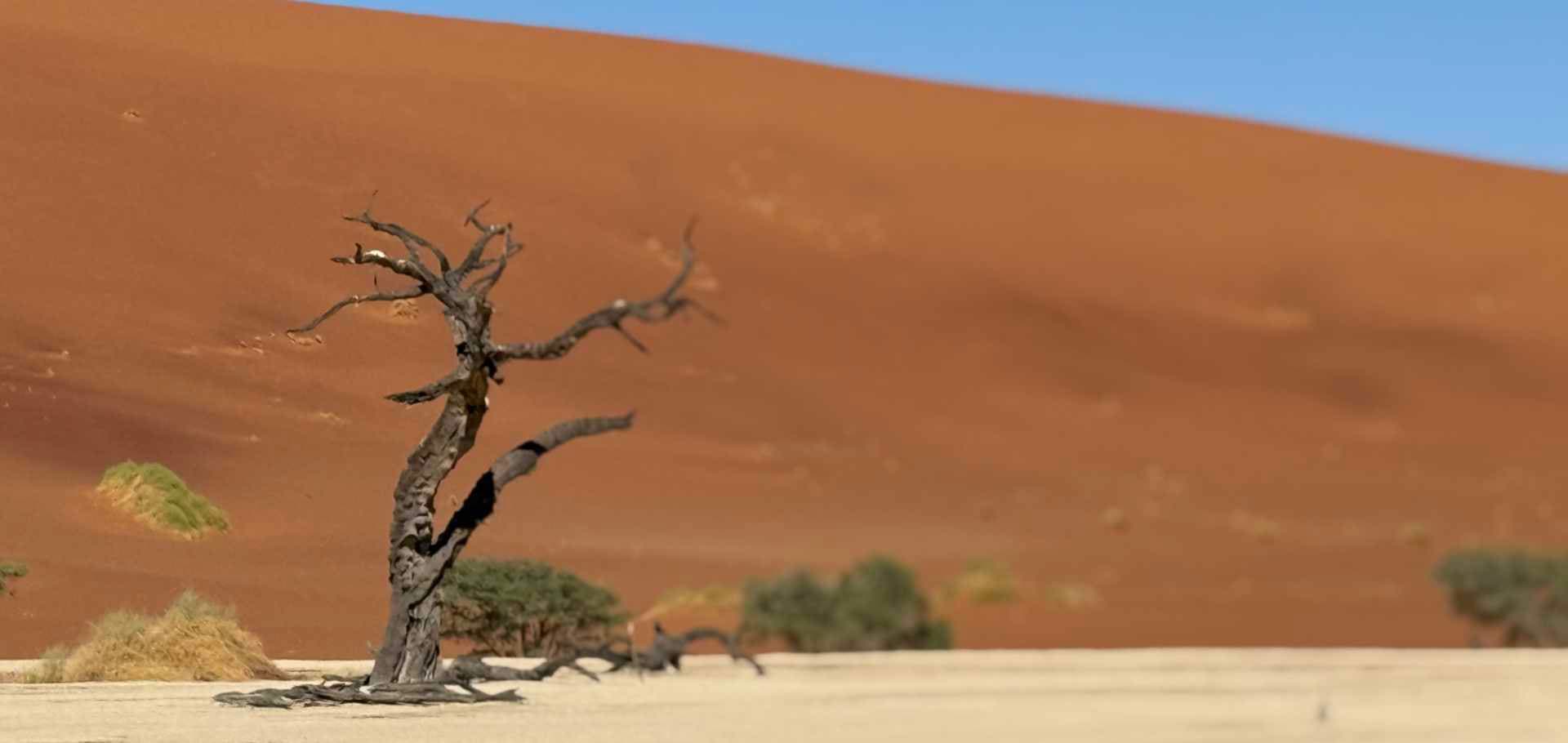
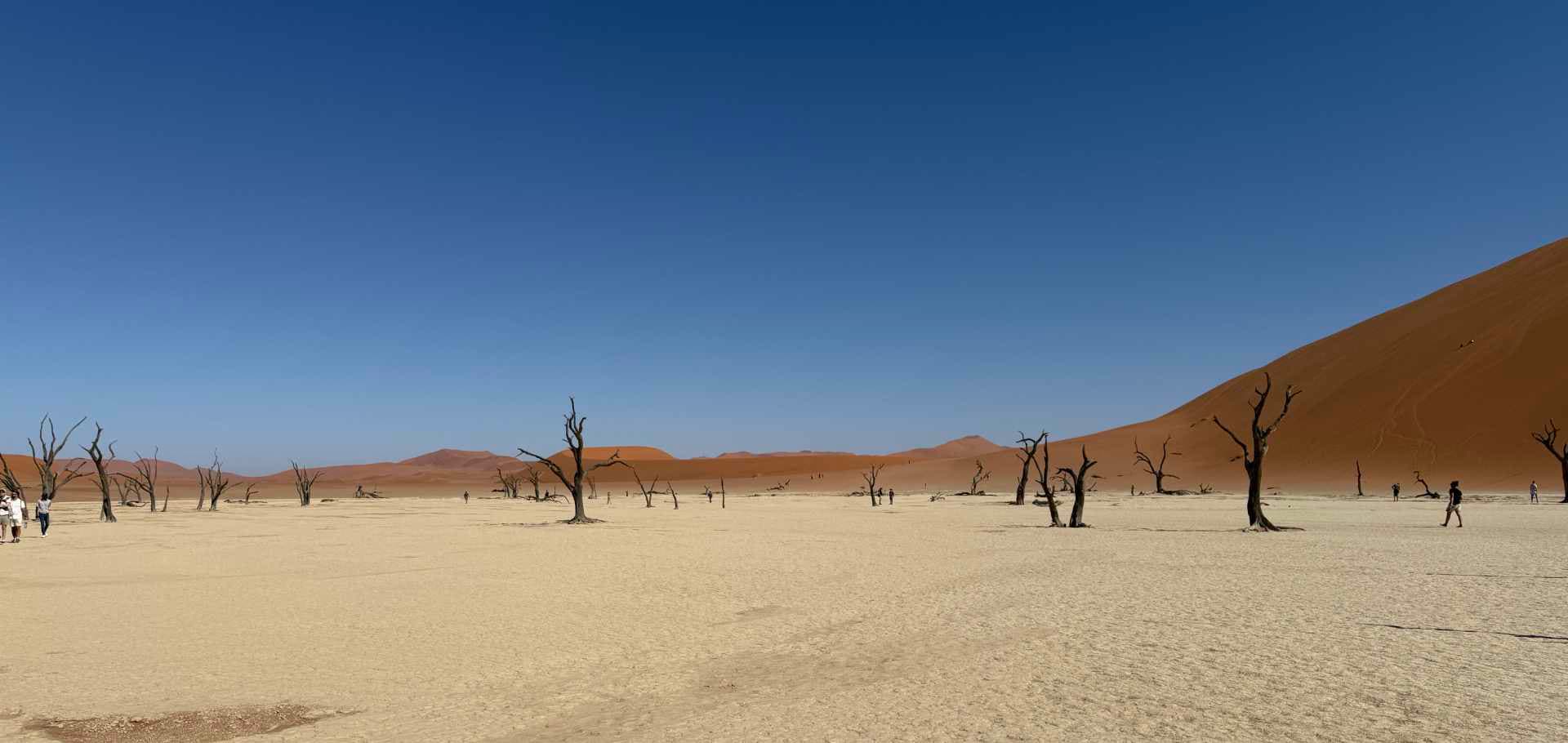
No desert birds sing in this hollow. Hundreds of twisted camel thorn trunks stand firmly rooted in the cracked, white calcrete earth, their gnarled limbs reaching up like scorched, black arms toward a deep cobalt vault that never offers a single drop of rain to the parched basin. The sheer scale of the surrounding orange sand dunes, which rise over three hundred meters into the sky, makes our own bodies feel fleeting and strangely out of place. A wild monument of wood and sand.
The Conflict of Sand and Silt
This sand holds deep, silent time. While this hyper-arid desert has resisted life for fifty-five million years, a brief wet spell during the eleventh century—just as the Crusades began to shake the Mediterranean—allowed the Tsauchab River to flood this clay basin, giving rise to a lush grove of camel thorn trees. But the desert winds soon marched back, shifting the massive dunes until a wall of sand choked off the vital river around the year twelve hundred, just as English barons forced King John to sign the Magna Carta. A death knell written in sand.
The dry heat arrested all decay. Shielded by the giant Big Daddy dune, which towers three hundred and twenty-five meters above the desert floor, these trees did not rot; instead, the fierce sun scorched and mummified their hard heartwood over nine centuries of dry isolation. Scientific carbon testing proves that these dark skeletons have stood untouched by decomposers since the eleventh century, preserved by a micro-climate that deflects the sharpest windstorms over the basin. A clean triumph of dry preservation.
Reflective Pause
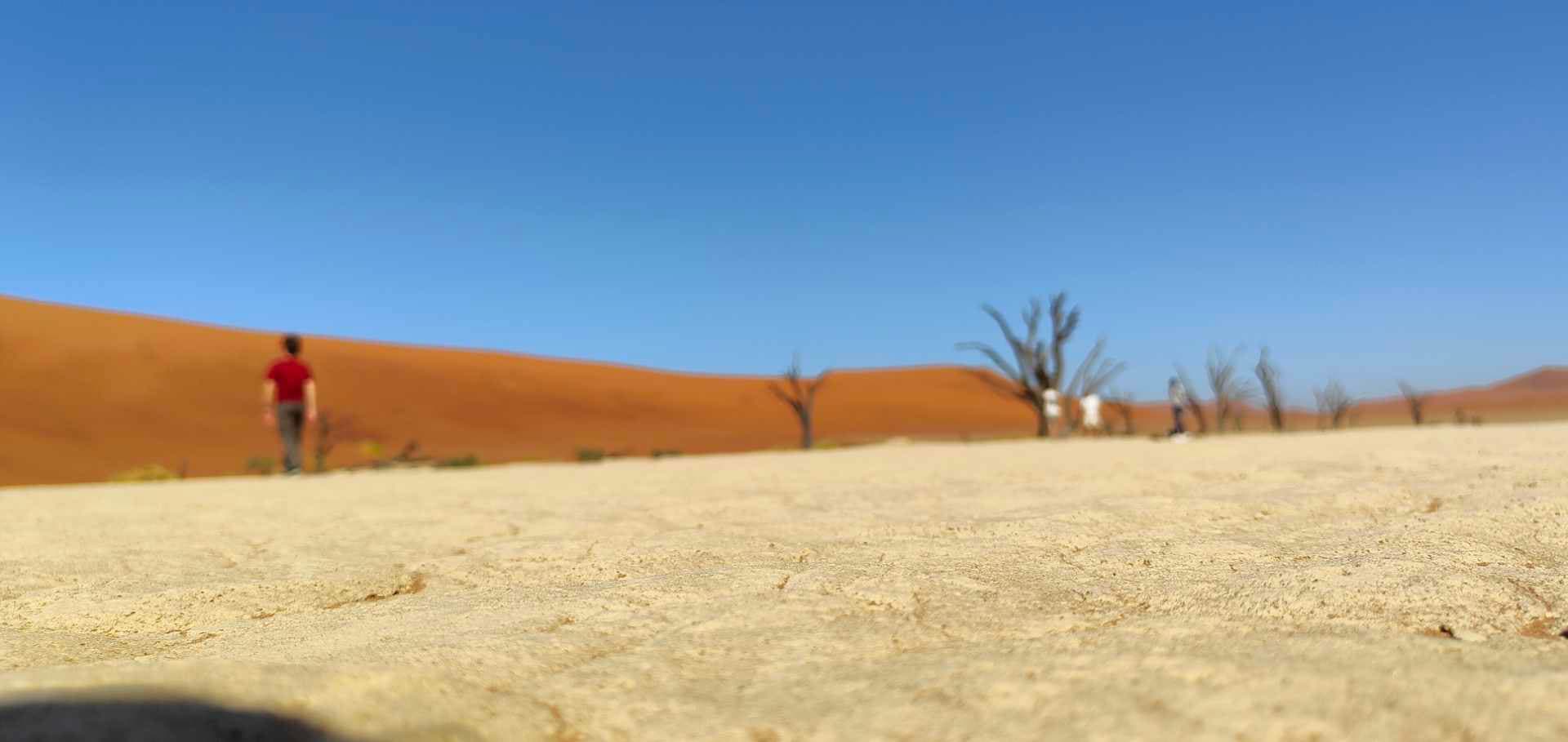
We touch rough, cold bark. My fingertips trace the deep, sandblasted ridges of a fallen branch, feeling the iron-hard coldness of old wood that refuses to turn to dust under this fierce sun. Far above us, a faint, dry hiss rises from the dune crests as the wind moves the sand.
The Insight
We close our eyes to listen. When we shut out the blinding glare of the clay for sixty seconds, we do not see blackness, but a glowing, blood-orange map of our own warm veins, a stark reminder of our brief lives inside this valley of ancient wood. This parched wilderness teaches us that time does not always erode beauty, but can instead seal it in a bright, eternal shell of salt and sand. A stark and beautiful victory over the desert decay.
Our heavy steps now threaten this peace. Every day, hundreds of global travelers walk across this white calcrete floor, unaware that their heavy footsteps crush the delicate, cracked crust and slowly grind the nine-hundred-year-old limbs of these brittle trees into gray dust. To keep this dry sanctuary alive for the next thousand years, we must learn to look without touching, leaving the dark shapes exactly as the desert winds shaped them. A deeply fragile, beautiful trust we must guard.
We leave the basin as shadows grow. Behind our retreating steps, the dark branches still claw toward the deep cobalt sky, their stark shapes standing completely still against the massive copper dunes that have kept the water away for nine hundred years. As the dry salt burns our throats one last time on the warm wind, we wonder how long our own busy, fleeting world can stand before the drift of time claims us too. A heavy, quiet question of sand.